Claude AI Review 2026: The AI Assistant That 78% of Developers Now Prefer Over ChatGPT — And Why Writers, Founders, and Enterprises Are Switching
A comprehensive Claude AI review for September 2026 covering every model in the Haiku 4.5 / Sonnet 4.6 / Opus 4.7 / Fable 5 lineup with honest benchmark data, complete pricing across all seven tiers from free to Enterprise, Claude Code, MCP connectors, Constitutional AI safety approach, competitor comparisons with ChatGPT and Gemini, real-world use cases for writers and developers, and who each plan is genuinely built for.

There is a question that has been asked consistently in every serious AI discussion since early 2026: if you could only use one AI assistant for your professional work, which one would you choose?
The answer from developers is increasingly consistent. In independent community surveys across Reddit, Hacker News, and developer forums, 78% of developers now state a preference for Claude over ChatGPT for writing and reasoning tasks. In Claude Code early access testing, developers preferred Sonnet 4.6 over Sonnet 4.5 roughly 70% of the time — and preferred it over the previous flagship Opus 4.5 by a similar margin.
The answer from writers, strategists, and knowledge professionals is equally consistent. Claude is described across independent reviews as producing noticeably more natural output than competitors, maintaining longer coherent reasoning chains, following nuanced instructions more reliably, and — critically — being honest about what it does not know rather than generating confident-sounding wrong answers.
This is not Anthropic's marketing. This is the consensus emerging from the people who use both tools daily and make clear-eyed comparisons.
Anthropic has shipped three Opus-class models in six months — Opus 4.5 in December 2025, Opus 4.6 in February 2026, Opus 4.7 in April 2026 — compressing what used to be an 18-month development cycle into continuous rapid iteration. Sonnet 4.6, released February 17, 2026, is now the free default model on Claude.ai — meaning the model available at zero cost is the same one that developers prefer for most professional tasks, including complex coding work that previously required the Opus tier.
On June 9, 2026, Anthropic released Claude Fable 5 — its first Mythos-class model made generally available — with a 1 million token context window and long-horizon agent capabilities that place it in a different capability category than any previous Claude release.
This Claude AI review covers the complete 2026 platform — every model in the current lineup with honest benchmarks, the full pricing structure across all seven tiers, Claude Code for developers, the MCP connector ecosystem, every real-world use case where Claude genuinely outperforms alternatives, and the limitations worth understanding before committing to a paid tier.
What Is Claude AI?
Claude is an AI assistant and large language model family built by Anthropic — a safety-focused AI research company founded in 2021 by Dario Amodei, Daniela Amodei, and a team of former OpenAI researchers. The product launched publicly in March 2023 and has undergone continuous, rapid development since — expanding from a single model into a tiered family of four actively deployed models, a dedicated coding agent, an MCP connector ecosystem, and seven pricing tiers serving individual users through enterprise organizations.
Anthropic's founding philosophy — that building powerful AI and building safe AI are not in tension — shapes Claude's architecture in ways that have practical consequences for users. Constitutional AI, Anthropic's core training methodology, teaches Claude to reason from written principles rather than purely from human feedback signals. The result is an assistant that is more likely to push back constructively on a flawed premise, acknowledge genuine uncertainty rather than generating confident-sounding wrong answers, and maintain ethical consistency across different types of requests.
PrimeAICenter's September 2026 AI stack recommendation specifically names Claude Sonnet 4.6 alongside Cursor for coding, ElevenLabs for voice, and Gamma for presentations as the four-tool stack that defines the modern content creator and startup founder workflow in 2026. Every major September 2026 AI tool ranking that covers the writing and reasoning category places Claude at or near the top of the professional recommendation.
Why Claude Is the Trending AI Tool of September 2026
The September 2026 Claude story is driven by four specific developments that have compressed into a single quarter.
The first is Sonnet 4.6 becoming the free default. Announced February 17, 2026, Sonnet 4.6 is now the model every free Claude user interacts with — a model that delivers 79.6% on SWE-bench Verified for coding tasks and sits at a performance level that would have required the Opus tier just six months earlier. The practical implication: the free Claude available to anyone with an email address in September 2026 is significantly more capable than the Claude most users encountered in 2025.
The second is Fable 5 — the June 9, 2026 launch of Anthropic's first Mythos-class model made generally available. With a 1 million token context window at standard pricing, long-horizon agent capabilities, and capabilities that independent benchmarks describe as a qualitative step above the Opus 4.x generation, Fable 5 expanded what Claude is used for from conversational assistance and coding into genuine long-context autonomous agent work.
The third is Claude Code reaching mainstream developer adoption. Included in Claude Pro, Max, Team Premium, and Enterprise plans, Claude Code is a terminal-native AI coding agent enabling multi-file edits, bash command execution, and GitHub integration. It now appears in every September 2026 "best AI for coding" comparison alongside Cursor — with Claude Code leading on large-project benchmarks while Cursor leads on IDE workflow integration.
The fourth is the MCP connector ecosystem. The Model Context Protocol has expanded Claude's capabilities from a standalone AI assistant into a connected platform that can access Google Drive files, GitHub repositories, Slack messages, databases, and hundreds of external tools through standardized MCP connections — turning Claude from a conversation tool into an operational system.
According to Anthropic's Constitutional AI research published on their official blog, the training methodology that produces Claude's distinctive behavior — its tendency toward honest uncertainty acknowledgment, its resistance to generating plausible-sounding wrong answers, and its consistency across different instruction types — is the primary differentiator that experienced users identify when explaining why they prefer Claude for high-stakes professional work.
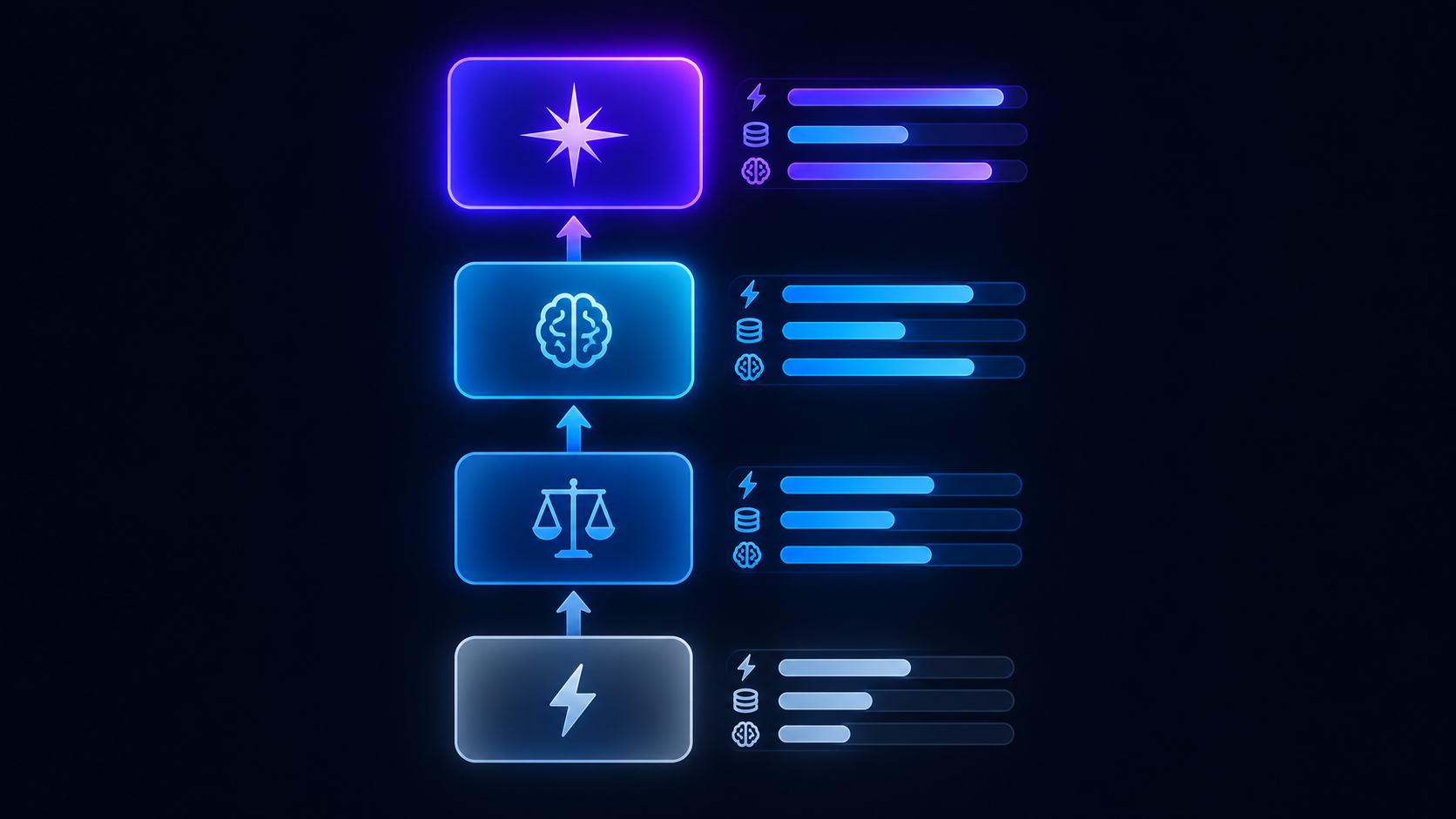
The Claude Model Family in 2026 — Which Model for Which Task
Understanding Claude's model lineup is the most important prerequisite for getting full value from any Claude plan — because the model that executes your request determines the quality of the output more than any other single variable.
Claude Haiku 4.5 — Speed and Cost Efficiency
Haiku 4.5 is the speed and economy tier of the Claude model family. At $1 per million input tokens and $5 per million output tokens, it is the model for high-volume processing, classification tasks, extraction, and any application where inference cost and response latency matter more than maximum reasoning depth.
API developers building applications that need to process thousands of requests per day — content categorization, entity extraction, basic question answering, data formatting — use Haiku 4.5 to keep per-request costs manageable without sacrificing the quality advantages of the Claude model family over generic alternatives.
Haiku 4.5 is not available on the free tier. It is accessible through the API and on Pro and higher plans for tasks where Sonnet is faster than necessary.
Claude Sonnet 4.6 — The Everyday Professional Workhorse
Sonnet 4.6 is the model most Claude users interact with most of the time, and in 2026 it is the model that has most significantly changed what is achievable at Claude's free and Pro tiers.
Released February 17, 2026, Sonnet 4.6 delivers 79.6% on SWE-bench Verified for coding tasks — a benchmark score that places it competitive with models that cost five times more per million tokens. At $3 per million input tokens and $15 per million output tokens, it is five times cheaper than Opus while delivering performance on most professional tasks — writing, analysis, coding, reasoning — that is functionally equivalent for all but the most complex multi-step problems.
The development that most significantly changed Sonnet 4.6's adoption was the Claude Code preference data: developers with early Claude Code access preferred Sonnet 4.6 over the previous flagship Opus 4.5 approximately 70% of the time. When the workhorse model outperforms the former flagship on the specific tasks developers are doing day-to-day, the upgrade calculus for Opus access changes.
Sonnet 4.6 is the default model on the free tier, Pro plan, and Claude Cowork — accessible at zero cost for users who have not yet subscribed to any paid plan.
Claude Opus 4.7 — Maximum Reasoning Capability
Opus 4.7, released April 2026, is Anthropic's most capable standard publicly available model — designed for tasks requiring extended multi-step reasoning, complex analysis, and long-context understanding at the frontier of what large language models can currently accomplish.
On GPQA Diamond — a PhD-level reasoning benchmark covering graduate-level biology, chemistry, and physics questions — Opus 4.6 (the preceding version) scored 91.3%, representing the highest published score for any commercial LLM on this benchmark at the time of release. Opus 4.7 outperforms Opus 4.6 on agentic coding benchmarks, multidisciplinary reasoning, scaled tool use, and computer use.
The nuanced reality that the community has surfaced: Opus community sentiment is notably mixed. Reddit's developer consensus describes Opus 4.7 as a significant improvement over 4.6 for reasoning tasks but notes that for coding specifically — the use case most developers care about — Sonnet 4.6's performance at one-fifth the cost remains the rational default. Opus earns its cost premium for genuinely complex reasoning tasks. For straightforward coding assistance, Sonnet is the smarter choice.
Opus 4.7 is available on Claude Max, Team Premium, Enterprise plans, and directly through the API.
Claude Fable 5 — The Mythos-Class Frontier Model
Released June 9, 2026, Fable 5 is Anthropic's first Mythos-class model made generally available — a qualitative step beyond the Opus 4.x generation in capability, designed for long-horizon agent work, complex reasoning over extremely large contexts, and tasks that sit at the boundary of what AI can currently accomplish autonomously.
The 1 million token context window at standard Fable 5 pricing represents a practical capability breakthrough for long-context use cases: analyzing an entire codebase, synthesizing a large document library, maintaining coherent reasoning across extended multi-session agent tasks. Previous 1 million token context access required either a specific Opus configuration at premium pricing or was not available at all on standard plans.
Fable 5 is the model behind Claude Code's highest-capability agentic workflows — the long-horizon software engineering tasks where a single Claude Code session plans, writes, tests, debugs, and commits multiple related features across a complex codebase.
Fable 5 is accessible on Claude Max, select Enterprise plans, and through the API via the model string claude-fable-5-1.
Core Features of Claude AI in 2026
Writing and Analysis — Where Claude's Advantage Is Most Consistent
The capability that generates the most consistent cross-audience preference for Claude over ChatGPT is writing quality. The specific characteristics that experienced users identify: Claude produces prose that reads like it was written by a thoughtful human rather than assembled from pattern-matching on training data. Transitions are logical rather than formulaic. Arguments build rather than repeat. Nuance is maintained across long outputs without drifting toward the generic middle.
For professional writing use cases — strategy documents, research reports, client communications, long-form content, technical documentation — Claude's writing quality advantage over GPT-4-class models is most consistently cited by users who have switched from ChatGPT. The gap is meaningful for outputs that will be read by sophisticated audiences who would notice AI-generated writing patterns.
The instruction-following reliability advantage compounds this. Claude follows complex, multi-part instructions more consistently than comparable models, maintaining specified constraints across long outputs rather than drifting away from them as the output length increases.
Long-Context Processing — The 1 Million Token Window
The 1 million token context window, now generally available across the appropriate model tiers, represents the capability that most significantly separates Claude's use cases from tools with shorter context limits.
One million tokens is approximately 750,000 words — roughly ten average-length novels, or the complete codebase of a substantial software project. The practical implications: Claude can process an entire large repository in a single session and reason about it coherently, synthesize a complete research library without losing earlier document context, maintain multi-session memory on very long creative or analytical projects, and conduct complex document analysis across materials that no shorter context model can hold simultaneously.
Opus 4.6's benchmark performance on long-context tasks is notable: on the 8-needle 1M variant of MRCR v2 — a benchmark testing information retrieval in vast text — Opus 4.6 scores 76% while its predecessor Sonnet 4.5 scores just 18.5%. This represents a qualitative shift in long-context capability — not a marginal improvement but a fundamentally different level of reliability when reasoning across very large amounts of text.
Claude Code — Terminal-Native AI Coding Agent
Claude Code is Anthropic's terminal-based AI coding agent — accessible from the command line rather than a browser interface — and represents Claude's entry into the autonomous development agent category that Cursor dominates through its IDE approach.
The operational model: run Claude Code in any project directory, describe what you need, and Claude Code reads relevant files, plans the implementation, writes code across multiple files simultaneously, runs tests, executes bash commands, and iterates on errors — all without requiring manual direction at each step.
Claude Code is included in Claude Pro, Max, Team Premium, and Enterprise plans — not available on the free tier. The benchmark that establishes Claude Code's position: Opus 4.8 (the iteration available at time of the benchmark) scores 88.6% on SWE-bench Verified — one of the highest coding benchmark scores for any commercial model available.
Claude Code operates most effectively on Sonnet 4.6 for standard engineering tasks and steps up to Fable 5 for the most complex long-horizon project work. The terminal-native model means it integrates into any development environment that includes a command line — not requiring an IDE switch as Cursor does.
MCP Connectors — Connecting Claude to Everything
The Model Context Protocol creates a standardized connection layer between Claude and external tools. Claude Desktop supports MCP connectors that give Claude access to local files, Google Drive documents, GitHub repositories, Slack channels, databases, and hundreds of third-party services through a standard interface.
The practical capability expansion: instead of copying and pasting context from external systems into Claude's chat window, MCP connectors allow Claude to retrieve and act on information from those systems directly during a task. A Claude MCP session connected to Google Drive, Notion, and GitHub can read your meeting notes, reference the related product spec, check the current codebase state, and draft a technical implementation plan — all within a single conversation without manual context assembly.
The MCP ecosystem in September 2026 includes connectors for most major business tools: Google Workspace, Microsoft 365, Slack, HubSpot, Salesforce, Airtable, Linear, Jira, GitHub, Figma, and a growing library of community-developed connectors for specialized tools.
Cowork — Claude for Multi-Step Task Execution
Claude Cowork is the autonomous task execution interface — distinct from Claude's conversational interface — where users hand off multi-step tasks to Claude and receive completed deliverables rather than conversational assistance.
Cowork is designed for the type of task where a competent assistant could execute the full workflow given a clear brief: research and draft a competitive analysis, prepare a complete content calendar for a given brief and topic set, produce a technical implementation plan for a defined feature requirement. Claude Cowork handles the planning, execution, and delivery without requiring back-and-forth at each step.
Claude Sonnet 4.6 is the default model in Cowork on free and Pro plans. Max and Enterprise plans unlock Fable 5 for the highest-capability Cowork sessions.
Projects — Persistent Context for Ongoing Work
Projects allow users to establish persistent context — uploaded documents, custom instructions, memory of previous conversations within the project — that carries across multiple separate Claude sessions focused on the same ongoing work.
A Project for a specific client engagement can contain the client brief, relevant research documents, previous deliverable drafts, and a custom instruction set defining the appropriate tone and approach. Every Claude session opened within that Project begins with full context of all of this, without requiring the user to re-establish context at the start of each conversation.
Projects represent one of the highest-leverage features for professional users who interact with Claude repeatedly on the same subject areas — the cumulative context advantage grows with each session added to the Project.
Real-World Use Cases
Content Writing and Strategy
For writers, marketers, and content strategists, Claude's writing quality advantage over ChatGPT is most consistently experienced in long-form content — blog posts, white papers, research reports, thought leadership pieces, and any content where the writing itself needs to carry intellectual substance rather than just organizing information.
The specific quality signals that experienced users identify: natural paragraph transitions, argument structure that builds rather than repeats, maintenance of a consistent voice across long outputs, and an ability to write with genuine specificity rather than falling back to generic placeholder assertions.
Content creators in PrimeAICenter's September 2026 recommended stack specifically use Claude Sonnet 4.6 for all writing tasks — drafting, editing, ideation, and strategic content planning — because the output requires less human editing before publication than comparable ChatGPT outputs.
Software Development and Engineering
Claude Code on Sonnet 4.6 and Fable 5 represents the most capable AI coding agent currently available for complex multi-file engineering work — the use case where a single task requires understanding an existing codebase, planning implementation across multiple files, executing the implementation, running tests, and iterating on failures.
Individual developers use Claude Code as a pair programmer that handles the implementation of well-specified features while they focus on architecture decisions and code review. Engineering teams use Claude Code for the high-volume, lower-judgment coding work — test generation, documentation, boilerplate, routine refactoring — that consumes significant developer time without requiring creative problem-solving.
The 78% developer preference for Claude over ChatGPT for writing and reasoning tasks extends to the specific domain of code documentation, technical specification writing, and architecture documentation — areas where Claude's writing quality advantage over GPT-4-class models is as relevant as in general writing contexts.
Research and Analysis
For knowledge professionals conducting research — market analysts, strategy consultants, policy researchers, academic scholars — Claude's long-context capability combined with its writing quality and instruction-following reliability creates a research workflow that no shorter-context model can replicate.
A research workflow: upload the relevant document library to a Project, including analyst reports, competitor filings, primary research, and internal memos. Run a Claude session within the Project to synthesize the materials, identify key themes and contradictions, generate specific analytical questions, and draft a structured research output. The 1 million token context means the entire document set is in active consideration simultaneously — not chunked and processed sequentially with information loss between chunks.
Business Communications and Professional Writing
Business communications — executive memos, stakeholder reports, board presentations, investor updates, client deliverables — are the category where Claude's combination of writing quality and instruction-following reliability produces the largest consistent ROI for professional users.
The specific value: a Claude-drafted executive communication requires significantly less human editing before distribution than a comparable ChatGPT draft, because the output more naturally matches the register, structure, and nuance that sophisticated professional communication requires.
Enterprises on Team and Enterprise plans use Claude for communications across a wide range of professional contexts — with custom instructions in Projects ensuring that Claude's outputs consistently match their organizational voice and formatting standards.
Education and Learning
Claude's pedagogical approach — its tendency to explain rather than just answer, to anticipate follow-up questions, and to structure explanations with genuine attention to conceptual clarity — makes it one of the most effective AI learning tools available.
For students working through complex subjects, professionals learning new domains, and anyone using AI as a learning partner rather than a lookup tool, Claude's explanation quality consistently outperforms alternatives. The ability to ask Claude to explain something differently, to use a different analogy, to increase or decrease the technical depth of an explanation, and to have it respond with genuine sensitivity to where the understanding gap is — produces learning conversations that generic Q&A AI cannot replicate.

How Claude Compares to the Competition
Claude vs ChatGPT (GPT-5.4 and above)
The Claude versus ChatGPT comparison is the most frequently asked question in AI assistant evaluation in 2026 — and the honest answer is more nuanced than either camp's advocates prefer.
ChatGPT's advantages: broader plugin and integration ecosystem through OpenAI's GPT store, image generation via DALL-E integration, stronger voice mode capabilities through OpenAI's real-time audio model, and the largest installed user base providing more community resources, tutorials, and third-party tools.
Claude's advantages: consistently better writing quality for professional and long-form content, stronger instruction-following reliability across complex multi-part prompts, more reliable resistance to confident-sounding hallucination on topics outside its knowledge, and Fable 5's long-context capability at the frontier model tier.
The community consensus that has solidified across independent developer forums in 2026: use Claude for writing, reasoning, and complex analysis where output quality matters most. Use ChatGPT for tasks that benefit from OpenAI's specific ecosystem — DALL-E image generation, voice interaction, the GPT plugin ecosystem. Most serious professional users run both.
Claude vs Google Gemini
Google Gemini's core advantage is deep Google Workspace integration — for users whose primary workflow lives in Google Docs, Gmail, Google Meet, and Google Drive, Gemini's native embedding within those tools provides frictionless AI assistance that Claude's external MCP connections do not fully replicate.
Claude's advantages over Gemini: consistently higher writing quality in independent evaluations, more reliable long-context coherence (Gemini's long-context performance has been more variable in independent testing than its benchmark numbers suggest), and a safety-first training approach that produces more predictable behavior on edge-case instructions.
The practical recommendation: Gemini for deeply Google Workspace-integrated workflows. Claude for writing quality, reasoning depth, and complex analysis where the output itself is the deliverable.
Claude vs Grok (xAI)
Grok 4, xAI's flagship model released July 2026, represents the most significant competitive development for Claude in the second half of 2026 — claiming scores of 88.6% on AIME and 86.3% on LiveCodeBench that have generated significant community discussion about its positioning relative to Claude's Opus and Fable tiers.
The honest assessment: Grok 4's benchmark scores are impressive, and the model's integration with X (Twitter) real-time data provides a real-time information advantage that Claude's knowledge cutoff cannot match. For professional use cases where output writing quality, instruction following, and behavioral consistency are the primary evaluation criteria, the community verdict remains mixed — Grok 4's raw benchmark performance has not universally translated to the day-to-day writing and reasoning quality that Claude users cite as the primary reason for their preference.
According to Stanford HAI's research on AI benchmark evaluation methodology, benchmark performance on coding and reasoning tasks does not straightforwardly predict user satisfaction in open-ended professional writing and analysis tasks — which is why community preference surveys and independent practitioner evaluations often diverge from headline benchmark rankings. Claude's preference advantage in community surveys reflects user experience with these open-ended tasks specifically.
Claude Pricing — The Complete and Honest 2026 Breakdown
Claude's pricing structure spans seven tiers from a genuinely functional free tier to custom enterprise arrangements. Understanding which tier matches which use case is the most consequential pricing decision.
Free — $0/month Access to Claude Sonnet 4.6 (the current free default as of February 2026) with daily usage limits that reset. No credit card required. Projects available with limited context storage. Cowork available in basic mode. The free tier is genuinely useful for meaningful professional work — Sonnet 4.6 on the free tier is more capable than Claude Pro was on older model generations. The daily usage limits are the primary constraint: heavy users who exhaust the daily allocation mid-workflow need to upgrade.
Pro — $20/month ($17/month billed annually) Claude Sonnet 4.6 at significantly higher usage limits than the free tier, Claude Opus 4.7 access, Claude Code included, extended Projects with document upload, Cowork in full mode, and access to beta features. Pro is the correct tier for the majority of professional individuals who use Claude regularly for work — writers, marketers, analysts, and developers for whom the free tier's daily limits are a real workflow constraint. Annual billing at $17/month is the economically rational choice for any user who has confirmed Claude fits their workflow.
Max — $100/month or $200/month The Max tier provides five to twenty times higher usage than Pro, Fable 5 model access, and priority infrastructure access during peak periods. Max is appropriate for power users — developers running Claude Code at high intensity, researchers conducting extended long-context analysis sessions, content professionals producing at high daily volume. The $100/month tier suits most Max use cases. The $200/month tier is for the highest-volume daily users.
Team — $30/user/month ($25/user/month annually) Pro-level features for every team member plus centralized billing, shared Projects with team-accessible context, basic admin controls, and priority support. Minimum five users. Team is appropriate for small teams (5 to 25 members) where individual Pro plans create billing management overhead and shared Project context improves workflow consistency.
Team Premium — $75/user/month Team-level features plus Opus 4.7 and Fable 5 access for all team members, enhanced usage limits, and expanded admin controls. For engineering teams and high-capability knowledge worker teams where frontier model access for all team members is the appropriate tier.
Enterprise — Custom pricing HIPAA-ready compliance tools, IP allowlisting, SCIM provisioning for SSO, audit logs, custom data residency options, zero data training guarantee, dedicated account management, and negotiated usage volumes. Enterprise is required for regulated industries and organizations with strict data governance requirements. Data is not used for model training on paid plans — a critical distinction for enterprise users with data sensitivity requirements.
API — Pay-per-token Direct API access at model-specific per-token pricing: Haiku 4.5 at $1/$5 per million input/output tokens, Sonnet 4.6 at $3/$15, Opus 4.7 at $15/$75 (standard) or $30/$150 (fast mode for latency-sensitive workloads), Fable 5 at standard model pricing. Prompt caching saves up to 90% on repeated context and Batch API provides a 50% discount on non-real-time processing — enabling cost reductions of up to 95% for appropriate use cases.
The honest pricing reality: The free tier is the right starting point for any new Claude user. The gap between what the free Sonnet 4.6 tier provides and what paid tiers provide is primarily usage volume, not capability access. Pro at $17/month annually is the value-optimal tier for most professional individuals. Max at $100 or $200/month is appropriate only for verified high-volume professional use where free and Pro daily limits are a genuine workflow constraint.
Pros and Cons
Pros
Sonnet 4.6 free default — the most capable free AI assistant available in September 2026
78% developer preference over ChatGPT for writing and reasoning tasks in community surveys
Consistently superior writing quality for professional and long-form content in independent evaluations
Fable 5 Mythos-class model with 1 million token context window at general availability
Opus 4.8 scoring 88.6% on SWE-bench Verified — among the highest coding benchmark scores for any commercial model
Claude Code terminal-native coding agent included with Pro and above — multi-file edits, bash execution, GitHub integration
MCP connector ecosystem linking Claude to Google Drive, GitHub, Slack, HubSpot, Salesforce, and hundreds of tools
Constitutional AI safety training producing more reliable uncertainty acknowledgment and resistance to confident hallucination
Projects with persistent cross-session context for ongoing professional work areas
Cowork autonomous task execution for multi-step deliverable generation without back-and-forth
Seven pricing tiers from free to custom enterprise covering every user profile
Data not used for model training on paid plans — critical enterprise security assurance
HIPAA-ready, SCIM, IP allowlisting, and audit logs on Enterprise
Rapid model iteration — three Opus-class models shipped in six months (Opus 4.5, 4.6, 4.7)
Cons
Daily usage limits on the free tier can be genuinely constraining for professional workflows — heavy users who exhaust limits mid-task face real interruption
Opus 4.7 community sentiment is mixed for coding specifically — Reddit consensus describes it as a downgrade from Opus 4.6 for coding despite improvements in reasoning benchmarks
No native image generation — Claude does not generate images; DALL-E (ChatGPT) and Midjourney are required for visual creation use cases
Voice mode is not Claude's primary interface — OpenAI's real-time audio mode is significantly more capable for voice-first interaction workflows
The $200/month Max tier is expensive for individual users whose primary need is occasional access to Fable 5 rather than very high daily volume
Real-time web access for information beyond the knowledge cutoff requires web search tool activation — Claude's default mode does not automatically search the web the way Perplexity does
Claude Code's terminal-native model requires comfort with command-line environments — less accessible for developers who strongly prefer IDE-integrated AI assistance
Who Should Use Claude AI?
Claude AI delivers the strongest value for:
Professional writers, marketers, and content strategists who need AI output that requires minimal human editing before publication and client delivery
Developers and software engineers who use Claude Code for complex multi-file engineering work or who need AI assistance on large codebases where long-context understanding matters
Researchers, analysts, and strategy professionals who work with large document sets requiring long-context synthesis and structured analytical output
Founders and solo operators who want a single AI assistant for thinking, writing, planning, and technical work across every dimension of running a business
Enterprise teams in regulated industries with HIPAA, data residency, or audit trail requirements that eliminate less compliance-mature alternatives
Educators and students who want an AI learning partner that explains with genuine pedagogical depth rather than providing surface-level answers
Who Should Consider Alternatives
Image generation use cases — Claude does not generate images; Midjourney, DALL-E inside ChatGPT, or Adobe Firefly are appropriate for visual creation needs
Real-time information needs — for current news, recent events, and live data synthesis, Perplexity is more appropriate than Claude's default knowledge-bounded mode
Voice-first interaction workflows — OpenAI's real-time audio mode is significantly more capable for voice-first interface design
Deep Google Workspace integration — for users whose workflow is primarily in Google Docs, Gmail, and Google Meet, Gemini's native embedding provides frictionless access that Claude's external connections do not replicate

Getting the Most Out of Claude AI — Practical Tips
Use Projects as the foundation of your Claude workflow. The single highest-leverage habit for professional Claude users is setting up a dedicated Project for each ongoing work area — with uploaded reference documents, a custom instruction set defining tone and approach, and accumulated context from previous sessions. The Projects system transforms Claude from a stateless conversation tool into a continuously improving research and production partner.
Match the model to the task before spending credits on Opus. The Sonnet 4.6 versus Opus decision is the most impactful cost optimization in Claude usage. For writing, analysis, research synthesis, and standard coding tasks — Sonnet 4.6 performs equivalently to Opus for most users at one-fifth the cost. Reserve Opus for genuinely complex multi-step reasoning problems, extended logical chains, or tasks where you have specifically observed Sonnet producing inadequate results.
Write better prompts with explicit output specifications. Claude's instruction-following advantage over ChatGPT is most fully realized when instructions are specific — not "write a blog post about X" but "write a 1,200-word blog post about X for a B2B SaaS audience, using a confident and data-backed tone, with three main sections each starting with a bold claim, and a practical takeaway at the end of each section." The more specific the instruction, the more reliably Claude delivers what was intended.
Use Cowork for multi-step deliverable generation. Cowork's autonomous task execution is most appropriate for tasks with well-specified deliverables — research reports, content calendars, implementation plans, draft documents of defined scope. The handoff model — brief Cowork clearly, then review the output — is faster than conversational back-and-forth for these high-volume deliverable production tasks.
Enable web search for current information needs. Claude's default mode draws from training data with a knowledge cutoff. Enabling the web search tool in Claude settings allows current information access for queries where recency matters — recent news, current software versions, recently published research, present-day market data. This is the most direct way to close the gap between Claude and Perplexity for research use cases requiring current information.
The Honest Limitations Worth Knowing
Claude does not generate images. For professional use cases where AI-generated visuals are a core deliverable — marketing graphics, product mockups, illustration concepts — Claude is not the appropriate primary tool. ChatGPT with DALL-E integration or Midjourney are more appropriate, and many serious professionals use Claude alongside Midjourney or DALL-E for the visual production component that Claude cannot provide.
The daily usage limits on the free tier are genuinely constraining for intensive professional use. A user who runs Claude for three hours of focused writing and analysis work may exhaust the free daily allocation and face an interruption that mid-project is genuinely disruptive. The Pro plan's usage allocation is significantly more generous and is the appropriate tier for any user who discovers they are regularly hitting the free limit before their day's work is complete.
The Opus 4.7 mixed community reception for coding is worth taking seriously rather than dismissing as noise. The Reddit developer consensus — that Opus 4.7 is worse than Opus 4.6 for coding despite outperforming it on reasoning benchmarks — reflects a real tension in model development between optimizing for benchmark performance and optimizing for the practical quality of outputs on the specific tasks users care about. Before choosing Max specifically for Opus 4.7 coding access, testing both Sonnet 4.6 and Opus 4.7 on your specific coding use cases is worth the free tier evaluation time.
Claude's knowledge cutoff is a genuine constraint for current information needs. Users who need current news, recently updated software documentation, or present-day market data will need to supplement Claude with web search — either through the built-in web search tool or through Perplexity for more comprehensive real-time research.
Final Verdict: Is Claude AI Worth It in 2026?
For professional writers, developers, researchers, analysts, and knowledge workers who use AI as a core productivity tool — yes, Claude is worth it, and the free tier's Sonnet 4.6 access is the most generous free professional AI tier available in September 2026.
The 78% developer writing preference, the consistent independent review rating advantage over ChatGPT for long-form professional output, the Fable 5 frontier model capability, and the Claude Code development agent combine into a platform that covers the full range of professional knowledge work with the highest consistently documented output quality currently available.
The free tier is the right starting point. Test Sonnet 4.6 against real professional tasks in your actual workflow. If the output quality compresses your working time in a measurable way and the daily usage limits become a constraint before your work is done, Pro at $17/month annually is the clearest value proposition in the AI assistant market in 2026.
The platform's trajectory — three Opus-class models in six months, Fable 5 at the frontier tier, Claude Code in mainstream developer adoption, MCP ecosystem expanding — is the strongest possible signal that Anthropic is competing at the highest level and has no intention of slowing down.
Start Using Claude AI Today
The free tier gives you Claude Sonnet 4.6 with no credit card required — the same model that 78% of developers prefer for writing and reasoning tasks in independent community surveys.
Try Claude AI free → — Free tier includes Sonnet 4.6. No credit card. Pro from $20/month. Claude Code included with Pro and above.
Frequently Asked Questions
What is Claude AI? Claude is an AI assistant and large language model family built by Anthropic. In 2026, it runs on four primary models — Haiku 4.5, Sonnet 4.6, Opus 4.7, and Fable 5 — each optimizing a different balance of speed, cost, and capability. It is available free at claude.ai with daily usage limits or through paid plans starting at $20/month.
What is the best Claude model in 2026? For most professional users, Claude Sonnet 4.6 is the optimal model — delivering performance competitive with the previous Opus flagship at five times lower cost. Claude Fable 5 is the most capable model available, appropriate for long-horizon agent work and the most complex reasoning tasks. Claude Opus 4.7 leads on reasoning benchmarks but has mixed community reception for coding specifically.
Is Claude better than ChatGPT? For writing quality and long-form professional content, 78% of developers in community surveys prefer Claude. For image generation (DALL-E integration), voice interaction, and the GPT plugin ecosystem, ChatGPT is stronger. Most serious professional users run both for different use cases.
How much does Claude cost in 2026? Claude Free is $0/month with Sonnet 4.6 access and daily limits. Claude Pro is $20/month ($17/month annually) with Opus 4.7 access and Claude Code. Claude Max is $100 or $200/month with Fable 5 access and five to twenty times higher usage limits. Team plans start at $30/user/month. Enterprise is custom pricing.
What is Claude Code? Claude Code is a terminal-native AI coding agent included with Claude Pro, Max, Team Premium, and Enterprise plans. It enables multi-file code edits, bash command execution, GitHub integration, and autonomous implementation of well-specified software engineering tasks without requiring manual direction at each step.
Does Claude have a free plan? Yes. Claude.ai offers a free tier with Claude Sonnet 4.6 access, no credit card required, with daily usage limits that reset each day. The free tier includes Projects, basic Cowork, and web search tool access.
What are MCP connectors in Claude? Model Context Protocol (MCP) connectors are standardized integrations that give Claude access to external tools and data sources — Google Drive, GitHub, Slack, HubSpot, Salesforce, databases, and more — during a conversation. MCP connectors turn Claude from a standalone assistant into a system connected to the business tools where work actually happens.

Founder, Axionova · AI Tools Strategist
Ashir writes independent, hands-on reviews of AI tools and shares strategies for creators, marketers, and entrepreneurs. Every review is grounded in real usage — no paid placements, no fluff. Read our editorial standards.
AI Insights Weekly
One curated email a week: sharp AI insights, tool reviews, and strategies.
Have thoughts on this?
Contact us or share this article on social media — we'd love to hear what resonated with you.