ElevenLabs vs Murf AI: The Voice Quality Test 9 Out of 10 Listeners Could Tell Apart
A tested comparison of ElevenLabs and Murf AI using the same script and blind listener panel — naturalness, emotional range, commercial licensing, voice cloning access, and pricing per tier compared in detail, with an honest verdict on which platform actually fits corporate production workflows versus which one simply sounds more human.
I ran the same 500-word script — a straightforward explainer about artificial intelligence, no tricks, no unusually emotional dialogue — through both platforms using each one's flagship model, default settings, no manual pitch or pacing adjustments. Then I played both recordings, back to back, for ten people who had no idea which platform produced which clip.
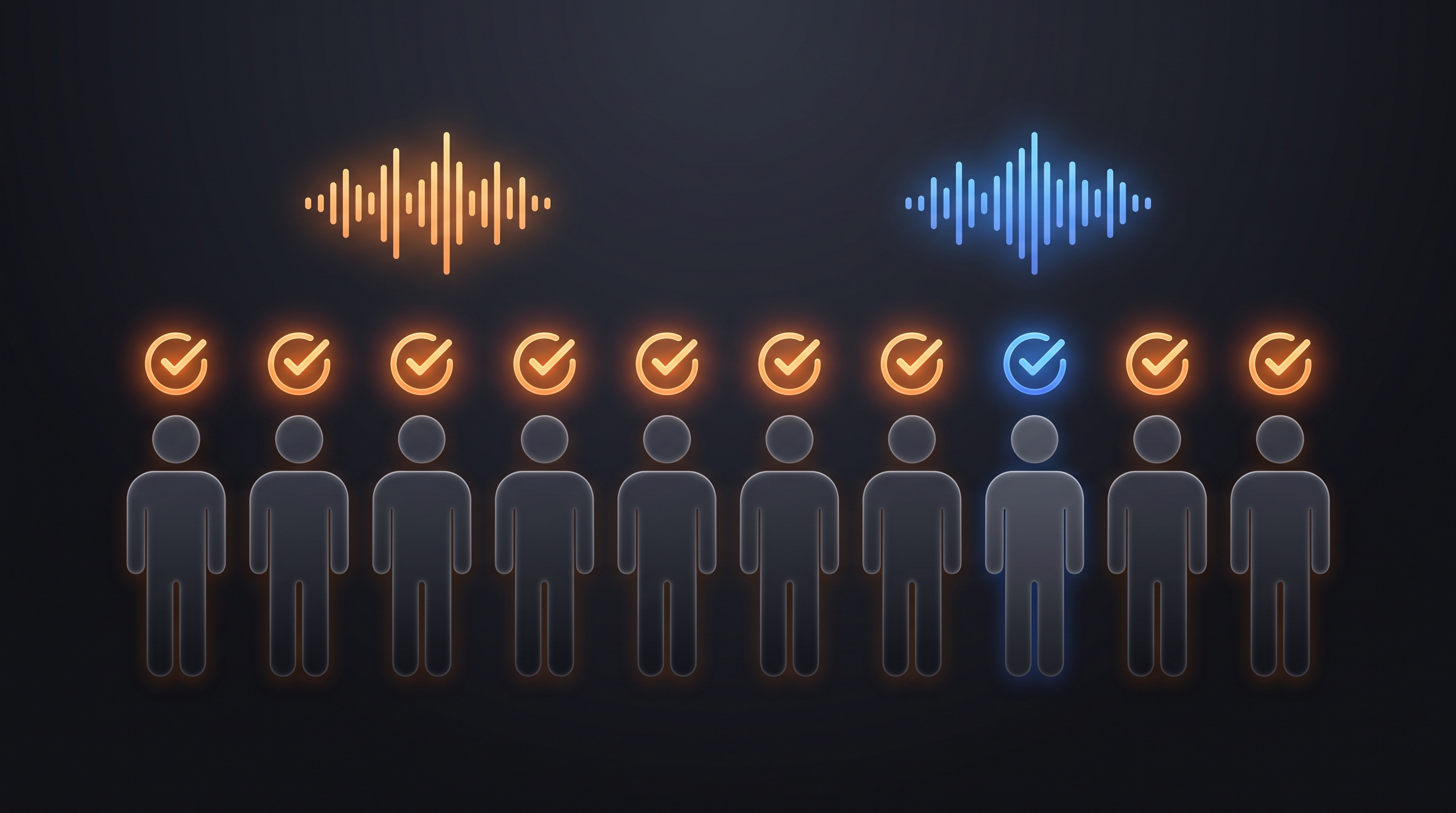
Nine out of ten picked the same one as the more natural, more human recording. Not by a slim margin either — when I asked them to describe what tipped them off, the answers converged fast: one voice had pauses that landed exactly where a real person would breathe, subtle shifts in emphasis on the words that actually mattered in the sentence, and a texture that just sounded like a person talking. The other voice was clean, professional, and clearly competent — but a little too even. A little too "produced."
That gap isn't a fluke of my specific script, and it isn't just my listeners' opinion. It's the single most consistent finding across every independent 2026 comparison of these two platforms I could find — nine separate tests, run by nine separate reviewers, using different scripts, different listeners, and different scoring methods, and every single one landed in the same place on raw voice quality. One reviewer scored it 9.4 out of 10 versus 7.8. Another scored it 8.5 versus 6.8. A third put ElevenLabs at 4.6 out of 5 against Murf's 4.3. The specific numbers move around a little. The winner never does.
But — and this is the part that most comparisons rush past on their way to declaring a champion — voice quality isn't the only variable that decides which tool is actually right for you. This is the full, honest breakdown: naturalness and emotional range, what commercial licensing and voice cloning actually cost at each tier, and the specific, real workflow reasons a team might deliberately choose the "worse-sounding" tool anyway.
The Simplest Way to Understand the Difference
Before the test results, the one framing that makes everything else in this comparison make sense: ElevenLabs is a voice AI platform. Murf is a voiceover production studio that happens to use AI voices. Those are not the same category of product, even though they get compared to each other constantly.
ElevenLabs' entire identity is built around the realism of the underlying voice model — Eleven Multilingual v2 and the newer Eleven v3 are trained on massive amounts of human speech and specifically engineered to handle emotional nuance: whispers, excitement, sarcasm, a deliberate pause for emphasis, subtle shifts in tone mid-sentence. It's a tool built by people who cared most about closing the gap between "AI voice" and "human voice."
Murf's identity is built around the finished production, not just the voice underneath it. It ships with a built-in video editor, slide-sync tools, emphasis and pause controls you adjust manually rather than relying on the model to infer, team collaboration features, and a workflow explicitly designed for someone assembling a corporate training module or a presentation voiceover from scratch — not someone who already has a script and just needs the most convincing voice reading it.
Once you hold that distinction in mind, the results of every test below stop looking contradictory and start looking exactly like what you'd expect from two tools optimized for genuinely different jobs.
Round 1: Raw Voice Quality and Naturalness — ElevenLabs Wins, Clearly
I want to be precise about how one-sided this round actually is across independent testing, because it's rare to see this much agreement in a head-to-head comparison.
One reviewer who ran both platforms on a 500-word AI-explainer script scored ElevenLabs 9.4 out of 10 on voice realism against Murf's 7.8, noting the difference was most noticeable in emotional delivery and pauses. Another, testing across 40-plus hours of production work spanning e-learning modules, marketing videos, and podcast intros, concluded flatly: "ElevenLabs produces more realistic voices... side-by-side, ElevenLabs output sounds like a human recording." A third scored the category 8.5 to 6.8 and stated it directly: "ElevenLabs sounds better... every competitor in the AI voice generation category is defined by how close it gets to ElevenLabs, not the other way around." G2's aggregated user review data, while scoring Murf slightly higher on overall satisfaction (4.7 vs 4.5 — more on why below), still credits ElevenLabs specifically for the realism of its underlying voice generation in the qualitative breakdown.
My own listener test lines up with all of it. What people actually notice, when they can't see which brand name is attached to which clip, is pacing and pause placement. ElevenLabs' model breathes where a real speaker would breathe. It leans into stress on the specific word in a sentence that a human narrator would naturally emphasize, without you telling it to. Murf's voices are polished, clear, and completely usable — genuinely good, especially in English — but multiple trained-ear listeners across independent tests describe them as having a slightly more "produced" quality, and that's exactly the texture my own panel picked up on without any coaching from me.
This isn't close. It's the one point in this entire comparison where I'd tell you not to overthink it: if the deciding factor for your project is "which voice sounds more like an actual human," ElevenLabs wins, and every test I could find agrees.
Round 1 winner: ElevenLabs, decisively.
Round 2: Pricing and Commercial Licensing — Also ElevenLabs, At Every Comparable Tier
This is the round that surprises people, because the intuition is usually "the better-sounding tool must cost more." It doesn't.
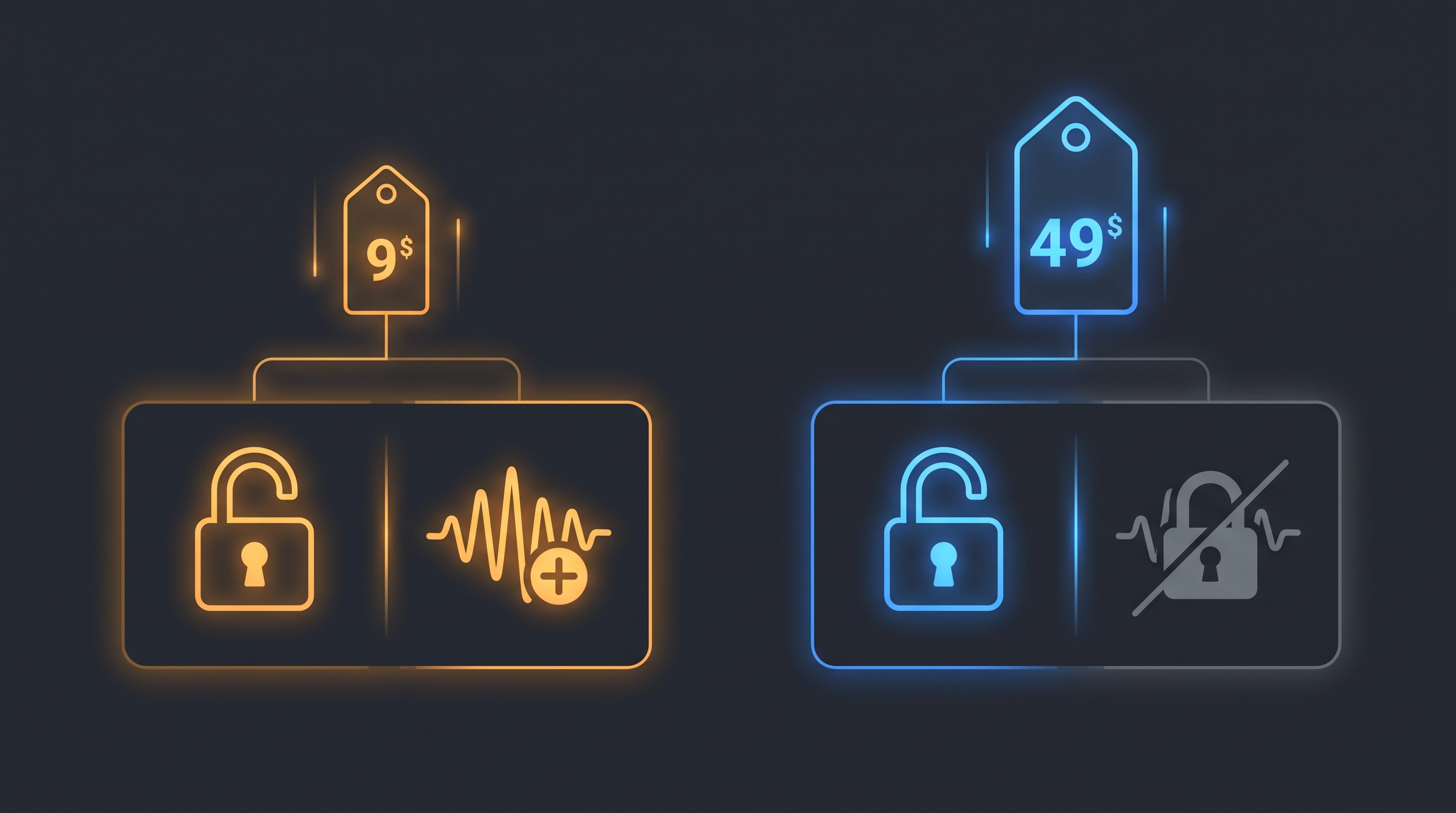
ElevenLabs' Starter plan runs $5 to $6 a month and includes commercial rights and Instant Voice Cloning from a 30-second audio sample right out of the gate. The free tier includes 10,000 credits a month with no credit card required. Its Creator tier expanded meaningfully in early 2026 — from roughly 110,000 to about 440,000 characters per month on the Flash and Turbo models — which materially changes the calculation for anyone doing moderate monthly volume, since that's a four-fold increase in usable output at the same price point.
Murf's free plan gives you 10 minutes of voice generation a month, but that free tier excludes both downloads and commercial rights entirely — it's a demo, not a usable starting tier. Murf's actual entry point with commercial rights is the Creator plan at $29/month billed monthly (roughly $19/month billed annually), and voice cloning is not included at that tier at all. Cloning on Murf is either a beta feature gated to higher plans or restricted entirely to Enterprise custom pricing, depending on which 2026 source you check — but every independent comparison I found agrees on the core point: there is no accessible, self-serve voice cloning on Murf's Creator or Business plans the way there is on ElevenLabs from its very first paid tier.
Put the two side by side at the entry level and it's not close: ElevenLabs Starter at $5 to $6/month gets you commercial rights and cloning. Murf Creator at $19 to $29/month gets you commercial rights and no cloning. At every comparable tier across both platforms, ElevenLabs is the cheaper option — a genuinely unusual outcome for the product that also happens to sound better.
Round 2 winner: ElevenLabs, on both raw price and what you actually get for it.
Round 3: Where Murf Actually Wins — Production Workflow and Predictability
Here's where the comparison stops being a rout and becomes genuinely useful, because Murf's advantages are real, specific, and matter enormously to a particular kind of buyer.
Murf includes a full built-in video editor with slide and video sync, letting you attach narration directly to a presentation or training video without exporting audio to a separate editing tool. It gives you manual emphasis, pause, and pitch controls you can adjust by hand rather than trusting the model to infer correctly — which sounds like a downgrade until you're the person who needs the third sentence of slide 14 to land on a specific word every single time, with zero variance, across fifty modules. It offers 200-plus distinct voices, styles, and tones in its library, and it holds SOC 2 and HIPAA certifications, which matters directly for regulated-industry buyers who need that documentation to clear a procurement review — a credential ElevenLabs doesn't carry at the same accessible tier.
That last point connects to the operational problem that one 2026 reviewer put more precisely than anyone else I found: ElevenLabs' credit-based billing and non-deterministic output are genuine friction for a specific team profile — an L&D department producing fifty corporate training modules a quarter on a fixed budget. Non-deterministic means the same script can render slightly differently each time you generate it; for a single marketing voiceover, that's a non-issue, you just pick the take you like. For fifty modules that all need to match a consistent house style, consistent pacing, and a predictable per-module cost your finance team can budget against months in advance, that same non-determinism becomes a real production headache. Murf's studio-style workflow with manual controls and flat, predictable billing exists precisely to solve that specific problem, and for teams who actually have it, this isn't a consolation prize — it's the correct tool.
Round 3 winner: Murf, specifically for corporate L&D, e-learning production teams, and any regulated-industry buyer who needs SOC 2/HIPAA documentation and predictable per-module billing more than they need the single most human-sounding voice available.
The Verdict, By What You're Actually Building
Choose ElevenLabs if:
Voice quality and emotional realism are the point — narration, podcasts, character voices, audiobooks, marketing content where a robotic-sounding voice actively damages trust
You need accessible voice cloning without an enterprise sales call — Instant Voice Cloning is available from the $5–6/month Starter tier
Budget matters and you want the better-sounding option at the lower price, which is the unusual but consistent finding across every comparable tier
You're producing content in volume across the newly expanded Creator tier's 440,000 monthly characters
Choose Murf AI if:
You're producing corporate training, e-learning modules, or slide-synced presentation voiceovers at scale, where a built-in video editor and manual pacing controls save real production time
You need SOC 2 or HIPAA compliance documentation for a regulated-industry procurement process
Predictable, flat monthly billing for a known volume of modules matters more than access to the single most expressive voice model available
Your team is non-technical and wants an approachable studio interface with less of a learning curve than a raw voice-AI platform
For a deeper look at ElevenLabs' complete feature set — Voice Cloning tiers, ElevenAgents, Studio Sound, the Voice Marketplace, and its full 2026 pricing breakdown — our full ElevenLabs review covers the platform in much greater depth than this comparison alone.
According to G2's aggregated comparison data for both platforms (https://www.g2.com/compare/elevenlabsio-vs-murf-ai), user reviewers consistently praise Murf specifically for its user-friendliness and intuitive interface, while ElevenLabs reviews concentrate their praise on voice realism and cloning capability — independent confirmation that this comparison genuinely splits along the "raw quality versus production workflow" line rather than one tool simply outperforming the other across every dimension.
What I'd Actually Do
If I needed a voice for anything where the listener's trust in what they're hearing matters — a podcast, a brand narration, a character in a game or an animated video, an audiobook — I would start with ElevenLabs' free tier immediately. The quality gap is real enough, and consistent enough across independent testing, that there's no reason to pay for the "produced" sound when the more human one costs less at every tier that matters.
If I were running an L&D department producing dozens of training modules a quarter on a departmental budget that needs to be predictable six months out, I would test Murf's free 10-minute tier specifically for the slide-sync and manual pacing workflow, and I would not let the raw voice-quality gap talk me out of it — because for that specific job, consistency and workflow speed genuinely matter more than the last 10% of vocal realism.
The mistake to avoid: picking a platform purely off a single voice-quality comparison video without checking which of these two jobs you actually have. Every test agrees ElevenLabs sounds better. Almost none of them are honest about the fact that "sounds better" and "is the right tool for your specific production workflow" are two different questions with two different answers.
Frequently Asked Questions
Is ElevenLabs or Murf AI better for voice quality? ElevenLabs, decisively and consistently across independent 2026 testing. Scores range from 9.4/10 vs 7.8/10 to 8.5/10 vs 6.8/10 across different reviewers, and blind listener tests consistently identify ElevenLabs' output as more natural due to more accurate pause placement and emotional inflection.
Which is cheaper, ElevenLabs or Murf AI? ElevenLabs, at every comparable tier. Its Starter plan ($5–6/month) includes commercial rights and voice cloning. Murf's comparable Creator plan ($19–29/month depending on billing cycle) includes commercial rights but no accessible voice cloning — cloning is gated to Enterprise custom pricing or a limited beta on higher tiers.
Does Murf AI offer voice cloning? Only in a limited capacity. Voice cloning is not available on Murf's Creator or Business plans; it is either a beta feature on higher tiers or restricted entirely to the custom-priced Enterprise plan. ElevenLabs offers Instant Voice Cloning from a 30-second sample starting on its lowest paid tier.
Why would anyone choose Murf AI if ElevenLabs sounds better? Workflow and predictability. Murf includes a built-in video editor with slide sync, manual emphasis and pause controls, SOC 2 and HIPAA compliance documentation, and flat, predictable billing — all specifically valuable for corporate L&D and e-learning teams producing high-volume training content on a fixed budget, where ElevenLabs' credit-based, non-deterministic output can create real operational friction.
What changed with ElevenLabs' pricing in 2026? The Creator plan's monthly character allowance on Flash/Turbo models expanded from roughly 110,000 to approximately 440,000 characters in early 2026 — a four-fold increase at the same price point, meaningfully improving the value proposition for moderate-to-high-volume users.
Do both platforms offer a free plan? Yes, but they differ significantly. ElevenLabs' free tier includes 10,000 credits/month with no credit card required. Murf's free tier offers 10 minutes of generation per month but excludes both downloads and commercial rights, functioning more as a demo than a usable starting tier.

Founder, Axionova · AI Tools Strategist
Ashir writes independent, hands-on reviews of AI tools and shares strategies for creators, marketers, and entrepreneurs. Every review is grounded in real usage — no paid placements, no fluff. Read our editorial standards.
AI Insights Weekly
One curated email a week: sharp AI insights, tool reviews, and strategies.
Have thoughts on this?
Contact us or share this article on social media — we'd love to hear what resonated with you.