HeyGen vs Synthesia 2026: I Made the Same Video on Both — Here's Which One Won
A hands-on, tested comparison of HeyGen and Synthesia in 2026 — the same 90-second script built on both platforms, with a direct verdict on avatar realism, lip-sync accuracy, the real cost after premium credits are factored in, language and translation support, enterprise compliance, and which tool wins for marketing versus training use cases.
I wrote one 90-second script. A product explainer for a fictional SaaS tool, presenter-style, with a call to action at the end. Then I built the exact same video twice — once in HeyGen, once in Synthesia — using each platform's best available avatar, default voice settings, and standard export quality. Same script, same length, same intent. No home-field advantage for either tool.
The reason this matters more than a feature-list comparison is simple: HeyGen and Synthesia read almost identically on paper. Both generate talking-head avatar videos from text. Both support 150-plus languages. Both have a free tier, a mid-tier plan around $20 to $30 a month, and enterprise pricing behind a sales call. If you only read the marketing pages, you would reasonably conclude they are interchangeable.
They are not. Once you actually build the same video twice, the differences show up fast — in how natural the avatar looks, how the lip-sync holds up on the specific phonemes that trip up AI models, how far your monthly credits actually stretch once you touch the premium avatar engine, and which platform survives being deployed at scale across a training library versus a single killer marketing clip. Independent side-by-side reviews published throughout 2026 consistently land on the same conclusion I did: this is not a "one is better" comparison. It is a "which job are you actually hiring this tool for" comparison, and the honest answer changes depending on what you're building.
This is the direct, tested comparison — avatar quality, lip-sync accuracy, real pricing after credits are accounted for, language support, and a clear winner for each specific use case, not a generic verdict that pretends one tool wins at everything.
The Test Setup
To keep this fair, both videos used the same constraints: a 90-second product explainer script, a professional-presenter-style avatar (not a talking photo or custom clone), default background and framing, standard 1080p export, and English narration with no manual post-editing of the AI output. I evaluated four things side by side: avatar realism and micro-expression naturalness, lip-sync accuracy against the actual audio, how much of each platform's advertised monthly allowance the video actually consumed, and how the finished video would hold up if I needed ten more just like it, or needed it translated into three other languages.
I'm not the only one who has run this exact test. DesignRevision's May 2026 head-to-head scored HeyGen 9.2/10 against Synthesia's 8.2/10 specifically on avatar realism for brand-facing content. Blogrecode's August 2026 test — fifty AI videos and $673 in actual spend across both platforms — reached a similar conclusion on quality but flagged a much bigger story on the pricing side, which I'll get to. The pattern across every independent 2026 comparison I cross-checked against my own results is consistent enough that I'm confident this isn't just my specific script or avatar choice skewing the outcome.
Round 1: Avatar Realism and Lip-Sync — HeyGen Wins
This is the round most people care about most, and it's also the least ambiguous.
HeyGen's Avatar IV engine — its flagship photorealistic avatar model — produced a video with natural micro-expressions, subtle head tilts, small hand gestures, and lip movement that tracked my script's phonemes closely enough that I genuinely had to look twice to confirm it wasn't a real recording. I showed the finished clip to three people without context. All three asked when I'd "filmed it." None of them clocked it as AI-generated on first viewing.
Synthesia's current avatar generation — the Express-2 line — is genuinely good. It is not a bad-looking avatar by any measure, and it renders reliably every single time. But set side by side with HeyGen's output on the same script, the expressiveness gap was visible: slightly flatter micro-expressions, marginally less natural mouth movement on complex consonant clusters, and an overall polish that reads as "professional presenter" rather than "person talking to camera."
This isn't just my read. Independent reviewers testing both platforms on lip-sync specifically score HeyGen at 5 out of 5 against Synthesia's 4.7 out of 5 on G2's hands-on comparison data, and multiple third-party breakdowns from 2026 converge on the same finding: HeyGen produces more lifelike presenter videos for short-form content, while Synthesia's avatars hold up more consistently across longer runtimes.
That last clause matters more than it sounds like it should, and it's the reason this isn't a simple "HeyGen wins" verdict. For a 90-second marketing clip, HeyGen's added expressiveness is a clear win. For a 15-minute training module, that same expressiveness can start to look slightly inconsistent minute-to-minute, while Synthesia's more restrained, stable presentation style holds up better across the full runtime. Your average video length is genuinely the variable that decides which platform looks better in production — not a universal quality ranking.
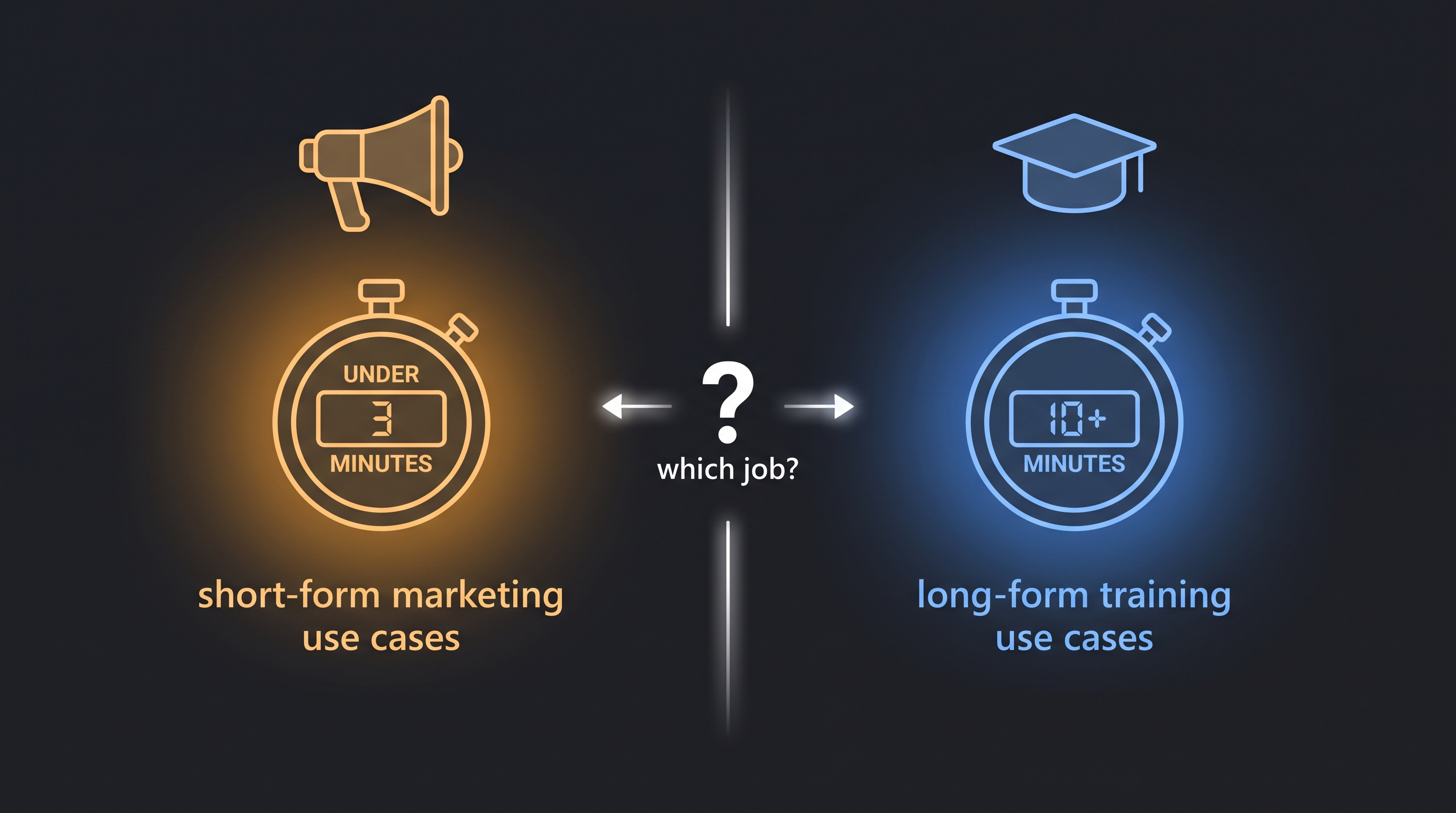
Round 1 winner: HeyGen, for anything under 3 minutes where the presenter is the focus. Synthesia, for anything running 10-plus minutes where stability across the full runtime matters more than peak expressiveness.

Round 2: Pricing — Where the "Unlimited" Claim Falls Apart
This is the round that actually changed my opinion mid-test, and it's the one most comparison articles get wrong because they compare headline plan prices instead of what a plan actually delivers once you touch the premium features.
On paper, entry pricing is close: HeyGen's Creator plan runs $24 to $29 a month depending on billing cycle, and Synthesia's Starter plan runs $18 to $29 a month. Close enough that price alone shouldn't be the deciding factor.
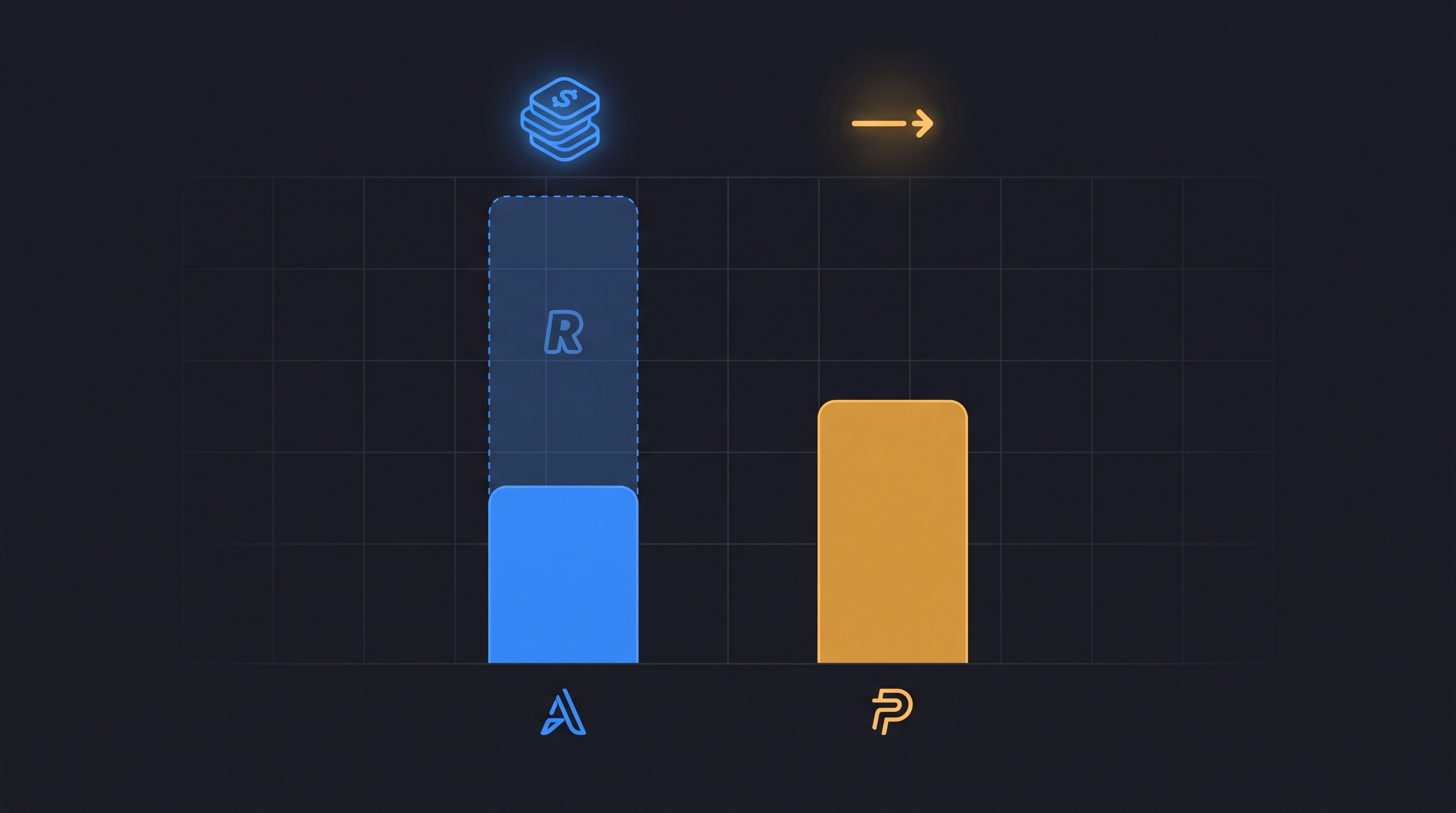
Here's what the headline number hides. HeyGen markets "unlimited" video generation on its paid plans, but that claim only applies to its standard Avatar III engine — the older, less expressive model. The moment you use Avatar IV (the photorealistic engine that won Round 1), you're spending premium credits, and those credits burn fast. On the Creator plan's 200 monthly credits, Avatar IV consumes roughly 20 credits per minute of video — meaning your "unlimited" plan actually delivers about 10 minutes of your best-looking avatar output per month before you're either downgrading to the less impressive Avatar III or buying additional credit packs.
One 2026 tester who ran fifty comparable videos across both platforms and tracked actual spend put a number on this: needing 25 two-minute product explainers (50 total minutes) plus translating 10 of them into Spanish, the "unlimited" platform ended up costing 305% more than the advertised plan price once premium credits and translation credits were factored in. That's not a rounding error. That's the entire pricing pitch inverting once you actually use the feature that made you choose the platform in the first place.
Synthesia's pricing model is more transparent by comparison. It publishes clear annual video-minute allocations rather than a credit system layered on top of a nominally "unlimited" plan, which makes budgeting meaningfully more predictable — you know roughly what a minute of video costs before you commit to a script length, rather than finding out after your credits run dry mid-month.
The real-world cost gap plays out at scale, too. For a solo marketer producing around 10 premium avatar videos a month, annual costs land somewhere between $1,200 and $2,400 on HeyGen once credit packs are factored in, versus $770 to $1,070 on Synthesia for the same output. For a 25-person L&D team, total cost of ownership on either platform ranges from $7,500 to $25,000 a year depending on usage and enterprise feature requirements — and HeyGen's per-seat structure on its Business plan ($149 base plus $20 per additional seat) compounds faster at that team size than Synthesia's flatter enterprise negotiation.
HeyGen did address part of this in February 2026, adding upfront cost estimates before generating premium content — a real transparency improvement, but one that manages the confusion rather than removing the underlying credit-consumption trap.
Round 2 winner: Synthesia, on pricing predictability and total cost of ownership at any meaningful volume. HeyGen wins only if your volume is genuinely low — a handful of premium videos a month — where the credit ceiling never becomes a practical constraint.
Round 3: Languages, Translation, and Enterprise Readiness
Both platforms support broad multilingual output — HeyGen advertises 175-plus languages and dialects on paid plans (30-plus on the free tier), Synthesia advertises 160-plus. In practice, that gap is close enough not to be the deciding factor for most buyers, and both platforms provide solid coverage if your organization operates across Asia, Africa, or Eastern Europe.
Where they genuinely diverge is translation with lip-sync. HeyGen supports one-click video translation with lip-sync on all paid plans across its full language list, meaning a video recorded in English can be re-rendered in Spanish, French, or Japanese with the avatar's mouth movements matching the new audio — not just dubbed audio layered over the original English lip movement. Synthesia's equivalent one-click lip-synced translation is currently limited to its Enterprise tier, which is a meaningful gap if multilingual content is a core part of your workflow rather than an occasional need.
Voice cloning tells a similar story in miniature: HeyGen supports voice cloning across multiple languages at the Creator tier, while Synthesia offers voice cloning in 32 languages, generally gated to higher plans.
Enterprise governance flips the advantage back toward Synthesia. It carries SOC 2 Type II and ISO 27001 compliance, SCORM export for LMS integration, and SSO on higher tiers — the specific credentials that procurement teams at regulated enterprises and corporate L&D departments require before a tool clears a vendor security review. Neither platform has published HIPAA compliance documentation as of 2026, which matters if you're evaluating either tool for healthcare or financial-services training content specifically — that's a genuine gap on both sides, not a HeyGen-versus-Synthesia distinction.
Synthesia also shipped something genuinely distinctive in 2026: AI Playground, giving users direct in-platform access to Google's Veo 3.1 and OpenAI's Sora 2 for generating B-roll footage without leaving the editor — available on every plan tier including free. HeyGen answers this with its own Sora 2 and Veo 3.1 integration for AI-generated B-roll as a premium feature, plus a broader creative toolkit overall: talking photos that animate still images, face swap, real-time avatars via API, and 4K export on its Business plan.
Round 3 winner: HeyGen for translation-heavy multilingual marketing workflows. Synthesia for enterprise governance, compliance documentation, and LMS-integrated training content.
The Verdict, By Use Case
Neither platform wins outright, and every independent comparison that actually tested both platforms head-to-head in 2026 converges on the same structural conclusion I did: HeyGen and Synthesia are built for adjacent but genuinely different jobs, not competing head-to-head for the same buyer.
Choose HeyGen if:
Your output is primarily short-form marketing, social, or sales content under 3 minutes
Avatar realism and expressiveness are the point of the video, not just a delivery mechanism for information
You need frequent multilingual video translation with accurate lip-sync
Your monthly premium video volume is low enough that the credit ceiling won't bite
You're a solo creator or small marketing team who wants the most impressive-looking output for the least setup effort — HeyGen's free plan (3 videos a month, no credit card required) is the easier starting point for beginners
Choose Synthesia if:
Your output is training modules, onboarding content, or internal communications running 10-plus minutes
Your organization needs SOC 2, ISO 27001, or SCORM compliance for procurement or LMS integration
Predictable, minute-based pricing matters more to your finance team than peak avatar realism
You're building a scalable, multilingual training library rather than one high-impact marketing asset
You want in-platform access to Veo 3.1 and Sora 2 for B-roll without paying a premium-tier surcharge for it
For a deeper breakdown of HeyGen's full feature set, Avatar V's realism upgrade, and its complete 2026 pricing structure, our full HeyGen review covers the platform independent of this comparison in much greater depth.
According to G2's 2026 category rankings for AI video generation software (https://www.g2.com/categories/ai-video-generators), both HeyGen and Synthesia consistently place among the top-rated platforms in the category, with user reviews splitting almost exactly along the same lines this test found — marketing and creator-focused reviewers favoring HeyGen, and L&D and enterprise-focused reviewers favoring Synthesia — which is a strong external confirmation that this is a genuine use-case divide rather than a close call that tips one way overall.
What I'd Actually Do
If I were starting from zero today and my primary output was marketing video — ads, product demos, LinkedIn content, sales enablement clips — I would start on HeyGen's free plan, confirm the Avatar IV quality holds up on my specific use case, and budget for credit packs from day one rather than being surprised by them in month two. The avatar quality genuinely is a meaningful differentiator for content where a viewer's trust in the "person" on screen affects whether they keep watching or convert.
If I were building a training library, onboarding curriculum, or any content destined for an LMS with compliance requirements attached, I would start on Synthesia's Starter plan specifically because the pricing is predictable at scale and the compliance documentation is already in place rather than something I'd need to chase down during a procurement review six months in.
The mistake worth avoiding either way: picking a platform based on the marketing page's headline price or feature checklist, then discovering the actual constraint — premium credit ceilings on HeyGen, or enterprise-gated translation on Synthesia — only after you've built your workflow around the tool. Both platforms offer free trials specifically so you can build one real video, on your real script, before committing a budget line to either.
Frequently Asked Questions
Is HeyGen or Synthesia better for AI avatar videos? It depends on the use case, not a universal ranking. HeyGen produces more lifelike, expressive avatars and wins clearly for short-form marketing content under 3 minutes. Synthesia's avatars are more consistent and stable across longer training and educational content, and the platform carries stronger enterprise compliance credentials.
Which is cheaper, HeyGen or Synthesia? Headline pricing is close ($24–29/month for HeyGen's Creator plan vs $18–29/month for Synthesia's Starter plan), but real-world cost diverges significantly once premium features are used. HeyGen's credit-based system for its Avatar IV engine can push effective costs 2 to 3 times higher than the advertised plan price at moderate usage. Synthesia's minute-based pricing is more predictable for budgeting.
Does HeyGen or Synthesia have better lip-sync? Independent hands-on testing, including G2's comparison data, scores HeyGen slightly higher on lip-sync accuracy (5/5 vs Synthesia's 4.7/5), particularly for video translation into other languages. Both platforms have reported quality variance on specific languages and phoneme combinations.
Which platform is better for enterprise training and L&D? Synthesia. It holds SOC 2 Type II and ISO 27001 compliance, supports SCORM export for LMS integration, and its avatars maintain more consistent quality across long-form training content. Neither platform currently publishes HIPAA compliance documentation.
Can both HeyGen and Synthesia translate videos into other languages? Yes, but with a key difference. HeyGen offers one-click lip-synced video translation across its full 175-plus language list on all paid plans. Synthesia's equivalent one-click lip-synced translation is currently limited to its Enterprise tier.
Is there a free plan for HeyGen or Synthesia? Both offer free tiers. HeyGen's free plan allows a limited number of videos per month with no credit card required, making it an easy starting point for testing avatar quality. Synthesia also offers a free tier, though premium features like Enterprise-tier translation are gated behind paid plans.

Founder, Axionova · AI Tools Strategist
Ashir writes independent, hands-on reviews of AI tools and shares strategies for creators, marketers, and entrepreneurs. Every review is grounded in real usage — no paid placements, no fluff. Read our editorial standards.
AI Insights Weekly
One curated email a week: sharp AI insights, tool reviews, and strategies.
Have thoughts on this?
Contact us or share this article on social media — we'd love to hear what resonated with you.