How to Make Money With Lovable in 2026: 7 Proven Business Models for Non-Technical Builders
A complete guide to making money with Lovable in 2026 — covering all 7 business models including freelancing, micro-SaaS, templates, agency white-labeling, and MVP building, with realistic income ranges, step-by-step execution, and honest limitations.
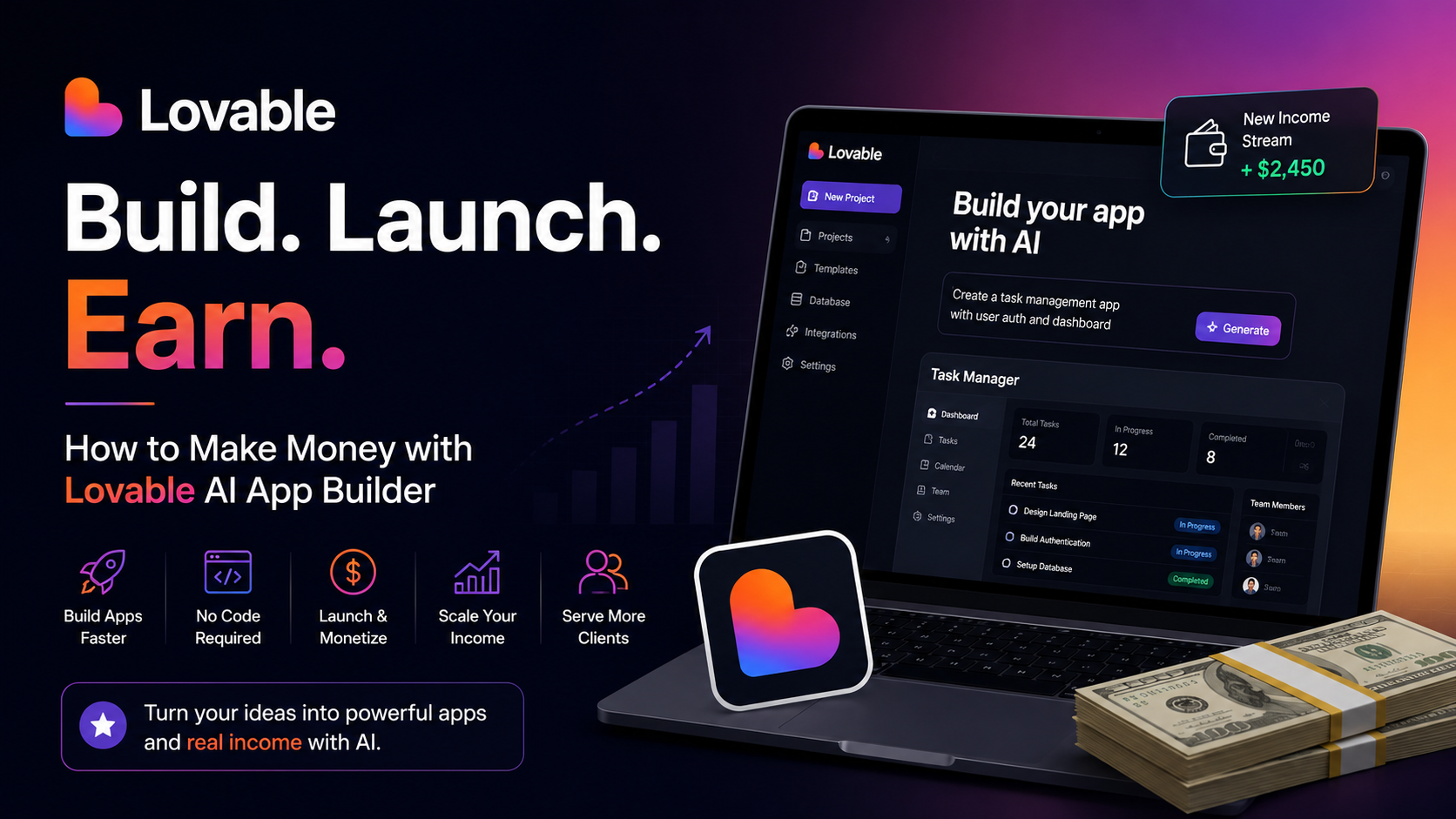
A few years ago, turning a software idea into a real, working product required one of two things: either you knew how to write code, or you had the budget to hire someone who did. A basic MVP from a traditional development agency ran anywhere from $10,000 to $50,000. A freelance developer charging $100 per hour could burn through five figures before you even had something worth showing to potential customers.
Lovable changed that equation entirely.
Lovable is an AI-powered full-stack app builder that takes natural language descriptions and turns them into working web applications — complete with frontend, backend, database, authentication, and deployment — without requiring a single line of code from the person building it. Since launching and growing to $500 million in annualized revenue by May 2026, Lovable has become the dominant browser-based AI app builder and one of the fastest-growing software products in history.
More importantly for the people reading this: Lovable is not just a tool for building things. It is a commercial opportunity — one that non-technical founders, freelancers, agency operators, content creators, and solopreneurs are using to generate real income across multiple business models right now.
This guide covers every legitimate way to make money with Lovable in 2026 — the realistic earnings, the exact steps, and the strategic mistakes to avoid so you do not spend three months going nowhere before finding what works.
What Is Lovable and Why Does It Matter?
Lovable was originally known as GPT Engineer, built by Anton Osika in Sweden. It rebranded and relaunched as Lovable in 2024 with a mission to make app development accessible to anyone with an idea. The growth that followed was extraordinary — the platform reached $50 million in annual recurring revenue within 12 months of launch and hit $500 million ARR by mid-2026.
The technical foundation is impressive for a no-code product. Lovable generates clean React and Tailwind CSS applications with a Supabase backend providing authentication, database, file storage, and API functionality. Users can connect Stripe for payments, sync their project to GitHub for full code ownership, and deploy to a custom domain — all from within a single dashboard driven by natural language prompts.
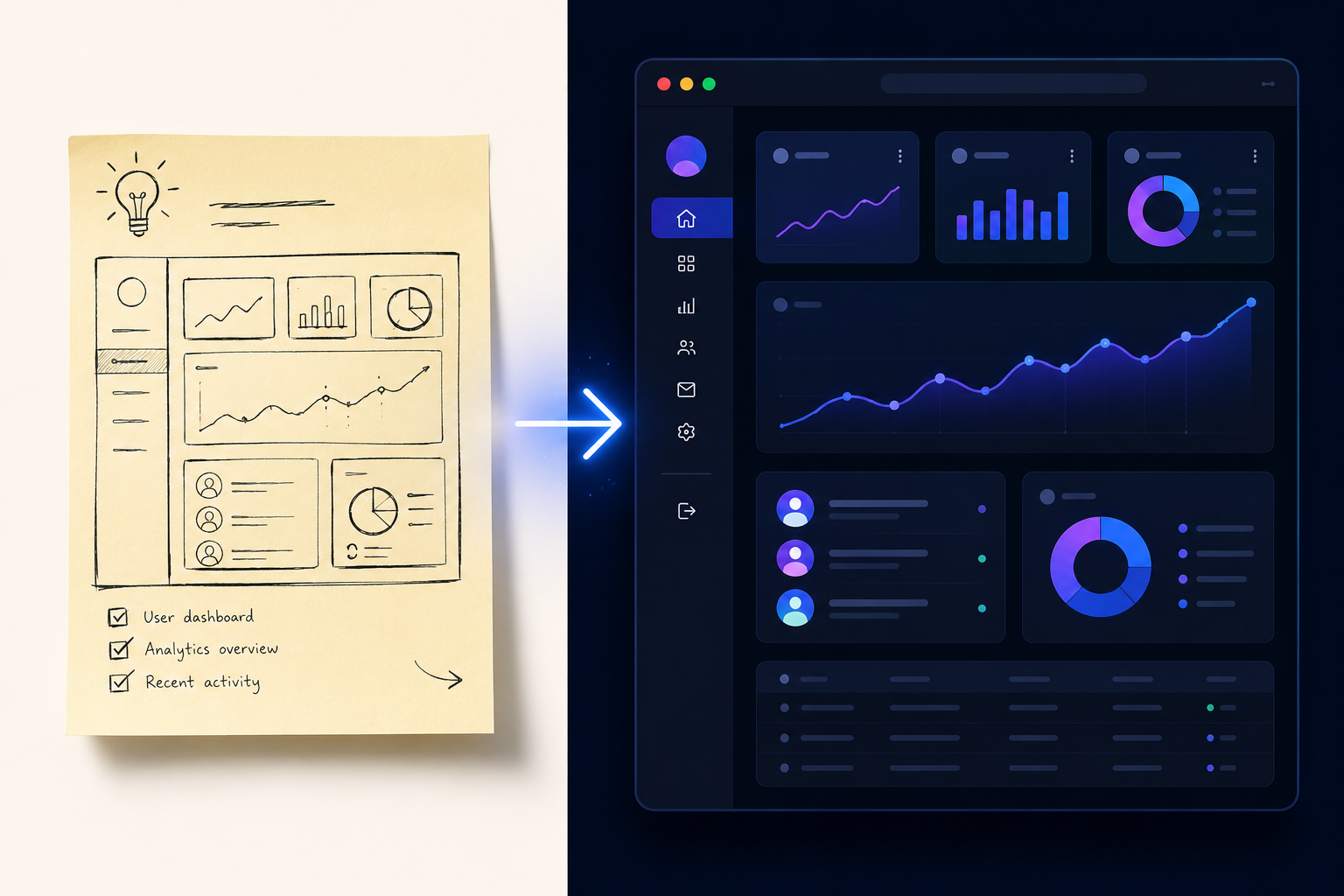
The platform also offers a visual editor that works like a simplified version of Figma — allowing users to click on elements in the live app preview and make design adjustments directly without writing new prompts. A Draw-to-Build interface lets users sketch UI elements on a canvas and have AI convert them to production-ready code.
For non-technical users, the key implication is this: Lovable gives you the ability to build and ship software products that previously required $50,000 in development fees, for a monthly subscription starting at $25. That capability gap is what creates the commercial opportunities explored in this guide.
According to McKinsey's research on technology democratization, the most significant economic opportunities emerging from AI are those where previously gatekept capabilities — like software development — become accessible to people who previously lacked the technical skills or capital to participate. Lovable is a direct example of this shift in action.
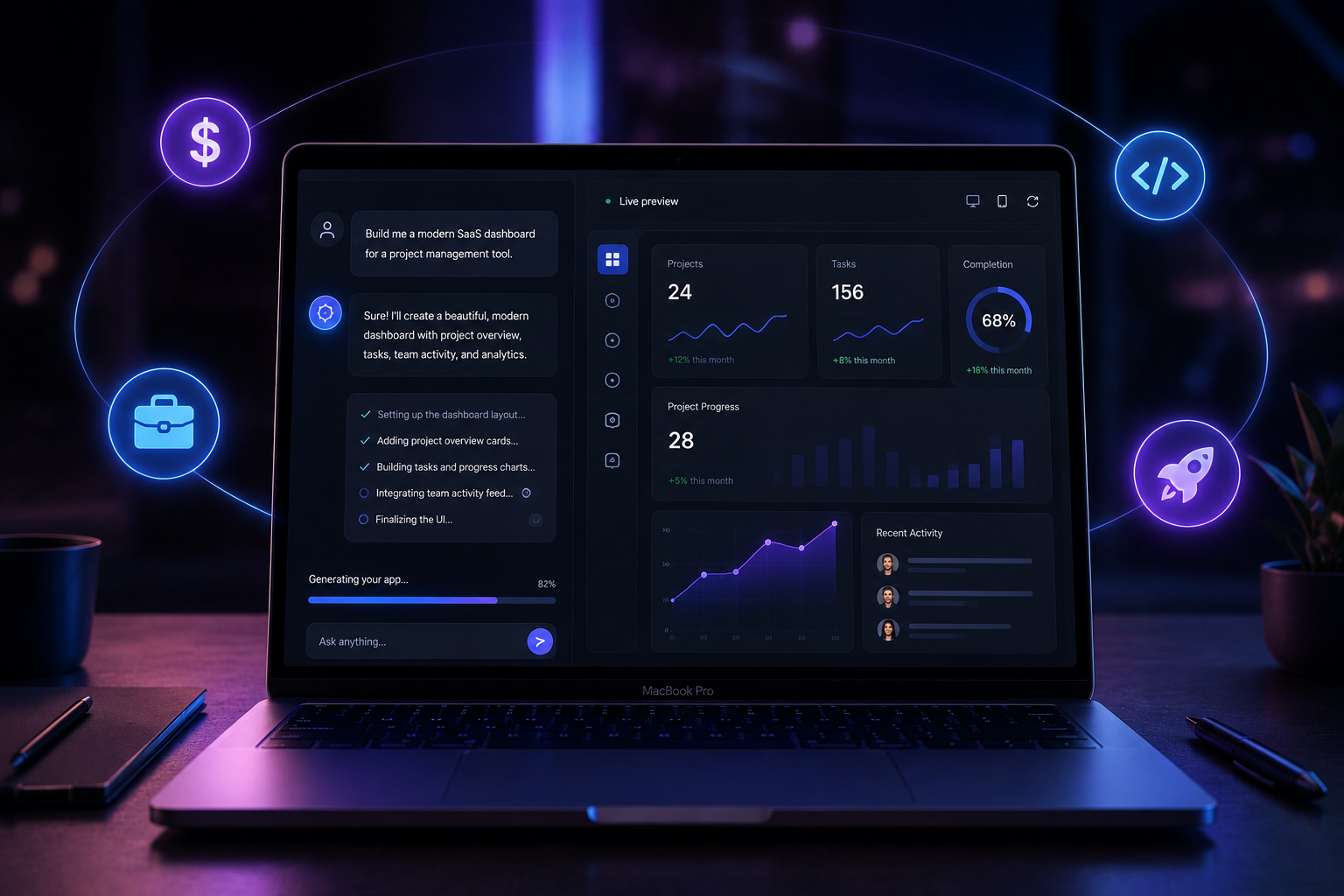
Who Is Making Money With Lovable Right Now?
Understanding who is successfully monetizing Lovable gives context for which model is realistically accessible based on your current situation.
The profiles earning real income in 2026 include:
Non-technical founders who had SaaS ideas for years but lacked the development resources to build them — now building and launching subscription products in weeks rather than years.
Freelancers and solopreneurs offering app-building services to small businesses, startups, and agencies who need digital products but cannot afford traditional development firms.
Agency white-label builders who build Lovable-powered products behind the scenes while agencies sell and deliver projects to their clients at traditional development prices.
Template creators who build polished, reusable application templates for common use cases and sell them on platforms like Gumroad, Lemon Squeezy, and their own stores.
Content creators and educators who build audiences around Lovable tutorials and AI development content, monetizing through affiliate commissions, course sales, and sponsorships.
The realistic income range across these models: $500 to $2,000 monthly for beginners in their first 3 to 6 months, $2,000 to $10,000 monthly for established service providers and template sellers, and $10,000 or more for those who have built SaaS products, scaled agencies, or combined multiple income streams.
The 7 Business Models for Making Money With Lovable
Business Model 1: Freelance App Development Services
This is the fastest path to income for most people starting with Lovable, and it has the highest success rate of any monetization model because it requires no audience, no product, and no upfront investment beyond the Lovable subscription.
The model is simple: businesses need digital products they cannot build themselves. A booking system for a dental practice. A client portal for a consulting firm. A lead capture dashboard for a real estate agent. An inventory tracker for a retail store. These are all buildable in Lovable in hours to days, and they are the kind of projects small businesses routinely pay $2,000 to $8,000 for when they approach traditional developers.
With Lovable, a competent builder can deliver these projects in dramatically less time — which means higher effective hourly rates even when charging clients at the market rate rather than at a "Lovable discount."
The platforms where freelance Lovable work is most accessible in 2026: Upwork, Fiverr, and direct outreach on LinkedIn. Experienced freelancers report that Upwork posts new MVP-related project listings every few minutes — demand consistently outpaces supply for builders who can demonstrate shipping capability.
The tactic that wins significantly more jobs than generic applications: record a short Loom video addressing the client's specific brief before applying, or build a quick mockup of the requested feature before making contact. Freelancers who demonstrate work before selling it consistently report win rates well above the platform average.
Realistic income: $500 to $2,000 monthly for beginners working 10 to 20 hours per week. $3,000 to $8,000 per month with 2 to 4 completed client projects.
Who this works for: Anyone who can learn Lovable's interface, build polished demos, and communicate value clearly to non-technical clients. No prior coding experience required.
Business Model 2: Agency White-Label Building
This model is the highest-value version of freelance Lovable work, and it does not require you to do any sales whatsoever.
The structure: you become the behind-the-scenes builder for agencies and consultancies that sell digital projects to their clients but do not have in-house development capacity to deliver them. The agency sells the project at traditional development prices ($5,000 to $25,000 or more depending on scope). You build it in Lovable. The agency white-labels your work as their own. Everyone benefits.
One strong relationship with a well-positioned agency can generate $50,000 to $150,000 in annual project work from a single source — without you ever having to pitch a client directly. The agency does the sales. You do the building. The income compounds as the relationship deepens and the agency wins more projects knowing they have reliable delivery capacity.
Finding agency partnerships: reach out directly to web design and digital marketing agencies on LinkedIn who specialize in building websites for specific industries (dental, legal, real estate, hospitality). These agencies consistently need app-building capacity and are actively looking for reliable delivery partners.
Realistic income: £5,000 to £25,000 per project depending on scope. With consistent agency relationships, annual project work of £50,000 to £150,000 from a small number of relationships.
Business Model 3: Build and Sell Micro-SaaS Products
This is the model with the highest ceiling and the longest timeline. It is also the one most people overestimate their ability to execute quickly.
The model: identify a specific, painful problem that a defined audience of users will pay a monthly subscription to solve. Build the solution in Lovable. Launch it. Grow the subscriber base. The result is recurring revenue that compounds monthly without requiring you to trade time for money on every dollar earned.
The honest context that most guides skip: over 90% of SaaS products never reach $1,000 in monthly recurring revenue, according to benchmarking research from the SaaS community. The ones that do succeed almost always share common characteristics — they solve a specific, painful, validated problem for a defined audience rather than building a broad solution looking for a market.
The Lovable advantage for micro-SaaS: the platform can connect to Stripe for subscription payments, Supabase for user data and authentication, and deploy to a custom domain — meaning the technical foundation for a subscription business can be built in days rather than months. The execution speed reduces the cost of testing product ideas dramatically. A concept that would have cost $20,000 to validate with a traditional development agency can be built, shipped, and tested for real user response in a week.
Good micro-SaaS categories for Lovable-built products in 2026: client portals for specific industries (legal, healthcare, consulting), AI-powered proposal generators for service businesses, niche booking and scheduling tools, workflow automation dashboards, and content repurposing tools for specific platforms or formats.
According to the SaaS industry research from Bessemer Venture Partners, the most defensible SaaS businesses are built around deeply specific workflows in underserved verticals — exactly the category where Lovable-built tools can compete effectively because the niche is too small for enterprise software companies to address but large enough to support a profitable micro-business.
Realistic income: Most products take 6 to 18 months to reach $1,000 monthly recurring revenue. Successful products in well-validated niches reach $5,000 to $15,000 monthly recurring revenue within 2 years.
Who this works for: People willing to invest in a longer timeline in exchange for the compounding economics of subscription revenue. Requires genuine interest in a specific problem domain and willingness to do customer development before and after building.
Business Model 4: Sell Lovable Templates
Between custom client work and full SaaS products sits a genuinely semi-passive income model: building polished, reusable application templates for common use cases and selling them.
The structure: build a high-quality Lovable template — a CRM starter, a client portal, a project management dashboard, a booking system, an e-commerce storefront — document it well, and sell it on Gumroad, Lemon Squeezy, or your own website for $99 to $299.
Buyers are founders, freelancers, and small businesses who want the starting point of an existing build they can customize for their specific use — rather than paying for a fully custom build or starting from scratch themselves. Templates sell the same product indefinitely with no additional production cost per sale.
The path to meaningful template income requires catalog depth. Established template sellers with 10 to 15 products in their catalog typically earn $500 to $2,000 monthly in relatively passive income after 6 to 12 months of catalog building. Single templates rarely generate life-changing income on their own — the model compounds with volume.
The distribution channels that work best for Lovable templates: Gumroad (largest existing buyer community for digital products), Lemon Squeezy (strong for software and tools products), Twitter/X and LinkedIn (direct audience building for Lovable builders), and YouTube tutorials that demonstrate the template and link to the purchase page.
Gumroad's creator economy research consistently shows that creators who combine template sales with educational content — tutorials, case studies, walkthrough videos — significantly outperform those who rely on marketplace discovery alone. The content builds trust and drives traffic that converts at higher rates than cold marketplace browsing.
Realistic income: $500 to $2,000 monthly with 10 to 15 strong templates. Individual templates priced at $99 to $299 depending on complexity and completeness.
Who this works for: Builders who enjoy the creation process more than client management, and who are willing to invest in documentation and marketing content alongside template development.
Business Model 5: Build MVPs for Startups
The startup community is one of the most consistently active markets for Lovable-built products. Founders who need to validate product ideas before raising investment rounds or hiring engineering teams need functional prototypes fast — and Lovable delivers them faster and cheaper than any alternative.
A traditional MVP from a development agency costs $10,000 to $50,000 and takes 3 to 6 months. A Lovable-built MVP demonstrating the same core functionality can be ready in days to weeks, at a fraction of the cost. The gap between what a startup needs and what traditional development offers is exactly where Lovable builders can operate profitably.
The pricing model that works well for startup MVP work: fixed-scope packages rather than hourly billing. A clearly defined MVP scope — three core features, one user role, basic authentication, data persistence, custom domain deployment — priced at $2,000 to $5,000 as a fixed deliverable. The fixed scope protects your time and gives the founder a clear expectation of what they are buying.
Where to find startup MVP clients: AngelList, Y Combinator's founder forums, Product Hunt's Maker community, startup subreddits, and direct outreach to early-stage founders active on Twitter/X and LinkedIn. Indie Hackers is particularly valuable — a community specifically composed of founders validating product ideas, many of whom need MVP development help.
Realistic income: $2,000 to $5,000 per MVP project. Two to three projects per month is achievable with established client flow, producing $4,000 to $15,000 monthly at a development cost of $25 to $100 per month on Lovable.
Business Model 6: Content Creation and Education Around Lovable
If building applications is not your primary strength but explaining, teaching, and demonstrating them is — content creation around Lovable is a legitimate and growing income opportunity.
The core of this model: build an audience of people interested in Lovable, no-code development, and AI app building through YouTube tutorials, LinkedIn content, Twitter threads, or a newsletter. Monetize that audience through Lovable's affiliate program, course sales, sponsorships, and template or consulting upsells.
Lovable's affiliate program pays 10% commission on the first six payments from each referred customer within a 6-month earning window. At Lovable's $25 to $100 monthly plan pricing, individual commissions are modest — but volume builds. Content creators who generate consistent Lovable signups through tutorials and reviews earn meaningful supplementary income as their content library compounds.
The more powerful monetization layer for education content is selling your own courses and guides. A structured course on "How to Build and Launch a SaaS Product With Lovable" — covering niche selection, product design, building, launching, and customer acquisition — commands $97 to $497 on platforms like Teachable, Gumroad, or a standalone course site.
The timeline reality for content monetization: meaningful income from a Lovable-focused content business typically takes 12 to 18 months of consistent publishing to develop. This is not a fast model. It is a compounding model — one that produces growing income over time as the content library grows and the audience builds trust in the creator's expertise.
Realistic income: $500 to $2,000 monthly from affiliate commissions and initial course sales within 12 to 18 months. $5,000 to $15,000 monthly for creators with established audiences who combine affiliate, course, and sponsorship income.
Who this works for: People with communication skills and patience for a longer-term audience-building process. Works best when combined with genuine Lovable building experience — tutorial creators who actually build real projects in Lovable consistently outperform those who only teach.
Business Model 7: Build Internal Tools for Businesses
Every business has operational workflows that are manually intensive, error-prone, or managed through disconnected spreadsheets and generic tools that were never designed for that specific use case. Internal tools — custom dashboards, data trackers, workflow automation apps, client reporting systems — are exactly what Lovable builds well, and businesses consistently underestimate how much value a well-built internal tool delivers.
The sales motion for internal tool development is different from consumer or SaaS product sales. Internal tool projects are sold to decision-makers — operations managers, founders, heads of marketing — based on a specific operational pain point and a concrete ROI case. A custom project management dashboard that saves a team of five people two hours per week at a $50 hourly cost is worth $26,000 per year in recovered productivity. Charging $5,000 to build it is an obvious deal for the business.
Industries with consistently high demand for custom internal tools: e-commerce operations teams, marketing agencies managing complex client reporting, healthcare administrative teams, logistics and supply chain operations, and real estate brokerages managing multiple listings and agents.
Realistic income: $3,000 to $8,000 per project. Internal tool clients often have ongoing needs — version updates, new feature additions, training support — that create recurring relationships rather than single-transaction projects.
What Can You Actually Build With Lovable?
Understanding the realistic scope of what Lovable builds well — and where its limits are — is essential for choosing the right business model and managing client expectations accurately.
Lovable builds excellently:
Web applications with user authentication — login systems, user roles, protected routes, and profile management
Database-backed applications — any product that stores, retrieves, and displays user data through a Supabase backend
Subscription and payment-gated products — Stripe integration enables paywalls, subscription tiers, and one-time purchase flows
Dashboards and analytics interfaces — data visualization, KPI tracking, and reporting interfaces
Client portals and content management systems — authenticated environments where clients access their project information
Booking and scheduling tools — calendar logic, availability management, and appointment systems
CRM and contact management tools — customer relationship management for specific niches or workflows
E-commerce interfaces — product listing, cart, and checkout flows with Stripe payment processing
Lovable has genuine limitations:
Native mobile apps — Lovable builds web apps only. iOS and Android native app development requires a different tool.
Highly complex business logic — advanced algorithmic features, complex financial calculations, and intricate multi-step workflows often require manual code review and refinement in Code Mode.
Real-time features at scale — live collaboration tools, real-time multiplayer functionality, and high-throughput event streams can hit architectural limitations at production scale.
Enterprise-grade security requirements — applications handling highly sensitive regulated data (healthcare HIPAA, financial PCI) need professional security review beyond what an AI-generated codebase guarantees without audit.
The common practitioner wisdom in the Lovable community, validated by experience across multiple real projects: Lovable delivers the first 80% of an MVP faster than any alternative. The final 20% of production hardening, edge case handling, and performance optimization often requires graduating to Cursor or manual code review. For freelance and client work, this means scoping deliverables as MVPs and prototypes rather than fully production-hardened applications — which is appropriate and accurately framed.
Lovable Pricing — The Full Picture
Understanding Lovable's pricing model before committing to a business model is important because the credit system affects your cost structure and profitability calculations.
Free Plan — $0/month Includes 5 daily credits (up to 30 per month), private projects, unlimited collaborators, and deployment on Lovable.app subdomains. No credit card required and no expiry. Sufficient to learn the platform and build small demos. Not sufficient for consistent client work or product building.
Pro Plan — Starting at $25/month (100 credits) Unlocks Code Mode for direct code editing, private projects, custom domains, credit rollover, and removes the Lovable branding badge. The 100 credits at this tier cover simple prototypes. The Pro plan scales by credit volume — 200 credits for $50/month, 400 for $100/month, up to 10,000 credits for $2,250/month.
Business Plan — $50/month Adds SSO, team features, and shared workspace access for collaborative building. Priced per workspace rather than per seat, which benefits small teams and agencies managing multiple projects simultaneously.
Enterprise — Custom pricing For large organizations with advanced security requirements, custom integrations, dedicated support, and SLA guarantees. Quote-based only.
Annual billing saves 20%: Pro drops to $21/month, Business to $42/month on annual plans. Students with valid .edu email addresses receive 50% off Pro pricing.
The credit consumption reality: A styling tweak costs approximately 0.5 credits. Adding authentication logic costs approximately 1.2 credits. A full landing page with generated images costs approximately 2 credits. A complete MVP typically requires 150 to 300 credits across several weeks of iteration.
The hosting cost: Lovable Cloud — the built-in hosting and backend service — is billed separately from subscription credits. Each workspace receives $25/month in free Cloud hosting, which covers small projects. Applications with meaningful user traffic and data storage scale beyond the free hosting tier.
For freelancers and agency builders, the Pro plan at $25 to $100 per month represents a small fraction of project revenue even at the lowest project pricing — making the unit economics favorable from day one.
Step-by-Step: How to Start Making Money With Lovable
Step 1 — Choose one business model and commit for 60 days
The most common mistake is spreading across multiple models simultaneously — freelancing, building a SaaS, creating templates, and making content all at once. None of them reach traction because attention is divided. Pick the model that matches your current strengths and timeline. For the fastest income: freelance app development. For the most scalable long-term: micro-SaaS. For the most passive: templates.
Step 2 — Build your first portfolio demo
Before approaching any client or publishing any product, build a demo that shows what you can create. Choose a common, recognizable business problem — a booking system, a client portal, a project dashboard — and build it in Lovable. This demo is your primary sales asset. Clients who can see a working application are dramatically more likely to hire you than clients who read a text description of what you claim to be capable of.
Step 3 — Deploy it on a custom domain
A working application on a professional custom domain signals credibility in a way that a lovable.app subdomain does not. Purchase a $10 to $15 domain, connect it in Lovable's settings, and publish. This is the minimum viable signal that you are serious about the work.
Step 4 — Show the demo where your target clients exist
LinkedIn for B2B client work and agency partnerships. Twitter/X for startup founders and the indie maker community. Local business Facebook groups for service businesses. Reddit communities like r/entrepreneur, r/SaaS, and r/forhire for startup and freelance opportunities. Share the demo with context — what problem it solves, who it is for, and what it cost to build. Let the demo do the persuasion.
Step 5 — Deliver your first project and collect a testimonial
The first project is the hardest to get and the most important to execute well. Deliver more than expected. Communicate clearly. Fix issues without complaint. At the end, ask for a written testimonial and ideally a short video testimonial. Social proof compounds — each testimonial makes the next client easier to close.
Step 6 — Systematize and scale
Once the first income is flowing, document your process. What types of projects do you build best? What does your discovery conversation look like? What does a well-scoped project brief look like? What does your delivery timeline look like? Documentation enables consistent delivery quality and, eventually, delegation to subcontractors or team members that multiplies your output without multiplying your working hours.

The Tools That Complement Lovable for Maximum Output
Most serious Lovable builders pair the platform with a small set of complementary tools that handle the parts of the workflow Lovable does not cover:
Claude — For writing detailed, well-structured prompts that produce better Lovable output. Experienced Lovable builders describe detailed prompt engineering as the highest-leverage skill in the platform — and Claude's ability to help structure complex feature requirements into precise, buildable prompt sequences is valuable.
Supabase — Lovable integrates natively with Supabase for database, authentication, and storage. Understanding Supabase's dashboard is essential for any builder working on applications with complex data requirements.
Stripe — The payment integration for any monetized application. Lovable's Stripe integration enables subscription billing, one-time payments, and paywalled features without custom payment infrastructure.
GitHub — Every Lovable project can sync bidirectionally to a GitHub repository. For client work, this provides code ownership assurance. For builders who want to extend beyond what Lovable's interface allows, pulling the code into Cursor or VS Code is the pathway.
Cursor — The tool most Lovable builders graduate to for complex features, bug fixes that loop in Lovable, and production hardening. The combination of Lovable for rapid initial build and Cursor for refinement and extension is the stack that experienced builders describe as covering essentially any web application requirement.
According to the Stack Overflow Developer Survey 2025, AI-assisted development tools are now used by a majority of professional developers — with the shift toward AI-first development workflows accelerating faster than any previous technology adoption cycle in software development. The builders who learn to work effectively with AI tools like Lovable and Cursor are positioning themselves at the front of a wave that is still building.
Realistic Expectations: What Most Guides Won't Tell You
The income numbers shared earlier in this guide are real and achievable. They are also not guaranteed outcomes for everyone who signs up for Lovable and posts their first project on Fiverr.
The builders who succeed share specific behaviors:
They pick one business model and execute it for long enough to generate feedback. Income does not appear in week one. The first client project takes longer than expected. The first template sells slower than hoped. The first SaaS product iterates more than anticipated. The builders who persist through the first 60 days of low return are the ones who reach the traction phase.
They build in public. Sharing what they are building on LinkedIn or Twitter consistently drives discovery, early feedback, and inbound client interest that cold outreach alone never generates.
They treat Lovable as a capability — not a magic button. The platform dramatically lowers the barrier to shipping software. It does not eliminate the need for problem validation, client communication, sales, and product thinking. The most common failure mode is people who build impressive-looking applications that solve problems nobody is paying to solve.
They charge for the value delivered, not for the time and tools consumed. A booking system that saves a dental practice $1,000 per month in scheduling overhead is worth $3,000 to $5,000 regardless of how long it took to build in Lovable. The temptation to underprice because "I just used an AI tool" consistently leaves money on the table and undervalues the judgment, design thinking, and delivery reliability that the builder provides.
Final Verdict: Is Making Money With Lovable Worth It in 2026?
The opportunity is genuine, well-documented, and accessible to people without traditional software development backgrounds. Lovable has reached $500 million in annualized revenue because it solves a real problem — the gap between people who have ideas for digital products and the technical and financial resources required to build them — at a price and speed that was previously impossible.
The business models are real. Freelancers are earning $5,000 to $10,000 per month building client applications. Micro-SaaS founders are building subscription products in niches they understand. Template creators are building semi-passive catalogs. Content creators are growing audiences and monetizing through affiliate and education revenue.
The platform's credit-based pricing is the primary friction point — credits burn faster than beginners expect, and building complex applications requires either higher-tier plans or careful prompt engineering to maximize output per credit. This is a real cost consideration, not a minor footnote.
But when evaluated against the alternative — traditional development costs of $50 to $150 per hour, project timelines measured in months, and a technical skill requirement that takes years to develop — Lovable's $25 to $100 per month cost of entry for a legitimate software development capability is one of the most asymmetric value propositions in the tool market in 2026.
Start with the free plan. Build your first demo. Pick one income model. Execute it for 60 days before evaluating whether to continue or pivot. The builders who are generating real income with Lovable all started exactly the same way.
Start Building With Lovable — No Coding Required
Every application you see in this guide was built without writing a single line of code. The only question is whether you start building yours today or watch other people build theirs first.
Try Lovable free → — No credit card required. No coding experience needed. First app live in minutes.
Frequently Asked Questions
Can you really make money with Lovable without knowing how to code? Yes. All seven business models in this guide are accessible to people without coding backgrounds. Lovable generates the code from natural language prompts. The skills that matter are problem identification, product thinking, client communication, and prompt engineering — none of which require prior development experience.
What is the fastest way to make money with Lovable? Freelance app development services offer the fastest path to income — typically 3 to 6 months from starting to $2,000 to $8,000 monthly project revenue. Building a SaaS product takes longer but offers greater long-term upside.
How much does Lovable cost to use professionally? The Pro plan starts at $25 per month for 100 credits. Serious professional use typically requires $50 to $100 per month to maintain sufficient credit volume for consistent building. Business plans start at $50 per month and add team features. Annual billing saves 20%.
Does Lovable own the code it generates? No. All code generated by Lovable is owned by the user. Projects can be synced to a personal GitHub repository at any time, providing full code portability and ownership.
What types of apps can Lovable build? Lovable builds full-stack web applications including dashboards, client portals, CRM tools, booking systems, e-commerce interfaces, SaaS subscription products, and internal business tools. It does not build native iOS or Android mobile apps.
How do I find clients for Lovable-built applications? The most effective channels are Upwork and Fiverr for freelance projects, LinkedIn for B2B client work and agency partnerships, Twitter/X and indie Hackers for startup MVP clients, and local business communities for small business internal tools.
What is Lovable's affiliate program? Lovable's affiliate program pays 10% commission on the first six payments from referred customers within a 6-month earning window. It is most suited as supplementary income for content creators and educators rather than a primary revenue model.
Founder, Axionova · AI Tools Strategist
Ashir writes independent, hands-on reviews of AI tools and shares strategies for creators, marketers, and entrepreneurs. Every review is grounded in real usage — no paid placements, no fluff. Read our editorial standards.
AI Insights Weekly
One curated email a week: sharp AI insights, tool reviews, and strategies.
Have thoughts on this?
Contact us or share this article on social media — we'd love to hear what resonated with you.