Kling AI Review 2026: The #1-Ranked AI Video Generator Now That Sora Is Gone
A comprehensive Kling AI review for 2026 covering Kling 3.0's #1 ELO benchmark ranking, Multi-Shot narrative generation, native lip-sync audio-visual sync, the full pricing structure from free to $64.99/month, honest competitor comparisons with Runway, VEO 3.1, Sora, and Pika, and the genuine billing and support concerns worth understanding before subscribing.
For eighteen months, the AI video generation conversation was dominated by a single question: when will OpenAI's Sora finally live up to the demo reel that broke the internet in early 2024?
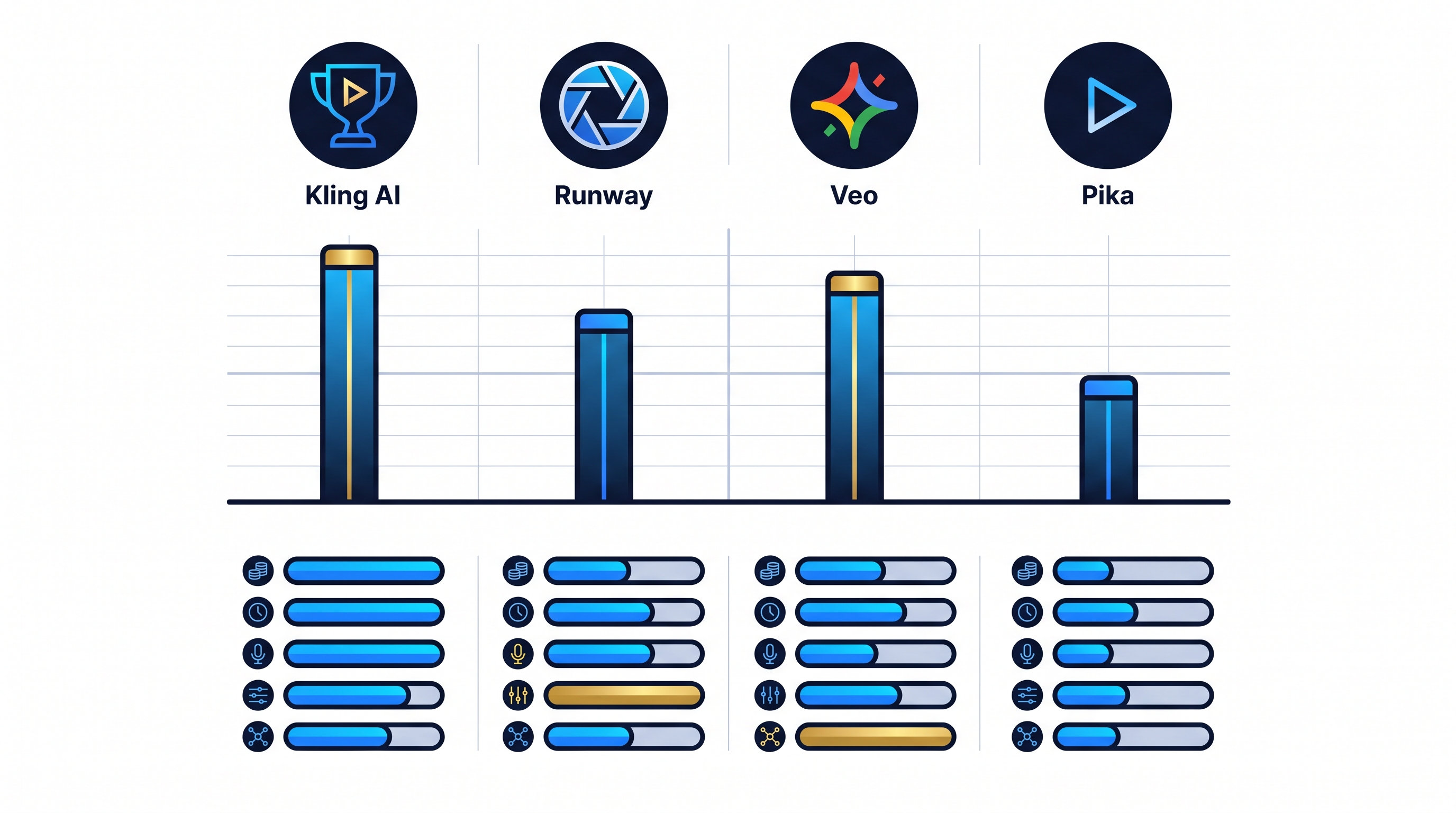
That question is now moot. OpenAI shut Sora down on March 24, 2026. And the model that now holds the highest ELO benchmark score of any AI video generator in the world — ahead of Google Veo 3.1, Runway Gen-4.5, and Pika 2.2 — is not American. It is Kling AI, built by Kuaishou, the Chinese short-video giant behind one of the largest content platforms on earth.
Kling's rise was not an accident of circumstance. It reached the top of the ELO leaderboard on its own technical merits before Sora's shutdown removed its most credible remaining challenger. Kling 3.0, which reached stable release on February 5, 2026, produces 4K video at 60 frames per second, generates connected six-shot narrative sequences in a single pass, synchronizes lip-sync audio across five languages, and does all of this at a starting price of $6.99 per month — a fraction of what comparable quality cost just a year earlier.
Over 60 million creators have used the platform to generate more than 600 million videos. It has gone through more than 30 model iterations since its June 2024 beta launch, and it now functions less like a single-purpose "type a prompt, get a clip" tool and more like a complete multimodal production studio — covering text-to-video, image-to-video, sound generation, character animation, and visual effects under one roof.
This Kling AI review covers everything: the complete Kling 3.0 feature set, the honest pricing structure across every tier, real-world use cases, direct comparisons with Runway, Veo, and Pika, and the genuine downsides — including customer support and billing practices that have generated real user frustration — that any serious evaluation needs to address directly.
What Is Kling AI?
Kling AI is a generative video and image platform built by Kuaishou, one of China's largest technology companies and the operator of a short-video ecosystem comparable in scale to TikTok's. It first launched in beta in June 2024 and has undergone continuous, rapid iteration since — more than 30 distinct model versions — culminating in Kling 3.0, which reached stable public release on February 5, 2026.
The platform's own positioning describes itself as a studio for turning text prompts, images, and reference material into multimodal creative content — video, image, and sound — within a single unified workflow. In practice, this means Kling has expanded well beyond its original text-to-video premise into a comprehensive production suite: text-to-video and image-to-video generation, native audio-visual synchronization with lip-sync, character animation and consistency tools, multi-shot narrative sequencing, video extension and editing, and visual effects generation.
The scale metrics validate the platform's position: over 60 million creators worldwide, more than 600 million videos generated, and a #1 ranking on the independent ELO video generation benchmark leaderboard with a score of 1243 — ahead of every major competitor including Google's Veo 3.1 and Runway's Gen-4.5.
Why Kling AI Is the Trending AI Tool Right Now
The AI video generation category has been reshaped by two events in the first quarter of 2026 that together explain why Kling is the tool defining this specific moment.
The first is Kling 3.0's stable release on February 5, 2026. The update introduced the Omni One architecture, bringing 4K resolution at 60 frames per second, physics-accurate motion simulation, and Multi-Shot generation — producing up to six connected camera shots with automatic pacing and transition selection from a single high-level scene description. This last capability, delivered through what Kling calls Smart Storyboard mode, addresses the single biggest limitation that has defined AI video generation since its inception: the inability to produce coherent multi-shot narrative sequences rather than isolated single clips.
The second is the shutdown of OpenAI's Sora on March 24, 2026. Sora's discontinuation removed the one competitor whose brand recognition and initial 2024 launch momentum had positioned it as Kling's most likely long-term rival at the frontier tier. With Sora gone, Kling's #1 ELO ranking is now effectively uncontested at the leaderboard's top position — a competitive dynamic that has driven a measurable surge in "best Sora alternative" and "Kling AI review" search volume throughout mid-2026 as former Sora users actively evaluate where to migrate their workflows.
According to MIT Technology Review's coverage of the generative video landscape (https://www.technologyreview.com/), the AI video generation category in 2026 has consolidated around a smaller number of platforms with genuine production-grade output quality, with Chinese models — Kling, Hailuo, and PixVerse — driving a disproportionate share of the category's technical advancement relative to US-based competitors, a trend that industry analysts attribute to aggressive iteration speed and a willingness to ship rapid version updates rather than infrequent major releases.
Core Features of Kling AI in 2026
Kling 3.0 — The Current Flagship Model
Kling 3.0 is the platform's most capable model, and understanding its specific capabilities is essential context for evaluating whether the platform fits a given production need. The model generates video at up to 4K resolution and 60 frames per second — a meaningful step up from the 1080p and 30fps ceiling that defined most consumer AI video tools through 2025.
Clip length has been extended to up to 15 seconds in a single generation, longer than most competing consumer-tier tools, with the Video Extension feature allowing multiple generations to be chained together into longer continuous sequences beyond that base limit.
Physics-accurate motion simulation is the specific technical improvement most frequently cited by reviewers as Kling 3.0's most noticeable quality jump over its predecessors — cloth movement, water dynamics, hair physics, and object collision behavior all show measurably improved realism compared to earlier Kling versions and most competing models.
As of early 2026, Kling 3.0 is rolling out progressively, with early access available to Ultra subscribers ahead of the broader tier rollout — a staged release pattern that has been consistent across Kling's major version updates.
Multi-Shot Generation and Smart Storyboard
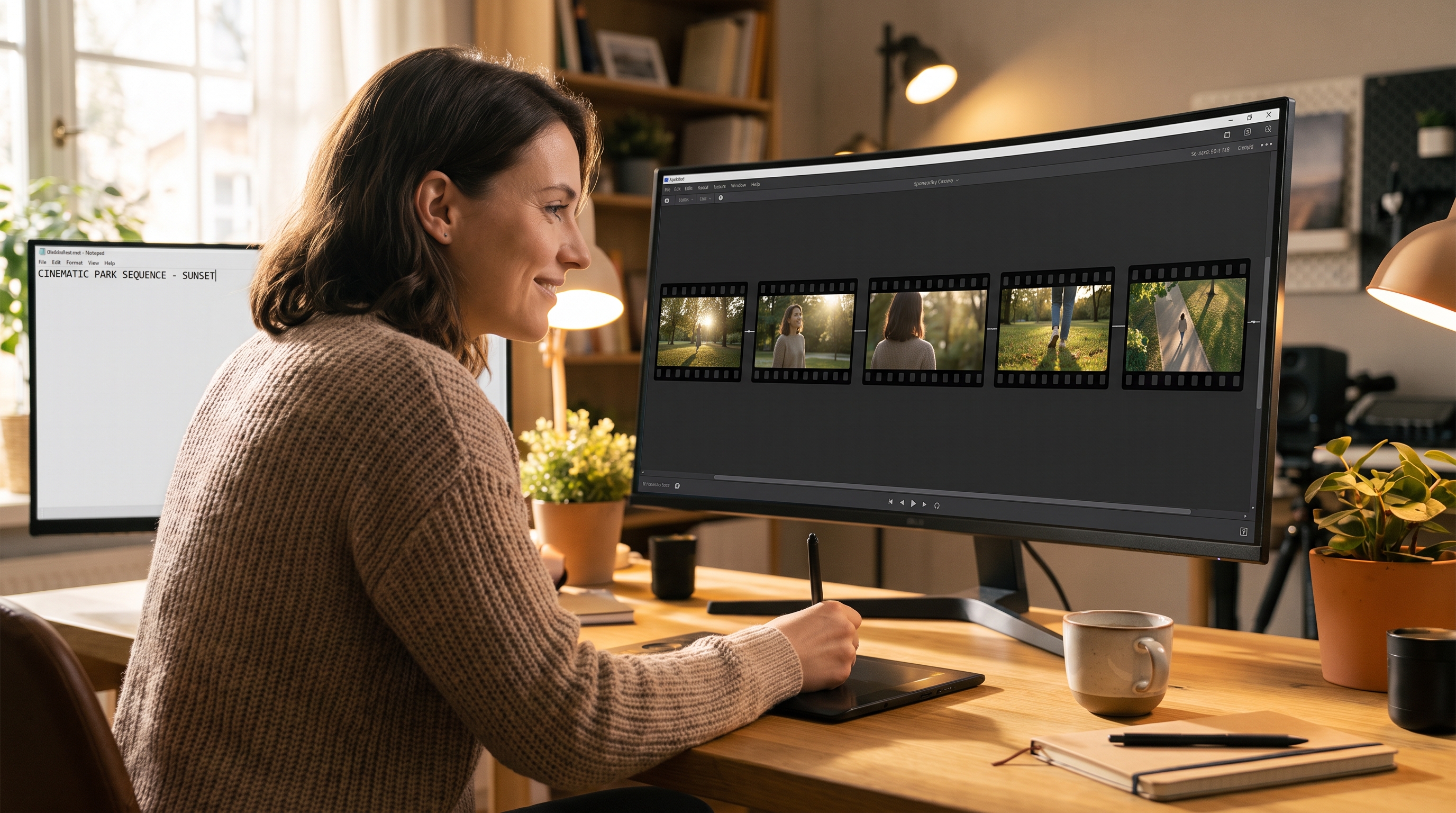
Multi-Shot is the single feature most likely to change how creators actually use AI video generation in production workflows. Rather than generating one isolated clip per prompt and manually assembling a sequence of separate generations into a coherent narrative, Multi-Shot produces up to six connected camera shots within a single generation pass.
Two working modes are available. Smart Storyboard mode accepts one high-level description of a scene or story and automatically determines the shot breakdown, camera angles, pacing, and transitions — appropriate for creators who want narrative structure without manually specifying every shot. A more manual mode allows direct specification of each shot's framing and content for creators who want precise control over the sequence.
This capability directly addresses what had been the most persistent structural limitation of AI video generation tools: the difficulty of producing content that tells a story across multiple connected shots rather than existing as a collection of disconnected clips requiring manual editing assembly.
Native Audio-Visual Synchronization With Lip-Sync
Kling 2.6, released ahead of the 3.0 flagship, introduced simultaneous audio-visual generation with lip-sync capability — meaning generated characters can speak with accurately synchronized mouth movements rather than requiring a separate audio track layered on afterward with imperfect alignment.
This native synchronization supports five languages in the current release, positioning Kling as one of the few AI video platforms capable of generating a talking character with accurate lip-sync directly from the generation process rather than through a separate post-production dubbing step.
For marketing content, character-driven narrative video, and any production where a speaking character is central to the output, this native audio-visual sync removes what was previously a mandatory additional production step requiring a separate lip-sync tool.
Motion Control and Character Consistency
Motion Control allows creators to direct specific movement patterns and camera behaviors within a generation — camera pans, character actions, and object motion can be specified more precisely than through text prompting alone, giving creators a finer degree of directorial control over generated output.
Character consistency tools address the challenge of maintaining a recognizable character across multiple separate generations — essential for any narrative content, branded character work, or serialized content where the same figure needs to appear across a series of clips with visually consistent appearance.
Avatar Features
Kling's Avatar capability generates animated character performances from reference material, extending the platform's use cases into digital presenter and character animation work that overlaps functionally with dedicated avatar platforms, though Kling's implementation is positioned as one feature within its broader multimodal studio rather than a specialized standalone avatar product.
Editing and Video Extension
Editing capabilities are what distinguish tools built for iterative refinement from those designed purely for one-shot generation. Kling's video extension feature allows adding additional segments to existing generated clips — extending a sequence beyond its original generated length by adding connected continuation footage rather than requiring an entirely fresh generation.
This iterative editing capability is a meaningful practical advantage for production workflows where the first generation is close but not quite right — rather than discarding a generation entirely and starting over, targeted extension and modification allow refinement of existing output.
3D Variational Autoencoder Architecture
Kling's underlying architecture uses a 3D variational autoencoder network that provides genuine spatial understanding of the scenes it generates — a technical foundation that industry analysts suggest could extend to more sophisticated 3D workflows in future releases, though current implementations focus primarily on 2D video output. This architectural foundation is part of why Kling's physics simulation and spatial consistency outperform models built on less spatially-aware generation architectures.

Real-World Use Cases
Content Creators and Social Media Video
For solo creators and small teams producing short-form video content — social media clips, promotional teasers, experimental artistic content — Kling's combination of quality, generation speed, and accessible entry-level pricing makes it one of the most practical tools available for volume content production without a filming budget.
The Standard plan at $6.99/month with commercial licensing included makes Kling AI genuinely viable as a production tool for creators monetizing their output, not just an experimentation platform. A creator publishing multiple short-form videos per week can operate comfortably within the Pro tier's credit allocation while maintaining consistent visual quality across their content calendar.
Marketing Teams and Advertising Production
Marketing teams producing video ad creative, product showcase content, and promotional campaigns use Kling for rapid concept-to-video production without the scheduling and cost overhead of traditional video shoots. The Multi-Shot Smart Storyboard mode is particularly valuable for ad concepts that need narrative structure — a problem setup, a product reveal, a call to action — delivered across multiple connected shots rather than a single static scene.
The native lip-sync capability extends this use case to spokesperson-style advertising content where a generated character delivers a scripted message with accurate mouth movement synchronization, removing the need for a separate dubbing or lip-sync correction step.
Independent Filmmakers and Narrative Content
For independent filmmakers and narrative content creators working with limited production budgets, Kling's Multi-Shot generation and character consistency tools represent a meaningful capability for producing connected narrative sequences that maintain visual coherence across a story arc — historically one of the hardest problems in AI-generated video content.
The physics-accurate motion simulation in Kling 3.0 is specifically relevant for narrative content where realistic movement — a character's gait, fabric and hair behavior, environmental physics — directly affects whether generated footage reads as believable rather than obviously synthetic.
Businesses Producing Training and Explainer Content
Businesses producing internal training materials, product explainer videos, and educational content use Kling's combination of scene generation and lip-sync avatar capability to produce narrated video content without traditional filming, voice actor booking, or studio production costs.
The commercial licensing included on Standard plans and above makes this a viable production pathway for businesses that need to distribute finished video content commercially rather than for personal or experimental use only.
Developers Building Video-Enabled Applications
For developers integrating AI video generation into third-party applications, Kling's API access through providers like fal.ai offers programmatic generation at per-second pricing — Standard tier at $0.084 per second and Pro tier at $0.112 per second, both excluding audio generation. This API access enables businesses to build video generation capability directly into their own products and workflows rather than requiring end users to interact with Kling's consumer interface directly.
How Kling AI Compares to the Competition
Kling AI vs Sora (Discontinued)
With OpenAI's Sora shut down as of March 24, 2026, this comparison is now primarily relevant for former Sora users evaluating migration options. Before its discontinuation, both platforms produced excellent quality video, but the practical comparison consistently favored Kling on several dimensions: Sora had no free plan and started at $20/month, while Kling offers both a functional free tier and a lower-priced entry point at $6.99/month. Kling also led on lip-sync capability and longer maximum video duration. Sora's specific advantage — where reviewers noted it edged ahead — was in complex prompt interpretation nuance for certain creative scenarios. With Sora no longer available, this comparison is now largely academic, but it explains why former Sora users have migrated toward Kling in significant numbers.
Kling AI vs Runway ML
Runway Gen-4.5, priced from $15/month, remains the strongest competitor for professional video production workflows specifically because of its superior in-platform editing suite and camera control tools — capabilities built for professional video editors who need granular post-generation control rather than one-shot output.
Kling's advantages over Runway are video length, lip-sync capability, and price — Kling AI's $6.99/month entry point undercuts Runway's $15/month starting tier while offering longer clip generation and native audio-visual synchronization that Runway's platform does not match at comparable pricing. The practical distinction: Runway for professional editors who want deep in-platform editing control as part of an established professional workflow, Kling for creators who want maximum output quality and narrative capability at a lower price point with less need for granular manual post-generation editing.
Kling AI vs Google Veo 3.1
Google Veo 3.1 is the most credible remaining frontier-tier competitor to Kling following Sora's shutdown, and the two platforms compete closely on raw output quality. Kling 3.0's #1 ELO benchmark score of 1243 places it ahead of Veo 3.1 on the current independent leaderboard ranking, though the margin between top-tier models in this category has narrowed considerably as all major platforms have converged toward similarly high quality ceilings.
Veo 3.1's specific advantages lie in its integration with Google's broader AI ecosystem — including its embedding within NotebookLM's Cinematic Video Overviews feature — making it the more natural choice for users already working within Google's Gemini and Workspace ecosystem. Kling's advantage is platform independence, competitive pricing, and the Multi-Shot storytelling capability that gives it a distinct edge for narrative-driven content specifically.
Kling AI vs Pika
Pika has historically competed at a similar consumer accessibility tier to Kling, but independent reviews in 2026 consistently note that Kling AI now leads Pika on quality, maximum clip length, and feature breadth. Pika remains a viable option for users specifically drawn to its particular stylistic output character, but the comprehensive feature set advantage — Multi-Shot, native lip-sync, Motion Control, Avatar generation — has widened meaningfully in Kling's favor through the 2.6 and 3.0 release cycle.
Kling AI vs Seedance 2.0
Seedance 2.0 is the most direct technical rival to Kling among newer entrants, and the comparison between the two is nuanced rather than one-sided. Seedance leans toward cinematic continuity and richer multimodal reference control — combining image, audio, and video reference inputs together — with unified audio-video generation included at no additional cost tier. Many experienced creators use a hybrid workflow: Kling for fast draft iteration and rapid concept testing, Seedance for final scenes specifically requiring tighter shot-to-shot continuity or precise dialogue synchronization.
According to PwC's Global Entertainment and Media Outlook 2026 (https://www.pwc.com/gx/en/industries/tmt/media/outlook.html), AI-generated video content is projected to represent a rapidly growing share of digital advertising and social media content production over the coming years, driven specifically by the cost and speed advantages that platforms like Kling provide relative to traditional video production — reinforcing why competitive positioning within this specific category carries outsized commercial significance for both platforms and the creators who depend on them.

Kling AI Pricing — The Complete and Honest 2026 Breakdown
Kling AI's pricing spans a free tier and several consumer subscription levels, plus separate API access for developers. Understanding the credit mechanics is essential, since headline monthly prices do not tell the full story of what a given plan actually delivers in practice.
Free Tier — $0/month 66 credits per day at 1080p resolution. Suitable for testing the platform's capabilities and experimenting with prompts, but genuinely limiting for any regular production use — the daily credit reset means unused credits do not accumulate, and 66 credits covers only a small number of generations per day depending on the mode and duration selected. Free tier output is restricted to personal, non-commercial use.
Standard — $6.99/month 660 credits per month, with commercial licensing included — meaning content generated on this and all higher tiers can be distributed, modified, and monetized commercially. This is the entry-level tier for creators who need real production capability at the lowest committed cost. Standard mode supports up to 10-second video generations.
Pro — $29.99/month 3,000 credits per month — enough for approximately 85 high-quality video generations, which independent reviewers describe as sufficient for a content creator publishing three to five videos per week. This is the recommended tier for creators with a consistent production schedule who have moved beyond casual experimentation.
Premier/Ultra — $64.99/month The highest consumer tier, providing the largest credit allocation and early access to new model releases — Kling 3.0's initial rollout, for example, launched to Ultra subscribers ahead of broader tier availability. Appropriate for high-volume professional creators and small agencies producing significant video output monthly.
Professional Mode Cost Multiplier Professional mode, which produces higher-complexity outputs for more demanding prompts, costs approximately 2x the standard credit rate per generation and supports up to 5 seconds per generation (versus 10 seconds in standard mode) — a meaningful trade-off between output complexity and clip duration that creators should factor into their credit budget planning.
Credit Top-Ups All subscription tiers allow purchasing additional credits when monthly allocations are exhausted, at rates typically ranging from $5 to $20 depending on quantity purchased. Top-up credit rates are less favorable than the per-credit cost included in subscription tiers, which is a deliberate structure encouraging users to select an appropriately sized base tier rather than relying on repeated overage purchases. Purchased top-up credits do not expire, unlike monthly subscription credits which reset each billing period.
Annual Billing Annual billing on consumer plans saves approximately 34% compared to monthly billing — a substantial discount for any creator who has confirmed Kling fits their regular production workflow.
API Pricing (via fal.ai and similar third-party providers) Standard tier at $0.084 per second of generated video and Pro tier at $0.112 per second, both figures excluding audio generation costs. This per-second model gives developers building Kling generation into their own applications a more granular, usage-proportional cost structure than the consumer subscription tiers.
The honest pricing reality that deserves direct emphasis: Multiple independent 2026 reviews explicitly flag that Kling's introductory pricing has, in some documented cases, silently increased at renewal, and that credits have reportedly been deducted for failed generations in certain instances. This billing practice concern is consistently cited as the platform's most significant operational weakness alongside customer support quality, and any prospective subscriber should verify current live pricing directly at kling.ai and read the specific terms around credit consumption for failed generations before committing to an annual plan.
Pros and Cons
Pros
#1 ELO benchmark score (1243) among all AI video generation models as of 2026 — ahead of Google Veo 3.1, Runway Gen-4.5, and Pika 2.2
Kling 3.0 generates 4K video at 60fps with physics-accurate motion simulation, a meaningful quality step beyond the 1080p/30fps ceiling of most consumer competitors
Multi-Shot generation produces up to 6 connected camera shots in a single pass — the strongest narrative continuity capability in the consumer AI video category
Native audio-visual synchronization with lip-sync across 5 languages, eliminating a separate dubbing step for character-driven content
Lowest entry price for commercial use among frontier-tier AI video platforms at $6.99/month
Free tier available with 66 daily credits for genuine platform evaluation before subscribing
60 million-plus creators and 600 million-plus videos generated — proven at massive scale
Video Extension and iterative editing tools support refinement of existing generations rather than requiring full restarts
API access via fal.ai and similar providers enables developer integration at transparent per-second pricing
Annual billing saves approximately 34% for confirmed regular users
Commercial licensing included on all paid tiers, enabling monetized use of generated content
With Sora's March 2026 shutdown, Kling's competitive position at the top of the video generation category is now effectively uncontested at its specific price-to-quality ratio
Cons
Customer support quality is a significant, consistently documented weakness across independent reviews
Billing practices have generated real user frustration — introductory pricing has reportedly increased silently at renewal in documented cases, and credits have reportedly been deducted for failed generations
As a Chinese-regulated platform, content censorship on politically sensitive topics is a real operational constraint for certain use cases
By using the service, users grant Kuaishou a worldwide, royalty-free license to use uploaded content for improving its AI systems — a meaningful consideration for anyone concerned about proprietary brand assets or sensitive client material
Free tier's daily credit reset (rather than accumulation) genuinely limits its usefulness for anything beyond light testing
Professional mode's 2x credit cost combined with its reduced 5-second maximum duration (versus 10 seconds in standard mode) creates a real trade-off that requires careful credit budget planning
Kling 3.0's rollout has been staged progressively by subscription tier, meaning lower-tier subscribers may experience delayed access to the newest model capabilities compared to Ultra subscribers
Runway's in-platform editing suite and camera control remain more suitable for professional video editors who need granular post-generation manual control as part of an established production pipeline
Who Should Use Kling AI?
Kling AI delivers the strongest value for:
Content creators and social media producers who need high-quality, high-volume short-form video at the lowest entry-level commercial pricing available among frontier-tier platforms
Marketing teams and advertisers producing narrative-structured video ad creative where Multi-Shot Smart Storyboard mode adds genuine production value
Independent filmmakers and narrative content creators who need connected multi-shot sequences with character consistency at a fraction of traditional production cost
Businesses producing training and explainer content who benefit from native lip-sync avatar capability without booking voice actors or filming studios
Former Sora users seeking a comparable or superior migration destination now that Sora has been discontinued
Developers building video generation into third-party applications via the transparent per-second API pricing available through providers like fal.ai
Who Should Consider Alternatives
Professional video editors requiring deep in-platform post-generation editing control — Runway ML's editing suite and camera control tools remain more purpose-built for this specific professional workflow
Users deeply embedded in Google's Workspace and Gemini ecosystem — Veo 3.1's native integration with Google's broader AI product suite, including NotebookLM's Cinematic Video Overviews, offers frictionless access that Kling's platform-independent model does not replicate
Organizations with strict data governance requirements around proprietary content — Kuaishou's content usage licensing terms for platform improvement purposes warrant careful review before uploading sensitive brand or client material
Creators needing content on politically sensitive topics — the platform's content moderation as a Chinese-regulated service is a real constraint for certain subject matter
Users who prioritize billing predictability and premium customer support above raw output quality and price — the documented billing and support concerns are worth weighing seriously against the platform's clear quality and pricing advantages
Getting the Most Out of Kling AI — Practical Tips
Use Smart Storyboard mode for narrative concepts you have not fully planned shot-by-shot. Rather than manually specifying every camera angle and transition, describing the overall scene or story at a high level and letting Kling's Smart Storyboard mode determine the shot breakdown consistently produces coherent results faster than manual multi-shot specification for most standard narrative structures.
Reserve Professional mode for prompts that genuinely need the added complexity. Given the 2x credit cost and reduced maximum duration, Professional mode is best used selectively for specific complex shots rather than as a default setting — test standard mode first and escalate to Professional only for the specific generations where standard mode output falls short of your quality bar.
Budget for credit consumption actively, especially around failed generations. Given the documented reports of credits being deducted for failed generations, monitoring your credit balance closely after each generation attempt — particularly with complex or unusual prompts more likely to produce unsatisfying results — helps avoid unexpected mid-month credit exhaustion.
Verify your renewal pricing before your first billing cycle completes. Given documented reports of introductory pricing silently increasing at renewal, checking your account's billing page and any renewal notice carefully before your first subscription period ends is a reasonable precaution given the platform's specific billing history.
Avoid uploading proprietary or sensitive material without reviewing the licensing terms. Since using the platform grants Kuaishou a license to use uploaded content for AI system improvement, any business considering uploading branded assets, client materials, or sensitive reference content should review the specific terms of service and consider whether that usage license is acceptable for the specific content in question.
The Honest Limitations Worth Understanding
The customer support and billing concerns documented across multiple independent 2026 reviews are not minor operational footnotes — they are consistently flagged as the platform's most significant weaknesses by reviewers who otherwise rate Kling's output quality and pricing very favorably. Any prospective subscriber should weigh these concerns directly rather than discovering them only after committing to an annual plan.
The content licensing terms — granting Kuaishou a worldwide, royalty-free license to use uploaded content for AI system improvement — deserve specific attention from any business or creator working with proprietary or client-sensitive material. This is a standard practice across many AI platforms, but the specific implications for brand assets and confidential material warrant a direct read of the current terms of service before uploading anything sensitive.
The content moderation reality as a Chinese-regulated platform is a genuine constraint for certain use cases involving politically sensitive subject matter — a consideration that matters for specific categories of content even though it does not affect the vast majority of commercial and creative use cases most users pursue.
And the staged rollout pattern for major model updates — where Kling 3.0 launched first to Ultra subscribers before broader availability — means lower-tier subscribers should expect a delay before accessing the newest model capabilities relative to what marketing materials and reviews describe for the flagship experience.
Final Verdict: Is Kling AI Worth It in 2026?
For creators, marketers, and businesses who need frontier-quality AI video generation at the most accessible commercial price point currently available, Kling AI is the clear category leader in 2026 — a position reinforced rather than created by Sora's shutdown, given that Kling reached its #1 ELO ranking on independent technical merit before its most credible American rival exited the market.
The combination of 4K/60fps output, Multi-Shot narrative generation, native lip-sync audio-visual synchronization, and a $6.99/month commercial entry point represents genuinely the strongest quality-to-price ratio in the AI video generation category as it stands today. The 60 million creators and 600 million videos generated are not marketing figures — they represent a platform that has been battle-tested at a scale few competitors can claim.
The honest caveats are real and deserve equal weight in the final decision: customer support quality, documented billing practice concerns, content licensing terms, and platform content moderation constraints are genuine considerations that a purely feature-and-price comparison would miss. Testing the free tier and reading current terms of service directly before committing to any paid plan — particularly annual billing — is the responsible approach given these documented concerns.
For the specific job of generating high-quality, narratively coherent AI video at the lowest achievable cost in 2026, Kling AI is difficult to beat. Whether the operational trade-offs are acceptable for your specific use case and risk tolerance is the final question only you can answer with current, verified information in hand.
Start Creating With Kling AI
The free tier provides 66 daily credits at 1080p resolution — enough to test the platform's output quality against your specific creative needs before committing to any paid subscription.
Try Kling AI free at klingai.com — Free tier available. Commercial plans from $6.99/month. Verify current pricing and terms directly before subscribing.
Frequently Asked Questions
What is Kling AI used for? Kling AI is used to generate video, images, and synchronized audio from text prompts or reference images. It is used by content creators, marketing teams, independent filmmakers, and businesses to produce short-form video, advertising content, narrative sequences, and character-driven video with lip-sync, without traditional filming or production costs.
Is Kling AI better than Sora? OpenAI's Sora was discontinued on March 24, 2026, making this comparison largely historical. Before its shutdown, Kling generally outperformed Sora on price (Sora had no free plan and started at $20/month versus Kling's $6.99), video length, and lip-sync capability, while Sora edged ahead on some complex prompt interpretation scenarios.
How much does Kling AI cost in 2026? Kling AI offers a free tier with 66 daily credits at 1080p, and paid tiers from Standard ($6.99/month, 660 credits) to Pro ($29.99/month, 3,000 credits) to Premier/Ultra ($64.99/month, the highest allocation with early model access). Annual billing saves approximately 34%. API access via providers like fal.ai starts at $0.084 per second.
What is Kling 3.0? Kling 3.0 is Kuaishou's flagship AI video model, reaching stable release on February 5, 2026. It introduces the Omni One architecture, enabling 4K resolution at 60fps, physics-accurate motion simulation, extended clip lengths up to 15 seconds, and Multi-Shot generation for connected six-shot narrative sequences.
Does Kling AI support commercial use? Yes. All paid plans (Standard and above) include a commercial license allowing distribution, modification, and monetization of generated video content. The free tier is restricted to personal, non-commercial use only.
How does Kling AI compare to Runway ML? Kling AI wins on video length, lip-sync capability, and price. Runway ML wins on in-platform editing suite depth and professional camera control tools, making it more suitable for editors who need granular post-generation manual control within an established professional workflow.
Is Kling AI safe for uploading proprietary content? Caution is advised. By using Kling AI, users grant Kuaishou a worldwide, royalty-free license to use uploaded content for improving its AI systems. Businesses and creators should avoid uploading proprietary brand assets or sensitive client material if this data usage concerns them, and should review current terms of service directly.

Founder, Axionova · AI Tools Strategist
Ashir writes independent, hands-on reviews of AI tools and shares strategies for creators, marketers, and entrepreneurs. Every review is grounded in real usage — no paid placements, no fluff. Read our editorial standards.
AI Insights Weekly
One curated email a week: sharp AI insights, tool reviews, and strategies.
Have thoughts on this?
Contact us or share this article on social media — we'd love to hear what resonated with you.