Nano Banana Pro Review 2026: Google's Free AI Image Generator That Finally Solves the Text-in-Images Problem
A comprehensive Nano Banana Pro review for 2026 covering Google's Gemini 3 Pro Image model, its industry-leading 94–96% text rendering accuracy, Search-grounded factual accuracy, the genuinely confusing but fully broken-down pricing structure across free, consumer, and developer API tiers, honest comparisons with Midjourney, Imagen 4, and Nano Banana 2, and the real limitations worth understanding.
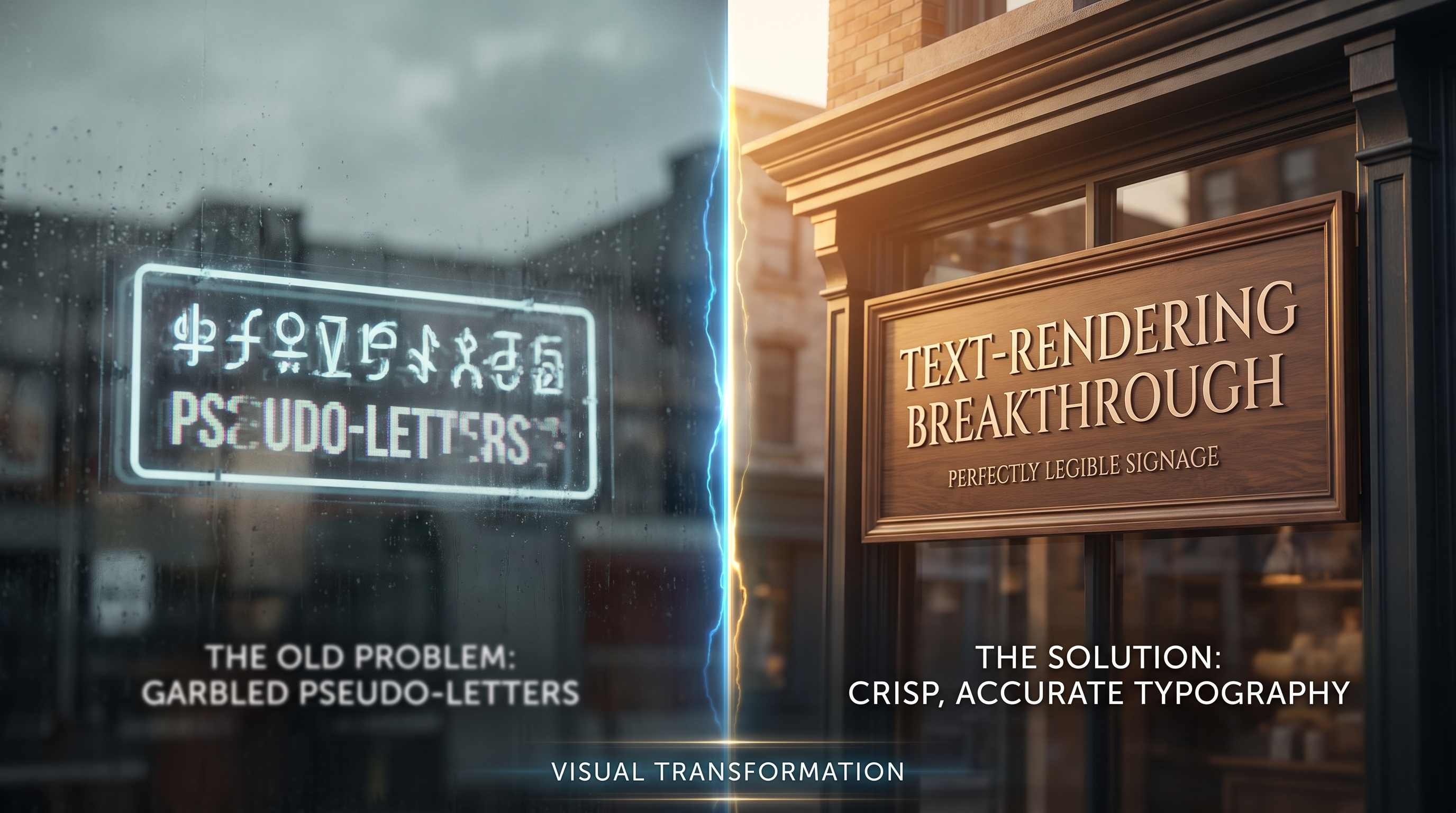
Ask any designer who has used AI image generators since 2022 what frustrates them most, and the answer is consistent: the text is always broken. A poster that should say "Grand Opening" renders as unreadable decorative gibberish. A product label comes out as confident-looking nonsense characters. A UI mockup with a button that should say "Sign Up" produces something that looks like a button but reads like static.
This has been the single most persistent failure mode in AI image generation since the Stable Diffusion era, and it has never fully gone away — not with Midjourney, not with DALL-E, not with the dozens of models that have launched since. Every new model claims improvement. Most still stumble on anything longer than a word or two.
Nano Banana Pro is the first mainstream model where typing "add the text 'Sale' in bold white lettering on the product" reliably produces exactly that — readable, correctly spelled, properly placed text, not an approximation of it. Independent benchmarks put its text-rendering accuracy at 94 to 96%, ahead of most competing models on that specific metric. And it does this while running inside Gemini, Google's free consumer AI app, meaning the model built on the most advanced image reasoning architecture Google has shipped is also, for casual use, free.
The story of how this model got its name is almost as interesting as the model itself. "Nano Banana" was not Google's official product name — it was an internal codename that leaked, got picked up by AI content creator communities (with the 20,000-plus member AI Video Bootcamp community credited as the largest to popularize it), and stuck so firmly that Google eventually leaned into it rather than fighting it. The official name, Gemini 3 Pro Image, is barely used by anyone outside Google's own documentation.
This review covers what Nano Banana Pro actually does, the genuinely confusing pricing structure across consumer and developer tiers, how it stacks up against Midjourney and Imagen 4, and the honest limitations — including a documented shrinking free tier — that any prospective user should understand before building a workflow around it.
What Is Nano Banana Pro?
Nano Banana Pro is Google DeepMind's flagship AI image generation and editing model, built on the reasoning architecture of Gemini 3 Pro. It extends Google's earlier Nano Banana model (based on Gemini 2.5 Flash Image) with significantly deeper multimodal reasoning, real-world grounding through live Google Search data, and higher-fidelity visual output.
The model is available inside the Gemini consumer app, Google AI Studio for developers, and Vertex AI for enterprise deployment — meaning the same underlying model serves a casual user generating a birthday card image, a developer building an app feature, and an enterprise team producing marketing assets at scale.
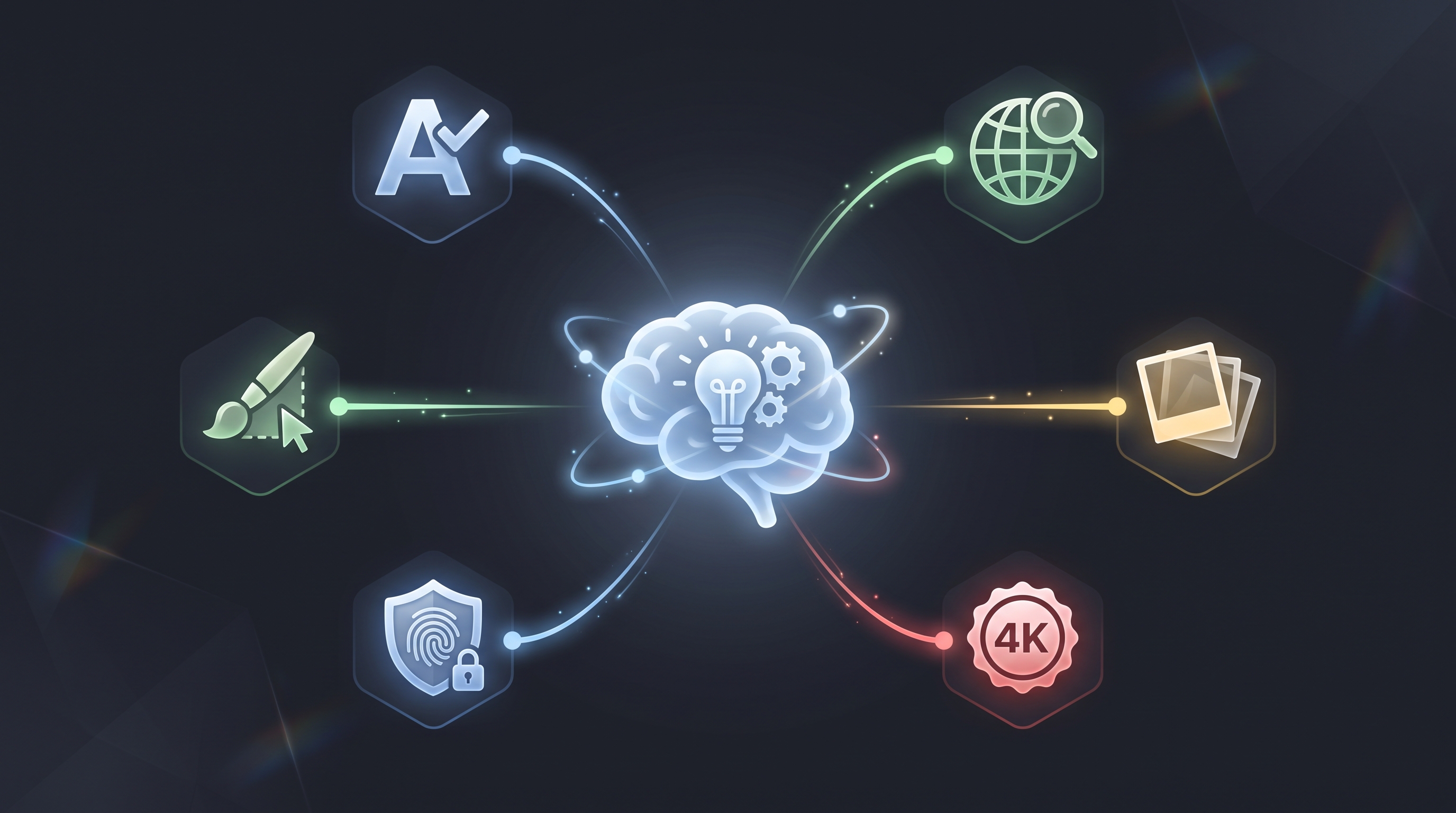
The architectural detail that most distinguishes Nano Banana Pro from earlier-generation image models is what Google internally calls "Thinking" mode: before rendering a final image, the model plans the scene's spatial layout and composition first, then generates the output based on that plan. This planning step is specifically what reduces the layout errors — misplaced text, awkwardly composed elements, broken spatial logic — that plagued earlier models which generated pixels directly from a prompt without an intermediate reasoning stage.
Google's Search-grounding integration means that a prompt referencing a real, verifiable subject — a specific landmark, a real product, a factual scene — pulls from actual search data to inform the generated geometry and details, rather than relying purely on the model's internal training data approximation. This is a genuine differentiator for factual data visualizations and product mockups, though it comes with a trade-off worth understanding: for surreal, highly stylized, or purely imaginative output, this grounding can act as a constraint rather than a benefit, and models like Imagen 4 Ultra reportedly perform better in that specific creative register.
Why Nano Banana Pro Is Worth Understanding Right Now
Nano Banana Pro sits at an unusual intersection in 2026: it is simultaneously one of the most capable AI image models available and one of the most confusingly documented, with independent sources disagreeing meaningfully on basic facts like its release date and exact pricing.
Some sources place its release as a June 18, 2026 general availability launch. Others describe it as having released on November 20, 2025 inside the Gemini app, Google AI Studio, and Vertex AI, with June 2026 marking a broader API general availability milestone rather than the model's original debut. This kind of discrepancy is common with major platform models that roll out in stages across different products and access tiers, and it is worth flagging directly rather than presenting a false sense of precision — a pattern this review will follow throughout, prioritizing honest uncertainty over confident-sounding but unverifiable specifics.
What is consistently reported across every source is the significance of the text-rendering achievement. Accurate in-image text has been arguably the single most requested and most persistently unsolved capability gap in AI image generation for four years running. Nano Banana Pro's 94 to 96% text-rendering accuracy is described across multiple independent technical reviews as best-in-class, ahead of the alternatives, for exactly this specific and previously stubborn capability.
The pricing story is equally significant from a market-disruption perspective. Midjourney has not offered a free trial since March 2023. Nano Banana Pro, by contrast, offers genuine free access through the standard Gemini app — a meaningfully different market positioning that has driven substantial search interest in "Nano Banana Pro vs Midjourney" and "is Nano Banana Pro free" throughout mid-2026.
According to Google's own Gemini developer documentation (https://ai.google.dev/gemini-api/docs), Google has positioned image generation as a core capability embedded directly within its general-purpose Gemini assistant rather than as a separate specialized product — a strategic choice that differentiates its go-to-market approach from dedicated image-generation platforms like Midjourney and directly shapes how most casual users will actually encounter and use the model.
Core Features of Nano Banana Pro in 2026
Industry-Leading Text Rendering
This is the feature that defines Nano Banana Pro's market position, and it deserves the most detailed treatment. Accurate, legible, correctly spelled text embedded within a generated image — on a sign, a product label, a UI mockup, an infographic callout, a poster headline — has been the specific failure mode that even otherwise excellent image models have struggled with since generative image tools became mainstream.
Nano Banana Pro's approach, driven by its "Thinking" mode planning step, treats text placement as a compositional element to be reasoned about before rendering rather than a texture pattern to be approximated during generation. The practical result, per independent benchmarking, is 94 to 96% accuracy on text-rendering tasks — including longer passages and multilingual layouts, not just single short words.
For any use case involving marketing materials, product mockups, infographics, social media graphics with headline text, or UI/UX design concepts where legible text is a functional requirement rather than a decorative afterthought, this capability alone can be the deciding factor over competing models.
Search-Grounded Real-World Accuracy
Nano Banana Pro's integration with live Google Search data means that prompts referencing real, factual subjects can be grounded in verified current information rather than the model's static training data. Asking for "the Eiffel Tower at sunset in autumn 2026" pulls toward factually accurate geometry and appropriately seasonal lighting rather than a generic or dated impressionistic guess.
This grounding capability is specifically valuable for factual data visualizations, real-world product composites, and any generation task where accuracy to an actual physical reality matters more than creative interpretation. The corresponding limitation, worth restating clearly: for surreal, highly stylized, or purely imaginative creative work, this same grounding can pull the output toward literalism when a more interpretive or stylized result was actually desired.
Multi-Image Fusion and Identity Preservation
Nano Banana Pro supports consistent multi-image blending and can preserve subject identity accurately across up to five subjects within a composition, with some sources describing 14-image fusion capability at the higher end of its feature set. This means a user can combine multiple separate reference images — different people, products, or elements — into a single coherent generated composition while maintaining visual consistency and correct identity for each element.
For marketing composites, group product shots, and any workflow requiring the combination of multiple distinct visual references into one final image, this fusion capability addresses a use case that single-reference image generation cannot handle.
Localized Editing Without Full Regeneration
Nano Banana Pro applies targeted, localized edits — adjusting specific lighting, changing a focus point, shifting a camera angle — without requiring the entire image to be regenerated from scratch. This iterative editing capability, described by reviewers as working naturally through conversational instructions like "make it more cinematic" mid-conversation within Gemini, allows for genuine creative refinement rather than a one-shot generate-and-discard workflow.
This conversational iteration model is a meaningful practical advantage over generation workflows that require crafting an entirely new, carefully engineered prompt for every adjustment — Nano Banana Pro's integration within Gemini's chat interface makes iterative refinement feel like a natural back-and-forth conversation rather than a technical prompt-engineering exercise.
4K Output and Resolution Options
Nano Banana Pro supports output up to 4K resolution, priced separately and at a premium over standard 1K/2K generation through the API (a reported $0.24 per 4K image versus $0.134 per 1K/2K image). For professional print and large-format use cases, this resolution ceiling matters; for casual social media and web use, standard resolution is typically sufficient and considerably cheaper.
SynthID Watermarking
Every image generated by Nano Banana Pro carries an invisible SynthID watermark embedded directly in the pixel data, allowing later verification that an image was AI-generated even when standard metadata has been stripped. This is Google's direct implementation of AI content provenance and transparency — a feature increasingly relevant as AI-generated content disclosure requirements expand globally, including under frameworks like the EU AI Act's transparency provisions for synthetic media.
Free Consumer Tier With Genuine Utility
Basic Nano Banana image generation is accessible on the standard, no-cost Gemini plan. Google's free tier reportedly includes a limited daily image generation allowance (reported by one source as 2 images per day at the more restrictive end, with other sources describing broader free access for the base Nano Banana model versus more limited free access specifically for Pro-tier capability). This free access point — genuinely usable rather than a crippled trial — stands in direct contrast to Midjourney's subscription-only model with no free trial since March 2023, and is a meaningful part of why Nano Banana Pro has driven such significant comparison search volume.
Real-World Use Cases
Marketers and Social Media Content Creators
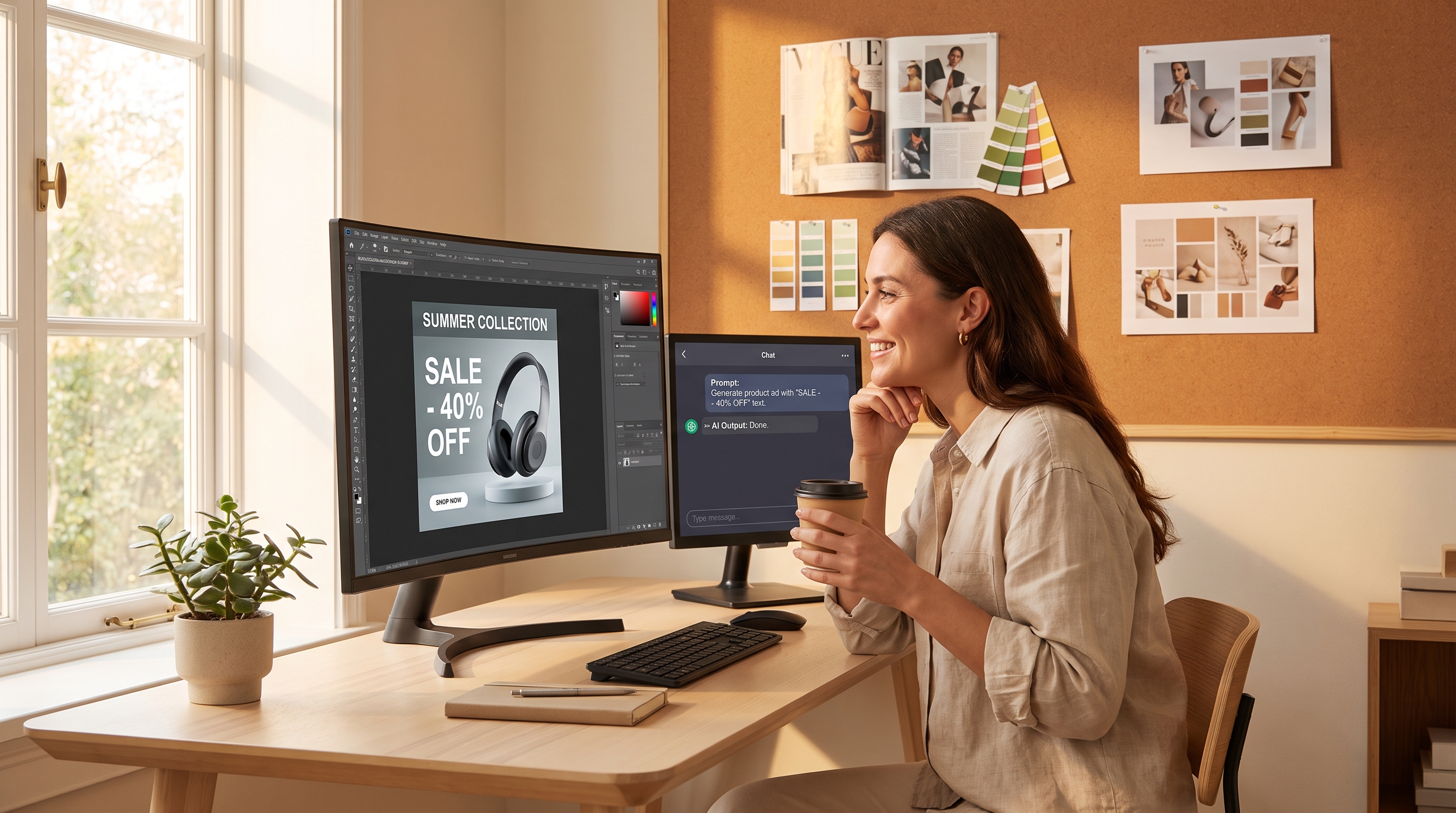
For marketing teams producing social graphics, promotional banners, and advertisement creative that require accurate text — sale percentages, product names, calls to action, headline copy directly embedded in the visual — Nano Banana Pro's text-rendering advantage directly addresses the single most common technical failure that has historically forced marketers to add text as a separate manual overlay step after AI image generation rather than trusting the model to render it correctly in the first pass.
UI/UX Designers and Product Teams
Designers producing UI mockups, app interface concepts, and product design visualizations benefit specifically from Nano Banana Pro's ability to render legible interface text — button labels, navigation text, form field placeholders — directly within a generated mockup, compressing what previously required manual text addition in a separate design tool into a single generation step.
Infographic and Data Visualization Producers
Content teams and educators producing infographics, charts, and data visualizations benefit from both the text-rendering accuracy for labels and callouts, and the Search-grounding capability for factually accurate representations of real-world data, statistics, and subjects that need to reflect current, verifiable reality rather than a generic AI approximation.
Developers Building Image-Enabled Applications
For developers integrating AI image generation directly into third-party applications — e-commerce product visualization tools, design assistant features, content creation platforms — Nano Banana Pro's API access through Google AI Studio and Vertex AI, at $0.134 per standard image, provides a transparent, usage-based cost structure suitable for building image generation into a product at scale.
Casual Creators and Everyday Gemini Users
For the largest segment of users — people who simply want to generate a birthday card image, a fun social media post, or a quick visual concept without any technical setup — Nano Banana Pro's integration directly inside the free Gemini app means image generation is simply another capability available in a chat conversation they may already be having, with no separate app, account, or subscription required for basic use.
How Nano Banana Pro Compares to the Competition
Nano Banana Pro vs Midjourney
This is the comparison generating the most search interest in 2026, and the honest answer is that the two models optimize for genuinely different priorities. Midjourney remains the stronger choice for purely creative, stylized, atmospheric image generation — the aesthetic distinctiveness and artistic quality ceiling that Midjourney has built its reputation on over several major version releases is not something Nano Banana Pro's Search-grounded, reasoning-first architecture is specifically optimized to match.
Nano Banana Pro's clear advantages are text rendering accuracy, a genuine free access tier (versus Midjourney's subscription-only model with no free trial since March 2023), and integration directly within a general-purpose assistant rather than requiring a separate dedicated platform and Discord-based or web-based workflow.
The practical recommendation that emerges from independent reviews: Midjourney for purely creative, artistically distinctive visual work where aesthetic quality is the primary goal and text accuracy is secondary or unnecessary. Nano Banana Pro for any work requiring accurate embedded text, factual grounding, or a lower-friction free entry point, and for users who want image generation available within a tool they are already using for other tasks.
Nano Banana Pro vs Imagen 4
Imagen 4 is Google's other, separate dedicated image generation model — distinct from the Gemini-integrated Nano Banana line — optimized specifically for the highest quality output, excellent text rendering, and photorealism as a standalone image generation product rather than a conversational feature within a broader assistant.
Imagen 4 Fast, at a reported $0.02 per image, is described as one of the cheapest high-quality image generation API options on the market — roughly three times cheaper than DALL-E 3 and comparable Midjourney API access points, making it the more cost-effective choice for high-volume, straightforward image generation tasks that do not require Nano Banana Pro's conversational reasoning and multi-turn editing capability.
The practical distinction: Nano Banana Pro when you need text understanding combined with image output in a single conversational model, ideal for iterative creative work. Imagen 4 when you need the highest volume, most cost-efficient pure image generation without the conversational reasoning layer — useful for generating large batches of marketing images at scale.
Nano Banana Pro vs Nano Banana 2 (the Flash Variant)
Within Google's own image model lineup, Nano Banana 2 (built on the faster Gemini 3.1 Flash Image architecture) is positioned as the speed and cost-efficiency option — generating images in under 2 seconds at $0.02 to $0.04 per image, roughly three times cheaper than Nano Banana Pro's $0.134 per standard image.
The practical guidance from independent developer reviews: use Nano Banana 2 for high-volume, quick-iteration workflows where speed and cost matter more than the deepest reasoning capability. Reserve Nano Banana Pro specifically for complex scenes, precise text rendering requirements, and detailed editing tasks where its deeper reasoning architecture provides a meaningful quality advantage that justifies the roughly 3x higher per-image cost.
According to McKinsey's research on generative AI in marketing and creative production (https://www.mckinsey.com/capabilities/growth-marketing-and-sales/our-insights), organizations extracting the most consistent value from AI image generation tools in 2026 are those that match specific models to specific task requirements — using faster, cheaper models for high-volume iteration and reserving premium reasoning-capable models for the specific outputs where their added capability justifies the added cost, rather than defaulting to a single model across every use case.
Nano Banana Pro Pricing — The Complete and Genuinely Confusing 2026 Breakdown
This is the section where honesty matters most, because independent sources reporting on Nano Banana Pro's pricing in 2026 do not fully agree with each other — a reflection of Google's tiered rollout across consumer app limits, subscription plans, and separate developer API billing, each with its own distinct pricing logic.
Free Tier (Gemini App) Basic Nano Banana image generation is available at no cost through the standard Gemini app. The specific daily limit for Pro-tier capability is reported inconsistently across sources — one review describes a notably restrictive 2 images per day for Pro-level generation specifically, while others describe broader free access to base-tier Nano Banana generation with more limited access to Pro-specific capabilities. The consistent theme across sources: meaningful free access exists, but it is more limited for Pro-tier features than for the base model, and this free allocation has reportedly been shrinking over time — worth verifying directly at gemini.google.com before assuming a specific daily limit.
Google AI Pro / Google One AI Premium — approximately $19.99/month Unlocks Gemini Advanced with expanded Nano Banana Pro capabilities, including character consistency, multi-image fusion, pose control, and higher (though likely still not fully unlimited) generation allowances, alongside the broader Google One AI Premium bundle including additional storage and Gemini chat capability.
Google AI Ultra Google reportedly cut Google AI Ultra's entry price from $249.99 to $99.99 per month at Google I/O in May 2026, while maintaining the same feature set — a significant price reduction that made the highest consumer tier considerably more accessible partway through the year. This tier includes the highest consumer-level Nano Banana Pro usage allowances alongside Google's broader AI Ultra feature bundle.
Developer API (Google AI Studio / Vertex AI) Standard image output is priced at $0.134 per 1K or 2K resolution image, with 4K output at $0.24 per image. Token-based pricing for the underlying model is reported at $2.00 per million input tokens and $12.00 per million output tokens, with separate rates for cache read ($0.20/M), cache write ($0.375/M), and image-specific input/output token rates. As of some sources' most recent verification in July 2026, Nano Banana Pro was reportedly not available in a free API tier for developers — meaning developer access requires paid usage from the outset, distinct from the consumer app's free tier.
Nano Banana 2 (Comparison Reference) For context on relative cost, the faster, lighter Nano Banana 2 variant is priced at approximately $0.02 to $0.04 per 1K image — roughly three times cheaper than Nano Banana Pro's standard $0.134 per image rate — making it the more economical choice for high-volume, less complex generation tasks.
The honest pricing verification note that deserves direct emphasis: Given the meaningfully different figures reported across independent sources — different daily free limits, different described release dates, and Google's own pattern of price adjustments during 2026 (the Ultra tier price cut being one documented example) — verifying current, live pricing directly at gemini.google.com and ai.google.dev before making any purchasing or development decision is not just recommended but necessary. This review synthesizes multiple recent sources that do not fully agree with each other, which is itself informative about how quickly this specific product's terms have been moving throughout 2026.
Pros and Cons
Pros
Industry-leading text rendering accuracy (94–96% per independent benchmarks) — solves AI image generation's most persistent and widely complained-about failure mode
Genuine free tier access through the standard Gemini app, in direct contrast to Midjourney's subscription-only model since March 2023
"Thinking" mode compositional planning reduces layout errors common in earlier-generation image models
Search-grounded generation produces factually accurate geometry and details for real-world subjects
Multi-image fusion with identity preservation across up to five (reportedly up to 14 in some configurations) subjects
Localized, conversational editing — adjust lighting, focus, and camera angle without full image regeneration
Integrated directly within Gemini's chat interface — no separate app or platform required for casual use
SynthID invisible watermarking provides built-in AI content provenance verification
4K output option available for professional and print use cases
Transparent, usage-based developer API pricing suitable for building image generation into third-party products at scale
Google AI Ultra price cut from $249.99 to $99.99/month (May 2026) significantly improved accessibility of the highest consumer tier
Cons
Pricing and release date information is genuinely inconsistent across independent sources — verification directly against Google's official pages is necessary before any commitment
Free tier daily limits are reported as restrictive for Pro-specific capability (as low as 2 images/day per one source) and have reportedly been shrinking over time
Search-grounding that benefits factual accuracy can act as a creative constraint for surreal or highly stylized artistic output, where Imagen 4 Ultra or Midjourney reportedly perform better
Developer API access reportedly requires paid usage from the start, with no free API tier as of the most recent verification
At $0.134 per standard image, Nano Banana Pro costs roughly 3x more per image than the faster Nano Banana 2 variant — a real cost consideration for high-volume use cases that do not need the deepest reasoning capability
65K token context window (in some configurations) is a meaningful constraint compared to the full Gemini 3 Pro Preview model, limiting certain advanced multimodal reasoning use cases
Agentic task performance is described as moderate rather than leading, meaning the model is not the right choice for complex multi-step agentic workflows beyond image generation itself
The "Nano Banana" branding, while memorable, originated as a leaked internal codename rather than an official product decision — creating some ongoing naming confusion between Nano Banana, Nano Banana Pro, Nano Banana 2, and the officially named Gemini 3 Pro Image across different documentation sources
Who Should Use Nano Banana Pro?
Nano Banana Pro delivers the strongest value for:
Marketers and social media content creators who need accurate, embedded text in promotional graphics — sale banners, headline copy, product labels — without a separate manual text-overlay step
UI/UX designers and product teams producing mockups and interface concepts requiring legible interface text directly within the generated visual
Infographic producers and educators who need factually grounded, accurately labeled data visualizations
Developers building image generation into third-party applications at usage-based API pricing, particularly those needing text understanding combined with image output in a single model
Casual creators and everyday Gemini users who want image generation available conversationally within a tool they already use, without a separate subscription or app
Budget-conscious creators evaluating a genuine free alternative to Midjourney for use cases where text accuracy matters more than the most distinctive artistic aesthetic
Who Should Consider Alternatives
Artists and creative directors prioritizing distinctive artistic aesthetics over factual accuracy or text rendering — Midjourney's creative quality ceiling for purely stylized, atmospheric work remains a genuine differentiator that Nano Banana Pro's reasoning-first, grounded architecture does not directly target
High-volume production teams generating large batches of straightforward images — Imagen 4 Fast at $0.02/image or Nano Banana 2 at $0.02–$0.04/image offer significantly better cost efficiency for use cases that do not require Nano Banana Pro's deepest reasoning capability
Developers needing a free API tier for testing or low-budget projects — since Nano Banana Pro reportedly requires paid API usage from the start, developers on tight budgets may need to start with a different model or the consumer app's free tier instead
Teams needing surreal or highly imaginative, non-literal creative output — the Search-grounding that benefits factual accuracy can work against purely imaginative creative briefs
Getting the Most Out of Nano Banana Pro — Practical Tips
Use the Subject + Action + Scene prompt structure for reliable results. Google's own recommended formula — start with who or what should appear in the image, describe what they are doing, then specify the environment and mood — consistently produces more coherent, accurately composed results than open-ended, unstructured prompt descriptions.
Be explicit and specific when requesting embedded text. For the text-rendering capability to perform at its documented accuracy level, specify the exact text content, its styling (bold, color, placement), and its context clearly — "add the text 'Grand Opening' in bold red lettering across the top of the banner" produces more reliable results than a vague instruction to "add some text about the opening."
Match the model tier to the task's complexity, not by default. For quick, low-stakes iterations and high-volume needs, use Nano Banana 2 or Imagen 4 Fast rather than defaulting to Pro for every generation. Reserve Nano Banana Pro specifically for tasks that benefit from its deeper reasoning — complex scenes, precise text rendering, and detailed multi-element compositions.
Use conversational iteration rather than restarting from scratch. Nano Banana Pro's localized editing capability means adjustments — "make the lighting warmer," "shift the camera angle slightly," "make it more cinematic" — work naturally as follow-up instructions within the same conversation, rather than requiring an entirely new, fully re-engineered prompt for each refinement.
Verify current pricing and free tier limits before committing to a workflow. Given the documented pattern of shrinking free tier limits and mid-year price adjustments (the Ultra tier's price cut being one clear example), checking gemini.google.com and ai.google.dev directly for current terms before building any regular production workflow around specific expected costs is a reasonable and necessary precaution.
The Honest Limitations Worth Understanding
The inconsistency in publicly reported facts about Nano Banana Pro — its exact release date, its exact free tier limits, and even some pricing figures — is itself worth treating as a signal rather than dismissing as noise. It reflects a product that Google has rolled out across multiple access points (consumer app, AI Studio, Vertex AI) on different timelines, with terms that have continued shifting throughout 2026. Any reader planning to build a regular workflow or a commercial product around this model should treat every specific figure in this review, and in any other review, as directionally accurate rather than as a guaranteed current fact, and should verify directly against Google's official documentation before making binding commitments.
The shrinking free tier is a genuine trend worth monitoring specifically, since it directly affects the primary competitive advantage — free access — that differentiates Nano Banana Pro most clearly from Midjourney's subscription-only model. If the free allocation continues to shrink, this specific advantage will erode over time, and prospective users should not assume today's free tier terms will remain constant.
The reasoning-driven, Search-grounded architecture that makes Nano Banana Pro excellent for factual and text-heavy work is a genuine trade-off, not a universal improvement, for purely creative and imaginative use cases. Users whose primary need is artistic distinctiveness rather than accuracy should test Midjourney or Imagen 4 Ultra directly against their specific creative brief before assuming Nano Banana Pro's technical strengths translate to their particular use case.
Final Verdict: Is Nano Banana Pro Worth It in 2026?
For the specific and widely shared frustration of unreliable text rendering in AI-generated images, Nano Banana Pro is a genuine, well-documented solution — not an incremental improvement but a meaningful capability leap on a problem that has persisted across the entire AI image generation category for four years.
Combined with genuine free access through Gemini, Search-grounded factual accuracy, and conversational iterative editing, it represents one of the most practically useful AI image tools available in 2026 specifically for marketing, design, and infographic use cases where legible embedded text and factual grounding matter.
It is not a universal replacement for Midjourney's distinctive artistic quality ceiling, nor is it the most cost-efficient option for high-volume simple image generation where Imagen 4 Fast or Nano Banana 2 are clearly better economic choices. The honest verdict is a matched-tool recommendation rather than a single universal winner: use Nano Banana Pro specifically for the tasks where its reasoning-driven text accuracy and factual grounding provide genuine value, and use faster or more purely creative alternatives for tasks where those specific strengths are not the priority.
Given genuine free access exists, the lowest-risk path is direct: try it inside Gemini today, on your own actual use case, and let your own results — rather than any single review's claims, including this one — determine whether it belongs in your regular toolkit.
Try Nano Banana Pro Today
Basic Nano Banana image generation is available at no cost through the standard Gemini app — no separate signup, no dedicated platform, no subscription required to start experimenting with your own prompts.
Try Nano Banana Pro free at gemini.google.com — Free tier available in the Gemini app. Paid tiers from approximately $19.99/month for expanded Pro capabilities. Developer API access via ai.google.dev. Verify current pricing directly before committing to a workflow.
Frequently Asked Questions
What is Nano Banana Pro? Nano Banana Pro is Google DeepMind's flagship AI image generation and editing model, officially named Gemini 3 Pro Image, built on the reasoning architecture of Gemini 3 Pro. It is known for industry-leading text rendering accuracy inside generated images, Search-grounded factual accuracy, and integration directly within the Gemini consumer app.
Is Nano Banana Pro free? Basic Nano Banana image generation is free through the standard Gemini app. Access to the full Pro-tier capability set is more limited on the free tier, with reports of daily generation limits as low as 2 images per day for Pro-specific features. Expanded access requires a paid Google AI Pro or Google AI Ultra subscription. The developer API reportedly does not include a free tier.
Why is it called Nano Banana? "Nano Banana" began as an internal Google codename for the underlying image model that leaked and was picked up and popularized by AI content creator communities, with the 20,000-plus member AI Video Bootcamp community credited as a major driver of the name's adoption. Google eventually embraced the nickname rather than exclusively using the official name, Gemini 3 Pro Image.
How much does Nano Banana Pro cost via the API? Standard image output (1K or 2K resolution) is priced at $0.134 per image, with 4K output at $0.24 per image, through Google AI Studio and Vertex AI. Underlying token-based pricing is $2.00 per million input tokens and $12.00 per million output tokens, with additional rates for image-specific input and output tokens.
Is Nano Banana Pro better than Midjourney? It depends on the use case. Nano Banana Pro leads decisively on text rendering accuracy and offers genuine free access, unlike Midjourney's subscription-only model. Midjourney remains stronger for purely creative, distinctively stylized, atmospheric artistic image generation. Most independent reviews recommend matching the tool to the specific task rather than declaring one universally superior.
What is the difference between Nano Banana Pro and Nano Banana 2? Nano Banana Pro is built on the more capable Gemini 3 Pro reasoning architecture and excels at complex scenes, precise text rendering, and detailed editing, at a higher per-image cost (around $0.134). Nano Banana 2 is built on the faster Gemini 3.1 Flash Image architecture, generating images in under 2 seconds at approximately $0.02–$0.04 per image, making it the better choice for high-volume, quick-iteration workflows.
Does Nano Banana Pro watermark its images? Yes. Every image generated carries an invisible SynthID watermark embedded in the pixel data, allowing later verification that the image was AI-generated even if standard file metadata is removed.

Founder, Axionova · AI Tools Strategist
Ashir writes independent, hands-on reviews of AI tools and shares strategies for creators, marketers, and entrepreneurs. Every review is grounded in real usage — no paid placements, no fluff. Read our editorial standards.
AI Insights Weekly
One curated email a week: sharp AI insights, tool reviews, and strategies.
Have thoughts on this?
Contact us or share this article on social media — we'd love to hear what resonated with you.