Suno AI Review 2026: The AI Music Generator Warner Music Signed a Deal With — While Universal and Sony Are Still Suing It
A comprehensive Suno AI review for 2026 covering the v5.5 flagship model with Voices, Custom Personas, and Studio DAW, the complete pricing structure, the Warner Music licensing deal alongside ongoing Universal Music Group and Sony Music litigation, and honest comparisons with Udio, ElevenLabs Music, Google Lyria 3, Stable Audio 3, and AIVA.

Type a mood, a genre, and a few lines of lyrics into a text box. Sixty seconds later, you have a complete song — verse, chorus, bridge, instrumentation, and a vocal performance that, on a good generation, is difficult to distinguish from a human singer. No studio. No band. No vocalist. No music theory knowledge required.
That is the premise Suno launched on, and in 2026 it has become the tool most people mean when they say "AI music generator." It has the largest user base in the category, the most mature vocal model, and — critically — something none of its direct competitors can currently claim: a real commercial licensing deal with a major record label.
In November 2025, Warner Music Group signed a licensing agreement with Suno. At the same time, Universal Music Group and Sony Music are still actively suing the company. This is not a contradiction so much as a snapshot of an industry mid-negotiation — one major label deciding to build a legitimate revenue-sharing relationship with AI music generation while two others continue to argue in court that the underlying training data infringes their copyrights.
Suno's latest flagship model, v5.5, arrived March 26, 2026, adding Voices (capturing your own singing voice for future generations), custom Personas trained on your own catalog, and a free personalization engine called My Taste. A Studio DAW-style editing environment now sits alongside the original one-shot generation flow, moving Suno from a novelty text-to-song box toward something closer to a genuine production tool.
This review covers what Suno actually does in 2026, the complete and current pricing structure, the legal landscape that any serious user needs to understand, honest comparisons with Udio, ElevenLabs Music, and Google's Lyria, and who should — and should not — build their creative or commercial workflow around it.
What Is Suno?
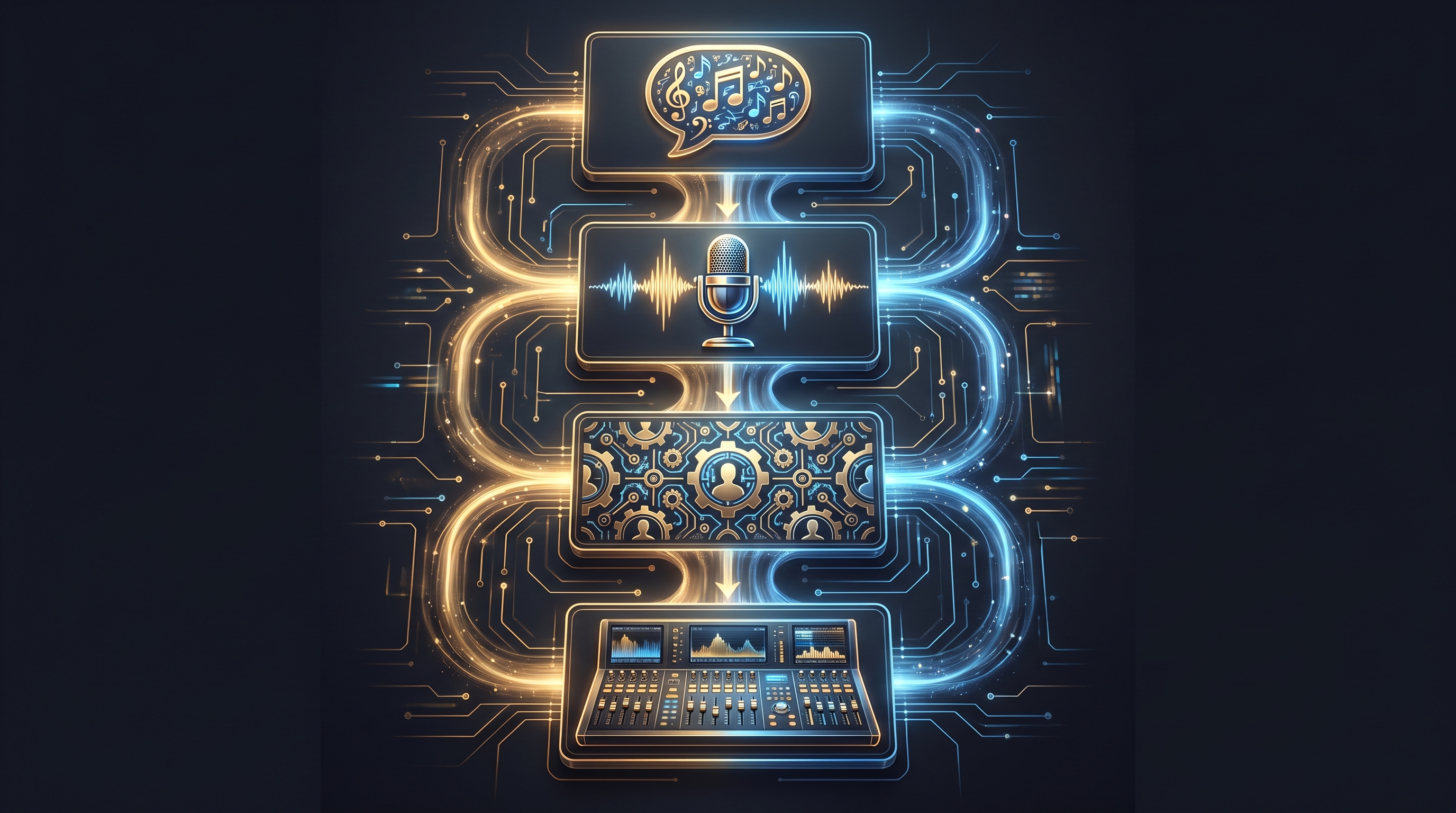
Suno is an AI music generation platform that converts text prompts and lyrics into complete, fully produced songs — vocals, instrumentation, and mix — through what the company describes as a multi-stage generation pipeline rather than a single end-to-end model. Rather than generating raw audio directly from a prompt in one pass, Suno's system separates the songwriting, vocal performance, and instrumental production into distinct stages, which is part of why its output tends toward coherent song structure — a verse that leads into a chorus that resolves believably — rather than a rambling, structureless audio clip.
The platform's accessibility is central to its market position: it works for someone with zero musical training who wants a fun, shareable track, while also offering studio-level tools — stem separation, extension and editing controls, a full DAW interface — that working musicians and producers can use for real production work. This dual accessibility, appealing to complete beginners and professionals simultaneously, is a large part of why independent reviews consistently name it the market leader over narrower or more single-purpose competitors.
Suno's flagship v5.5 model, released March 26, 2026, is the current default generation engine, and it introduces several capabilities that materially change what the platform can be used for beyond one-off novelty songs, covered in detail below.
Why Suno Is the Trending AI Tool Right Now
Suno's position in the September 2026 AI landscape rests on two separate but connected stories: rapid, genuine capability advancement, and an unusually public legal battle that is actively reshaping how the entire AI music category will be allowed to operate.
On the capability side, v5.5's launch in March 2026 was a meaningful jump rather than an incremental refresh. Voices — the ability to capture and later reuse your own actual singing voice — moves Suno from "generate a song with an AI voice" to "generate a song that sounds like you," a capability with obvious appeal for musicians who want AI assistance without losing their own vocal identity. Custom Personas, trained on a user's own existing catalog, extend that same logic to a consistent artistic style rather than just a voice. My Taste, a free personalization engine, learns a user's preferences over time and steers generations accordingly, similar in spirit to recommendation systems already familiar from music streaming but applied here to generation rather than discovery.
On the legal side, the story is genuinely significant for the entire category, not just for Suno specifically. Warner Music Group's November 2025 licensing agreement with Suno was the first major-label deal of its kind for AI-native song generation — an acknowledgment by one of the three major labels that a structured, compensated relationship with an AI music platform was preferable to continued litigation. Universal Music Group and Sony Music, in contrast, are continuing to pursue copyright infringement litigation against Suno over the training data used to build its models. This split — one major label licensing, two others suing — is precisely the kind of unresolved, high-stakes situation that keeps "Suno lawsuit," "is Suno legal," and "Suno licensing deal" persistently high in search volume throughout 2026, because the outcome will directly determine what commercial rights users actually have to generated music going forward.
According to the U.S. Copyright Office's ongoing guidance on AI and copyright (https://www.copyright.gov/ai/), questions of authorship, training data legality, and the copyrightability of AI-generated creative works remain among the most actively contested and unresolved areas of intellectual property law as of 2026 — a broader legal context that directly shapes the practical and commercial stakes of the Suno litigation for any creator relying on the platform for monetizable work.
Core Features of Suno in 2026
The Multi-Stage Generation Pipeline
Suno's core technical differentiator, and the reason its songs tend to hold together structurally where earlier-generation AI music tools produced meandering audio, is its multi-stage pipeline. Rather than a single model generating raw audio end to end, the system separates songwriting (lyrics and structure), vocal performance, and instrumental arrangement into distinct stages that inform each other — producing a final track with a recognizable verse-chorus-bridge architecture rather than an undifferentiated audio blob.
This structural coherence is a major part of why independent testers describe Suno's output as sounding like actual songs rather than AI-generated approximations of songs, particularly at the flagship v5.5 tier.
Voices — Capturing Your Own Vocal Identity
Voices, introduced with v5.5, allows a user to capture their own singing voice and reuse it across future generations — meaning the AI-composed instrumentation and structure can be paired with a vocal performance that is genuinely the user's own voice, rather than one of Suno's synthetic vocal models. For musicians who want compositional and production assistance without losing personal vocal identity, this closes a gap that made earlier AI music tools feel impersonal regardless of how good the AI vocal itself sounded.
Custom Personas
Custom Personas extend the same logic beyond an individual voice to an entire artistic style, trained on a user's own existing catalog of music. This allows an artist or project with an established sound to generate new material that stays consistent with their prior work — a capability aimed specifically at working musicians and content creators who need volume without diluting their established creative identity.
My Taste — Free Personalization Engine
My Taste is a free personalization layer that learns a user's generation preferences over time — genre tendencies, structural preferences, vocal style choices — and applies that learned taste to steer future generations more precisely toward what a specific user actually wants, reducing the trial-and-error cycle that comes with purely prompt-based generation.
Studio DAW
The introduction of a Studio DAW-style editing environment is one of the more significant structural shifts in Suno's 2026 feature set, moving the platform from a pure generate-and-download tool toward something with genuine post-generation production capability. Users can work with generated stems, make targeted edits, and refine a track within Suno itself rather than needing to export immediately to a separate digital audio workstation for any meaningful adjustment.
Extension and Segment-Based Refinement
Suno supports extending generated tracks and refining specific sections rather than only regenerating a song from scratch — a workflow capability that matters considerably for anyone trying to get a specific section of a song right without discarding an otherwise strong overall generation.
Multilingual Vocal Generation
Multilingual capability is now considered a standard baseline expectation across the AI music category in 2026, and Suno supports lyric generation and vocal performance across multiple languages — relevant for global creators and for content localization use cases where the same underlying song concept needs versions in different languages.
Commercial Rights Structure
Suno's paid tiers include a working commercial rights structure, allowing paid subscribers to use generated music commercially — a critical distinction from the free tier, where generated output explicitly cannot be monetized. This commercial licensing framework, combined with the Warner Music deal specifically, gives Suno a more defensible legal position for paying users than platforms operating without any structured label relationship.
Real-World Use Cases
Content Creators and Social Media
TikTok and Instagram Reels creators are among Suno's heaviest users, specifically because its vocal generation quality and the way its songs are structured lend themselves well to short, catchy, shareable clips that can go viral on exactly the platforms where sound-driven content performs best. The speed of generation — a complete song in roughly a minute — matches the production pace that high-volume social content creation demands.
Independent Musicians and Songwriters
For working musicians, Suno's Voices and Custom Personas features specifically address the use case of AI-assisted composition without losing personal artistic identity — generating instrumental beds, testing melodic and lyrical ideas quickly, and producing demo-quality tracks that retain the artist's actual voice and established style, then refining the result in Studio DAW rather than starting from a blank page in a traditional DAW.
YouTubers and Podcasters Needing Background Music and Theme Songs
Content creators producing video and audio content use Suno for royalty-free background scoring, intro and outro theme music, and mood-specific instrumental tracks — an alternative to licensing stock music libraries, with the specific advantage of being able to generate music tailored precisely to a video's tone rather than searching a stock catalog for an approximate match.
Advertising and Marketing Teams
Marketing teams producing video ads, jingles, and branded audio content use Suno's paid commercial tiers to generate custom musical assets quickly for campaigns, avoiding the cost and lead time of traditional composition and studio recording for shorter promotional pieces where a fully bespoke professional composition is not the budget priority.
Casual Creators and Hobbyists
A significant share of Suno's overall user base, consistent with independent review commentary, consists of people using the platform purely for fun — generating personalized songs for friends, birthday tributes, novelty tracks, and other one-off creative experiments where commercial rights are irrelevant and the free tier's limitations are not a meaningful constraint.
How Suno Compares to the Competition
Suno vs Udio
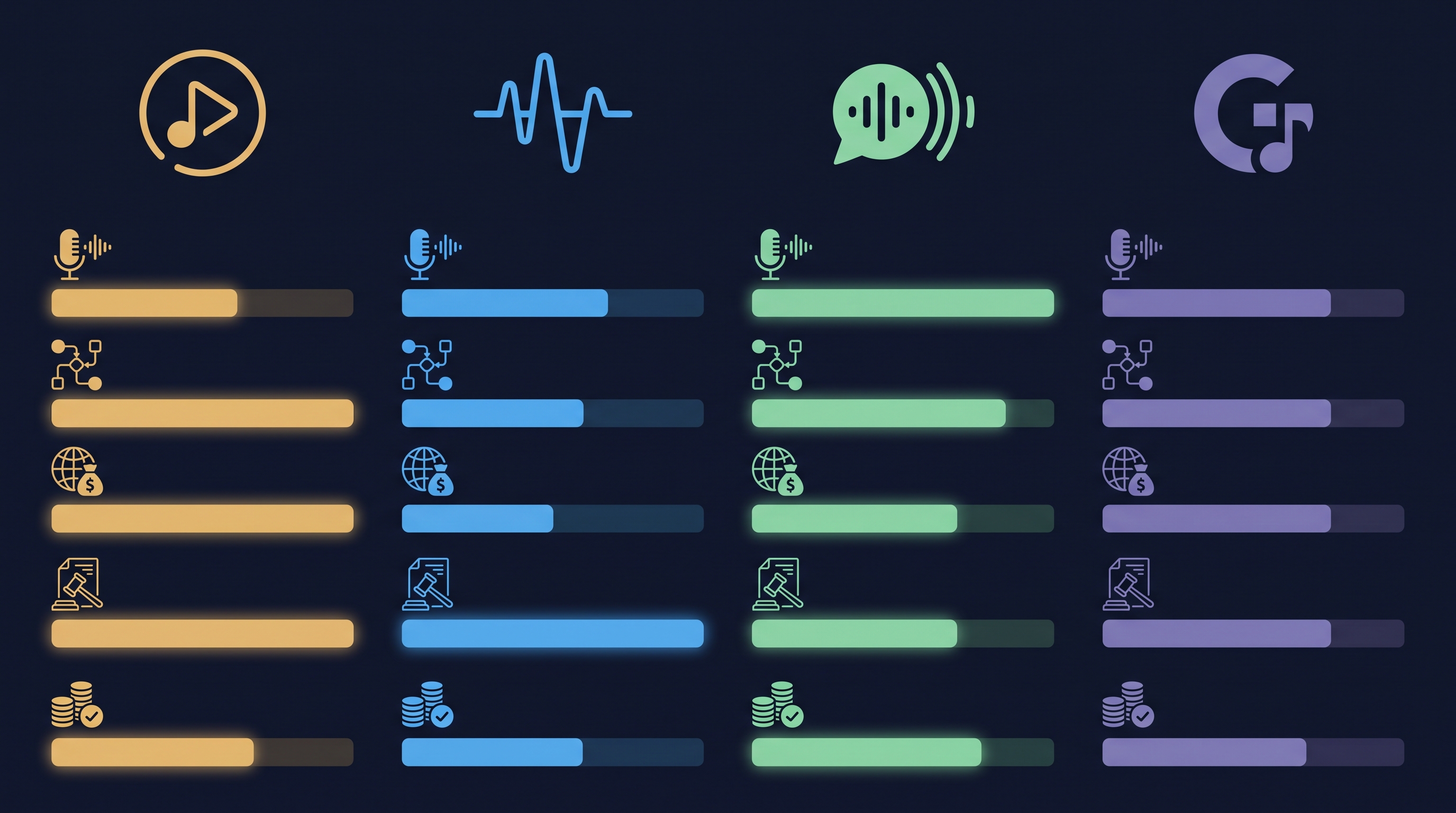
Udio is Suno's most direct and frequently compared rival, and the two platforms have diverged meaningfully in philosophy through 2026. Suno optimizes for fast, complete, one-shot song generation with a broad prompt ecosystem and the largest overall user base. Udio is built more around iterative, segment-based generation — songs build in roughly 32-second segments that a user extends and refines piece by piece, supported by a curated Style Library and style-blending tools, alongside a Voice Control feature for maintaining a consistent AI voice across tracks.
The most significant practical difference for prospective users in 2026 is platform openness. Udio has historically operated as a closed ecosystem where songs cannot be shared or exported outside the platform itself, and Udio has also been navigating a licensing transition following its settlement with major labels — a transition that has, at times, restricted features like downloads during the changeover. Suno, by contrast, allows commercial-rights subscribers to export and use their generated music externally, which is a meaningful practical advantage for anyone whose goal is to actually use the finished song somewhere else — a video, a release, a campaign — rather than share it within a single platform's social feed.
The practical recommendation from independent 2026 reviews: Suno for musicians and creators who want a complete, exportable, commercially usable song produced quickly. Udio for creators who enjoy an iterative, segment-by-segment production process and are comfortable working within its more closed, socially-oriented ecosystem.
Suno vs ElevenLabs Music (Eleven Music)
ElevenLabs, the company best known for its industry-leading voice cloning and text-to-speech technology, entered the music generation category in August 2025 with Eleven Music. As a newer entrant building on ElevenLabs' established strength in vocal realism, Eleven Music is a credible option specifically for users already embedded in the ElevenLabs ecosystem for voice work who want to extend into music without adopting an entirely separate platform.
Suno's advantage remains its multi-stage pipeline's structural song coherence and its considerably larger, more mature prompt ecosystem and community — the accumulated collective knowledge of what specific prompt phrasings reliably produce, built up over a longer product lifespan than Eleven Music's more recent entry into the category.
Suno vs Google Lyria 3
Google's Lyria 3, integrated within Gemini Advanced, offers the specific advantage of being bundled into a subscription many users already have, with a notable limitation: generation is currently capped at 30-second tracks, positioning it more as a quick musical sketch or accompaniment tool than a full-song generation platform. For users who already pay for Gemini Advanced and want occasional short musical accompaniments without an additional dedicated music subscription, Lyria 3 is a reasonable bundled option. For anyone needing a complete, full-length song with vocals and defined structure, Suno remains the more capable dedicated tool.
Suno vs Stable Audio 3 and AIVA
Stable Audio 3, from Stability AI, targets developers and sound designers specifically, with open-weight models, licensed training data, and fast local generation — a meaningfully different value proposition built around technical control and licensing transparency rather than one-shot vocal song creation for a general creative audience. AIVA leans toward classical and orchestral composition specifically, appealing to a narrower but distinct use case — film scoring, classical-style composition — where Suno's pop-and-vocal-oriented pipeline is not the natural fit.
According to Billboard's coverage of AI music industry licensing developments (https://www.billboard.com/business/), the Warner Music-Suno agreement is widely regarded within the music industry as a template that other labels may eventually follow, contingent on the outcome of the ongoing Universal Music Group and Sony Music litigation — positioning Suno's current legal and commercial status as directly consequential for how the broader AI music licensing landscape develops over the next several years, not just for Suno's own users.
Suno Pricing — The Complete 2026 Breakdown
Suno's pricing structure centers on a small number of clearly defined tiers, with the commercial rights distinction being the single most important detail for any user planning to use generated music beyond personal enjoyment.
Free Tier — $0/month Allows song generation and experimentation at no cost, but output on the free tier explicitly cannot be monetized. This tier is appropriate for testing the platform, generating songs for personal use, and evaluating output quality before committing to a paid subscription — but it is not a viable option for any commercial use case, including monetized YouTube content, branded marketing material, or any track intended for public release with revenue attached.
Pro Plan — $10/month Generates approximately 500 songs per month with commercial rights attached, making it the cheapest per-song commercial-rights tier in the category according to comparative 2026 reviews. This is the entry-level tier for any creator or small business that needs to legally monetize or commercially use Suno-generated music on a modest but real production volume.
Higher Tiers Suno offers additional tiers above Pro for higher generation volumes and expanded feature access, scaling for creators and businesses with heavier production needs. Given the pace of change in Suno's feature releases and the evolving legal landscape affecting commercial terms, verifying current tier details, generation limits, and commercial rights language directly at suno.com before committing to a plan — particularly for any business use case — is a necessary step rather than an optional precaution.
The honest pricing context worth emphasizing: The free-tier monetization restriction is not a minor technicality. Any creator planning to publish AI-generated music where revenue could be attached — a monetized YouTube video, a commercial release, branded content for a client — needs to be on a paid tier with commercial rights, and should independently confirm the exact scope of those commercial rights given the platform's ongoing, unresolved litigation with two of the three major labels.
Pros and Cons
Pros
Multi-stage generation pipeline produces structurally coherent songs — verse, chorus, bridge — rather than meandering, unstructured audio
Largest user base and most mature prompt ecosystem in the AI music generation category
v5.5 (March 2026) added genuinely useful new capability: Voices for capturing your own singing voice, Custom Personas for consistent artistic style, and free My Taste personalization
Studio DAW brings genuine post-generation editing and production capability into the platform itself
Warner Music Group licensing deal (November 2025) provides more legal legitimacy and commercial footing than most direct competitors currently have
Pro plan at $10/month generates roughly 500 songs monthly with commercial rights attached — among the cheapest per-song commercial-rights pricing in the category
Accessible for complete musical beginners while still offering studio-level tools for working professionals
Multilingual vocal generation supports global and localization use cases
Platform allows export and external use of generated tracks for paying subscribers, unlike more closed competitor ecosystems
Fast generation speed (roughly one minute per song) suits high-volume content production workflows
Cons
Ongoing copyright litigation from Universal Music Group and Sony Music remains unresolved, creating genuine legal uncertainty around training data and, by extension, some users' comfort level with commercial reliance on the platform
Free tier output cannot be monetized under any circumstances, requiring a paid subscription for any commercial use case
Vocal output is not consistently indistinguishable from a human vocalist across every generation — quality varies, and some outputs still carry recognizable AI vocal characteristics
The legal and commercial rights landscape is actively shifting, meaning terms, available rights, and platform features could change with limited notice as litigation and licensing negotiations develop
Higher-tier pricing and generation limits beyond the Pro plan require direct verification, as the fast pace of feature releases and legal developments makes third-party pricing summaries prone to becoming outdated quickly
Studio DAW, while a meaningful addition, is not yet a full replacement for a dedicated professional digital audio workstation for the most demanding production and mixing workflows
Who Should Use Suno?
Suno delivers the strongest value for:
Social media content creators on TikTok, Instagram Reels, and YouTube Shorts who need fast, catchy, vocal-driven music that suits viral short-form content
Independent musicians and songwriters who want AI-assisted composition and demo production while retaining their own vocal identity and established artistic style through Voices and Custom Personas
YouTubers and podcasters needing custom background scoring, theme music, and mood-specific instrumental tracks as an alternative to stock music licensing
Marketing and advertising teams producing branded audio content and jingles at commercial-rights-compliant volume via the Pro plan
Casual creators and hobbyists generating personalized, novelty, or purely creative tracks where commercial rights are not a factor
Who Should Consider Alternatives
Users specifically wanting an iterative, segment-by-segment production workflow with style blending — Udio's approach may better suit that particular creative process, with the caveat of its more closed, harder-to-export ecosystem
Users already deeply embedded in the ElevenLabs ecosystem for voice work — Eleven Music may offer a more integrated workflow for those specific users
Users who already subscribe to Gemini Advanced and only need short musical accompaniments — Lyria 3's bundled, 30-second-capped tool may be sufficient without an additional subscription
Developers, sound designers, and technically-minded users prioritizing licensing transparency and open-weight model control — Stable Audio 3 is purpose-built for that specific need
Classical composers and film scorers — AIVA's orchestral and classical specialization is a better fit than Suno's pop-and-vocal-oriented pipeline
Organizations with strict legal risk tolerance around unresolved copyright litigation — the ongoing UMG and Sony lawsuits are a legitimate consideration for any business planning heavy, long-term commercial reliance on the platform

Getting the Most Out of Suno — Practical Tips
Use Voices early if vocal identity matters to your project. For musicians who want AI-assisted composition without sacrificing personal vocal recognition, capturing your own voice through the Voices feature at the start of a project — rather than defaulting to a synthetic vocal model — preserves the artistic identity that matters most for an ongoing musical project or brand.
Build a Custom Persona once you have an established catalog, not before. Custom Personas work best when trained on a genuinely representative body of your existing work — building one prematurely, before you have a consistent enough catalog, produces a less useful and less accurate stylistic reference for future generations.
Use extension and segment refinement rather than regenerating from scratch. When a generation is strong overall but one section falls short, extending or refining that specific segment preserves the parts that already work rather than risking losing a strong overall generation by starting over completely.
Confirm commercial rights terms directly before any paid or monetized release. Given the platform's active, unresolved litigation with two major labels, any creator planning a genuinely commercial release — not just casual social content — should read Suno's current terms of service directly and consider consulting independent legal guidance for any release with meaningful revenue exposure.
Treat My Taste as a long-term investment, not an instant fix. The personalization engine improves with accumulated generation history — using it consistently over time, rather than expecting immediately precise results from day one, is where its practical value compounds.
The Honest Limitations Worth Understanding
The unresolved litigation with Universal Music Group and Sony Music is the single most important factor for any prospective commercial user to weigh honestly. Warner Music's licensing deal demonstrates that a structured, compensated path forward for AI music generation is achievable and that at least one major label sees enough value to formalize a relationship — but it does not resolve the legal questions the other two litigants are actively pursuing in court. Until that litigation concludes, some uncertainty about the platform's long-term legal footing, and the durability of specific commercial rights currently offered to subscribers, remains a real and legitimate consideration rather than a hypothetical one.
Vocal quality, while genuinely impressive at its best, is not uniformly indistinguishable from human performance across every single generation. Users expecting flawless, always-perfect vocal output on every attempt should expect some variance and plan for iteration — regenerating, extending, or refining specific sections — as part of a normal workflow rather than treating the first generation as automatically final.
The pace of both feature development and legal developments in this specific category has been unusually fast throughout 2026, which means any pricing or feature detail — including those in this review — should be verified directly against Suno's current official pricing and terms pages before making a purchasing decision, particularly for commercial or business use.
Final Verdict: Is Suno Worth It in 2026?
For creators, musicians, and content producers who want the fastest, most structurally coherent path from an idea to a complete, vocal-driven song, Suno remains the clear category leader in 2026 — a position earned through genuine, continuous capability improvement (Voices, Personas, Studio DAW) rather than through marketing alone.
The Warner Music licensing deal gives paying Suno users a meaningfully stronger legal footing than platforms operating with no structured label relationship at all, even as the ongoing Universal and Sony litigation means the category's full legal resolution is still pending. For casual and social content use, this legal nuance matters less. For serious commercial reliance — a business built around Suno-generated music, a significant revenue-bearing release — it deserves direct attention and, ideally, independent legal guidance specific to your situation.
At $10/month for roughly 500 songs with commercial rights attached, the Pro plan represents one of the most accessible entry points into legally usable AI-generated music currently available. The free tier is sufficient to evaluate quality and workflow fit before committing to any paid tier, with the clear understanding that free-tier output is for personal use only.
For the specific job of turning a musical idea into a complete, catchy, vocal song quickly, Suno remains difficult to beat in 2026 — provided the legal landscape's current uncertainty is weighed honestly against the specific scale and nature of your intended use.
Try Suno Today
The free tier lets you generate and evaluate Suno's output quality at no cost, with the clear understanding that free-tier songs are for personal use and cannot be monetized.
Try Suno at suno.com — Free tier available for personal use. Pro plan at $10/month includes commercial rights and approximately 500 songs monthly. Verify current pricing and commercial terms directly before any business use.
Frequently Asked Questions
What is Suno? Suno is an AI music generation platform that converts text prompts and lyrics into complete songs, including vocals, instrumentation, and structure, using a multi-stage generation pipeline. It is widely regarded as the market leader in AI-generated vocal music as of 2026.
Is Suno legal? Suno's legal status is mixed and evolving. Warner Music Group signed a licensing agreement with Suno in November 2025. Universal Music Group and Sony Music are still pursuing active copyright infringement litigation against the company as of 2026. Paid subscribers receive a commercial rights structure, but the underlying legal questions around training data remain unresolved in court.
Can I use Suno-generated music commercially? Only on paid tiers. Suno's free tier explicitly does not allow monetization of generated music. The Pro plan ($10/month) includes commercial rights for approximately 500 songs per month. Given the ongoing litigation, verifying current commercial terms directly before significant commercial reliance is recommended.
How does Suno compare to Udio? Suno emphasizes fast, complete, one-shot song generation with the largest user base and prompt ecosystem, and allows commercial-rights users to export tracks externally. Udio uses a more iterative, segment-based generation approach with style blending, but has historically operated as a more closed ecosystem with limited external sharing, and has gone through a licensing transition following its own label settlement.
What is new in Suno v5.5? Suno v5.5, released March 26, 2026, introduced Voices (capturing and reusing your own singing voice), Custom Personas (trained on your own catalog for consistent artistic style), My Taste (a free personalization engine), and a Studio DAW-style editing environment for post-generation production work.
How much does Suno cost? Suno offers a free tier for personal, non-monetizable use, and a Pro plan at $10/month generating approximately 500 songs with commercial rights attached. Higher tiers are available for greater volume; current pricing should be verified directly at suno.com given the pace of change in the platform's offerings.
Is Suno better than ElevenLabs Music? Suno has a more mature product, a larger user base, and a longer track record specifically in music generation. ElevenLabs Music (Eleven Music), launched in August 2025, may be a better fit for users already invested in ElevenLabs' voice technology ecosystem who want an integrated workflow, but it is a newer entrant to the music generation category specifically.

Founder, Axionova · AI Tools Strategist
Ashir writes independent, hands-on reviews of AI tools and shares strategies for creators, marketers, and entrepreneurs. Every review is grounded in real usage — no paid placements, no fluff. Read our editorial standards.
AI Insights Weekly
One curated email a week: sharp AI insights, tool reviews, and strategies.
Have thoughts on this?
Contact us or share this article on social media — we'd love to hear what resonated with you.